If you are wondering why a South African smartphone and tech reviewer is talking about water dispensers and purifiers, the truth is that managing smart home ecosystems and modern office setups goes hand-in-hand with utility optimization. Living through load shedding, municipal water maintenance issues, and erratic supply lines across Johannesburg, Cape Town, and Durban taught me that clean, reliable hydration is just as critical as having stable Wi-Fi and uninterrupted power. When you are sitting behind a desk for ten hours troubleshooting mobile review units or rendering 4K video files, getting up to find safe, chilled, or piping-hot water without fuss becomes a priority.
Navigating the South African market for water dispensers and purifiers can be overwhelming. From basic top-loading units at Makro to advanced under-counter reverse osmosis systems from Yuppiechef or specialized suppliers, pricing and features vary wildly. This comprehensive guide breaks down current local pricing, types of models, real-world utility, and maintenance costs to help you choose the best hydration station for your home or office.
Understanding Your Options: Dispensers vs. Purifiers
Before looking at price tags, it helps to distinguish between the core categories available in South Africa:
-
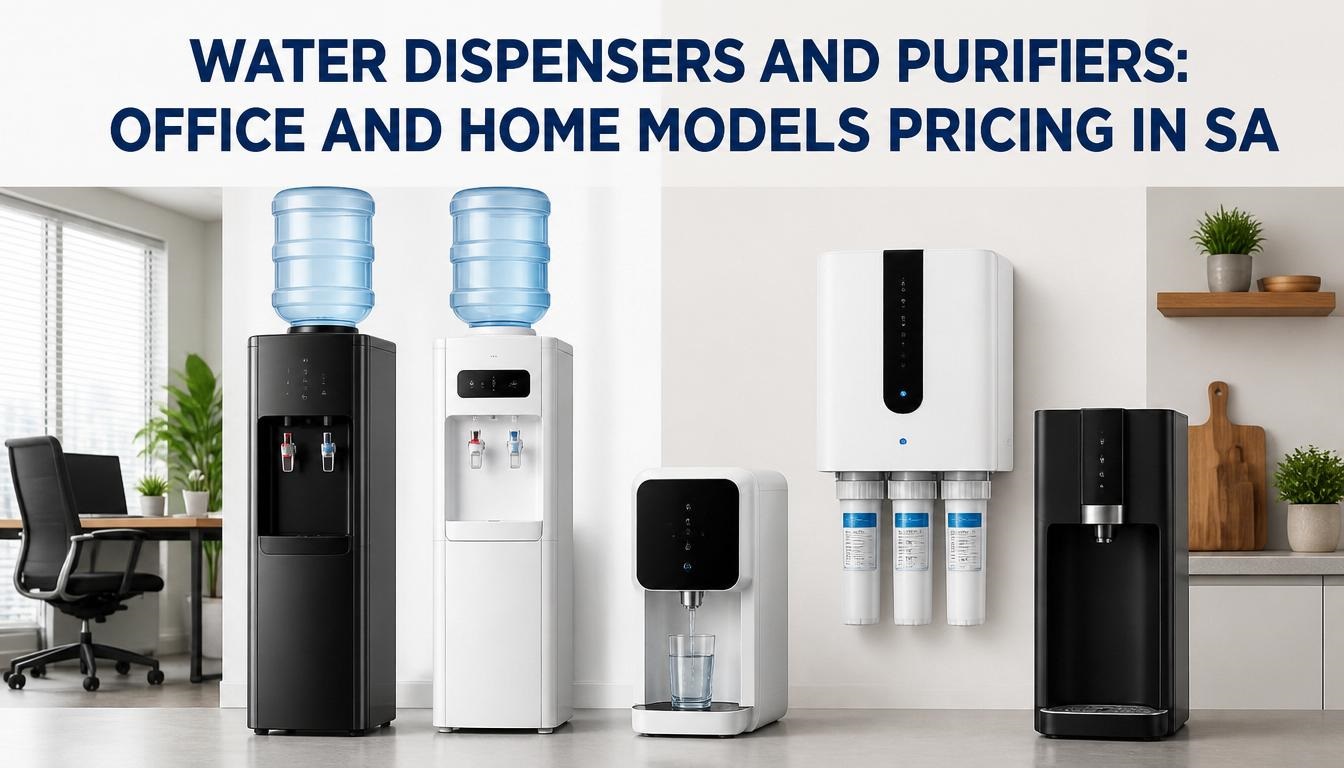
Bottled Water Dispensers (Top-Loading & Bottom-Loading): These units hold standard 19-litre bottles (often sourced from Oasis, Aquelle, or local suppliers). They offer instant hot and cold water options but require you to swap out heavy bottles manually.
-
Direct-Line Water Purifiers (Point-of-Use): Plumbed directly into your mains water supply. They filter municipal water on demand using Ultra-Filtration (UF) or Reverse Osmosis (RO), eliminating the need to buy or lift heavy bottles.
-
Countertop vs. Floor-Standing Models: Countertop units save floor space in small kitchens or compact offices, while floor-standing variants often include built-in storage cabinets or mini-fridges.
South African Pricing Breakdown: Home and Office Models
Prices fluctuate based on brand reputation, heating/cooling compressor efficiency, and filtration complexity. The market splits into distinct price tiers for residential and commercial spaces.
Entry-Level and Mid-Range Bottled Dispensers
Ideal for small offices or apartments where plumbing modifications are not permitted.
| Brand & Model Type | Key Features | Average South African Price (ZAR) | Best Suited For |
| Basic Top-Loading Dispenser (e.g., Midea, Superpure) | Hot & Cold taps, ambient options, lightweight plastic build | R1,899 – R2,300 | Small home kitchens, budget-conscious spaces |
| Standing Dispenser with Cabinet (e.g., Hoverman, Sunbeam) | Built-in storage base, reliable cooling compressor | R2,450 – R3,499 | Medium offices, heavy household use |
| Bottom-Loading Dispenser (e.g., Midea Silver, Elegance) | Hidden bottle compartment at the base, sleek aesthetics | R2,599 – R3,999 | Modern corporate offices, executive boardrooms |
| Premium Glass-Finish Top-Loaders (e.g., Russell Hobbs) | Premium styling, digital temperature displays | R5,500 – R6,650 | Design-conscious modern kitchens |
Advanced Purifiers and Direct-Line Systems
For spaces requiring heavy-duty filtration, removal of heavy metals, or protection against erratic municipal water quality.
| System Type | Technology Used | Average South African Price (ZAR) | Best Suited For |
| 3 to 4-Stage Under-Counter Purifier | Sediment, Granular Activated Carbon (GAC), Carbon Block | R1,999 – R3,600 | Direct kitchen sink installation for pure drinking water |
| Reverse Osmosis (RO) Floor Unit | Multi-stage membrane filtration with standing dispenser | R5,500 – R13,500 | Large commercial offices, clinics, high-traffic zones |
| Under-Counter Boiling/Chilling Modules (e.g., BIBO) | Instant boiling, chilled, and purified water on tap via designer faucet | R11,400 – R16,000 | High-end executive kitchens, sleek office pantries |
Real-World Experience: What Retailing and Daily Use Taught Me
When I set up a floor-standing hot and cold dispenser in a busy tech workspace shared by five content creators, a few practical lessons quickly emerged that specification sheets leave out:
-
The Heavy Lifting Factor: Top-loading 19-litre bottles weigh nearly 20 kilograms. If your office team consists of people who struggle to lift heavy weights shoulder-high without spilling water over the electronics, spend the extra R1,000 to get a bottom-loading model. It saves floors from puddles and backs from strain.
-
Energy Consumption During Load Shedding: Water dispensers feature heating and cooling compressors that draw continuous power. If you run your office off a backup inverter or solar setup, check the wattage. Heating elements typically pull between 500W to 600W when active, which can drain smaller power stations quickly. Most units feature rear toggle switches to turn off the heating element during summer months or power crunches.
-
Filter Maintenance Costs: If you buy a direct-line purifier or RO system, factor in replacement filters. Standard sediment and carbon replacement cartridge sets cost between R200 and R2,700 depending on whether you are replacing simple inline filters or complex multi-stage RO membranes. Neglecting filter changes turns your purifier into a breeding ground for bacteria.
Making the Right Choice: Home vs. Office Checklist
-
Choose a Bottled Dispenser if: You rent your office space, do not want to drill holes into granite countertops, or prefer buying branded spring water.
-
Choose a Direct-Line Purifier if: You want long-term cost savings, despise changing heavy bottles, and have access to a cold-water water inlet and drainage point.
Join the Discussion
Navigating utility appliances in South Africa requires balancing convenience, load shedding realities, and upfront budgets. Have you installed a direct-line reverse osmosis system in your home, or do you stick to the trusty office water cooler bottle?
Which type of water system do you currently use, and what has your biggest maintenance challenge been? Drop your thoughts or questions in the comments below!

Joseph Mathebula is a consumer analyst and market researcher at Prices in South Africa. He specializes in tracking local service costs, retail pricing, and travel budgets, helping everyday shoppers navigate the market to secure the best value.