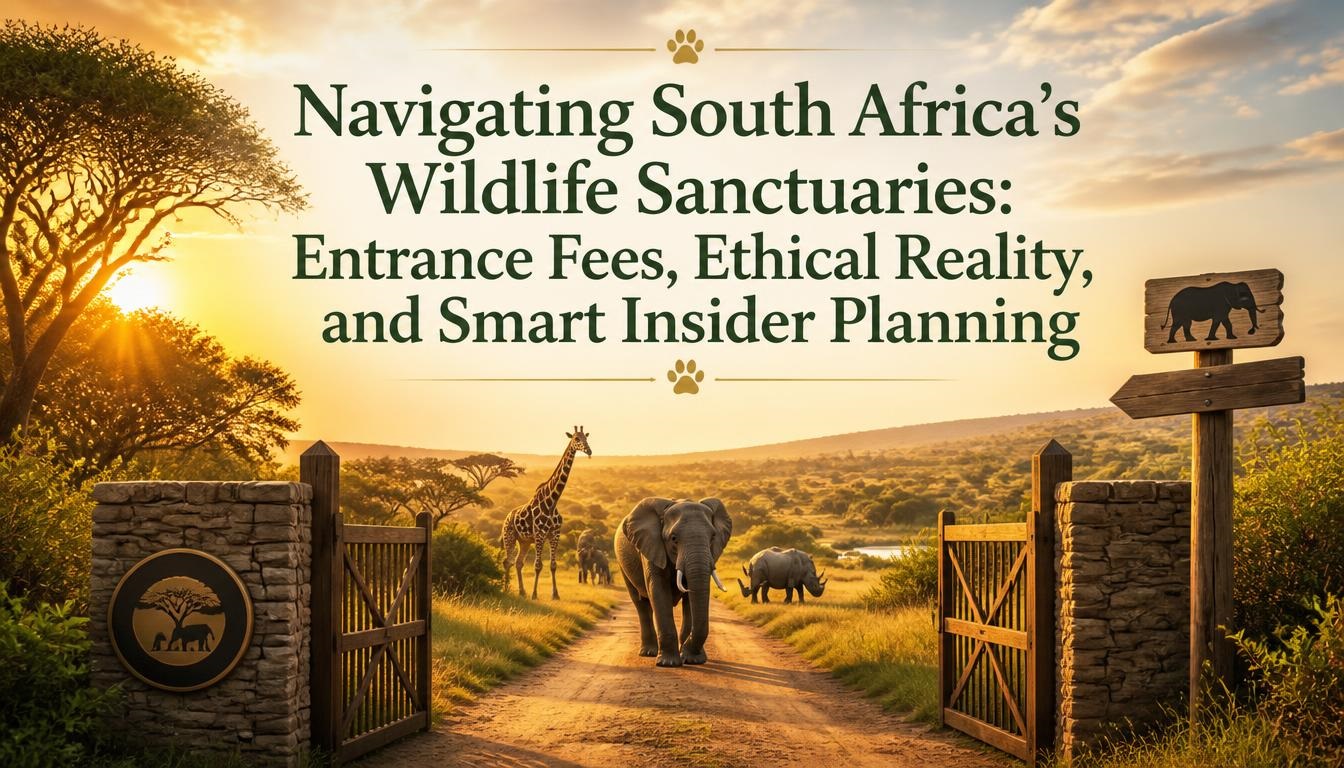
Standing next to a six-ton African elephant is a moment that rewires your brain. You hear the low, sub-audible rumble vibrating through the soles of your shoes long before you process the sheer scale of the animal in front of you. Having spent years guiding travelers, locals, and international guests through South Africa’s diverse safari hubs, I can tell you that visiting an elephant sanctuary or a wildlife rehabilitation center is one of the most rewarding—yet often misunderstood—experiences in the country.
Planning a trip to these facilities requires navigating complex choices. Tariffs vary wildly depending on whether you are looking for a quick educational walk or a half-day husbandry experience. The gap between ethical rehabilitation facilities and commercial, touch-focused operations has widened significantly over the past decade.
This guide outlines actual 2026 entrance pricing across South Africa’s leading sanctuaries, provides clear distinctions between sanctuary models, offers actionable tips to help you save money, and explains how to ensure your visit genuinely supports wildlife conservation.
1. 2026 Entrance Fee Comparison: South Africa’s Top Elephant & Wildlife Sanctuaries
To help you budget accurately, the breakdown below reflects the official tariff structures for the 2025/2026 operating season across South Africa’s primary elephant centers and wildlife rehabilitation facilities.
Note: All prices are quoted in South African Rand (ZAR).
Official Tiered Pricing & Rates Matrix
| Facility | Location | Experience Type | Adult Rate (2026) | Child Rate (2026) | Pensioner / Local Rate |
| The Elephant Sanctuary | Hartbeespoort (North West) | Standard Elephant Interaction (1.5 hrs) | R1,595 | R650 (Ages 4–14) | R1,050 (Weekdays only) |
| The Elephant Sanctuary | Hartbeespoort (North West) | Combo: Elephant & Monkey Sanctuary | R1,795 | R825 (Ages 4–14) | R1,295 (Weekdays only) |
| The Elephant Sanctuary | Hartbeespoort (North West) | “Day in the Life” Keeper Program | R3,150 | R2,050 (Ages 8–14) | N/A |
| Elephant Whispers | Hazyview (Mpumalanga) | 1-Hour Elephant Interaction | R920 | R460 (Under 12) | Standard rate applies |
| Elephant Whispers | Hazyview (Mpumalanga) | Interaction & Bush Walk (1.5 hrs) | R1,800 | R900 (Under 12) | Standard rate applies |
| Elephant Whispers | Hazyview (Mpumalanga) | Ultimate Experience + Lunch/Picnic | R3,350 | R1,675 (Under 12) | Standard rate applies |
| Moholoholo Wildlife Centre | Hoedspruit (Limpopo) | Guided Rehabilitation Tour (2 hrs) | R250 – R300 (est.) | R130 – R160 (est.) | Local discounts on request |
| Hoedspruit Endangered Species Centre (HESC) | Hoedspruit (Limpopo) | Standard Tour / Educational Drive | R290 – R350 (est.) | R150 – R180 (est.) | SA Senior Citizen discounts available |
| Jukani Wildlife Sanctuary | Plettenberg Bay (Garden Route) | Single Sanctuary Ticket (90 mins) | R440 | R220 (Ages 3–12) | 10% off for SA Pensioners |
| SAASA Combo Ticket | Plettenberg Bay (Garden Route) | 3-Sanctuary Hopper (Jukani + Birds of Eden + Monkeyland) | R900 | R450 (Ages 3–12) | 10% off for SA Pensioners |
2. Understanding Ethical Elephant Encounters: True Sanctuaries vs. Commercial Tours
When choosing where to spend your travel budget, it helps to understand the fundamental difference in operational ethics across wildlife centers in South Africa.
True Rehabilitation Centers
-
Primary Objective: Rescue, treat, rehabilitate, and release animals back into the wild whenever feasible.
-
Interaction Level: Strictly hands-off for the general public. Human contact is limited to veterinarians and direct caregivers to avoid imprinting.
-
Examples: Moholoholo Wildlife Rehabilitation Centre, Dullstroom Bird of Prey Centre, Crocodile River Reserve facilities.
-
Visitor Experience: Guided tours where you observe animals housed in spacious enclosures because they are injured, orphaned, or unable to survive in the wild.
Educational Elephant Sanctuaries
-
Primary Objective: Provide lifelong care for rescued or captive-bred elephants that cannot be returned to the wild, while offering educational programs.
-
Interaction Level: Controlled, structured interactions such as touching a trunk, feeding treats, or walking alongside the animals under handler supervision.
-
Ethical Evolution: Most reputable facilities in South Africa have phased out or strictly limited elephant riding over the past decade, shifting their focus toward educational walks, husbandry observation, and habitat enrichment.
Field Tip: Always verify if a facility supports captive breeding or animal trading. Ethical sanctuaries do not breed animals for commercial gain, nor do they sell animals into the exotic pet or hunting trades.
3. Detailed Regional Breakdown: What You Get for Your Money
The Elephant Sanctuary — Hartbeespoort (North West)
Located an hour’s drive from Johannesburg and Pretoria, “Harties” is popular for day trips.
-
The Experience: You are taken in small groups to meet the elephants and their dedicated handlers. The tour includes touching an elephant’s trunk, learning about their anatomy, feeling the texture of their skin, and walking trunk-in-hand through the bush.
-
Is the R1,595 Price Tag Worth It? If you live in Gauteng and have never been close to an elephant, yes. The small group sizing ensures high-quality guide interaction. However, if you are traveling on a tight budget, combining it with the nearby Bushbaby & Monkey Sanctuary via a Combo Ticket (R1,795) offers better overall value per hour.
Elephant Whispers — Hazyview (Mpumalanga)
Situated along the Sabie River right outside the Kruger National Park gates, Elephant Whispers cares for a small herd of rescued elephants, including large bulls like Tembo.
-
The Experience: Programs range from a basic 1-hour interaction (R920) to an extensive 5-hour half-day keeper experience (R5,300). The mid-tier Interaction & Walk (R1,800) hits the sweet spot, letting you observe herd behavior while walking alongside them through natural vegetation.
-
Best Value Pick: The 1-Hour Interaction at R920 offers great value. It covers the essential educational presentation, trunk-feeding, and photo opportunities without pushing into premium price tiers.
Moholoholo Wildlife Rehabilitation Centre — Hoedspruit (Limpopo)
If you want an authentic look at wildlife rescue, Moholoholo is an essential stop.
-
The Experience: A 2-hour guided walking tour among rescued lions, leopards, eagles, honey badgers, and rhinos. Guides share the backstory of each animal, explaining why it arrived at the center and whether release is possible.
-
Value Assessment: At under R300 per adult, Moholoholo offers exceptional value. Your entrance fee directly funds medical supplies, specialized diets, and rescue operations for injured bushveld wildlife.
Jukani & The SAASA Sanctuaries — Plettenberg Bay (Garden Route)
The South African National Species Apex Educational Trust (SAASA) operates Jukani, Monkeyland, and Birds of Eden along the Garden Route.
-
The Experience: Jukani houses rescued apex predators (big cats, apex carnivores) in large, natural bush enclosures. There is zero touching or human-animal interaction allowed—it is a true hands-off sanctuary model.
-
Value Assessment: The single entry ticket is R440, but purchasing the Three-Sanctuary Hopper Ticket for R900 saves you over R400 compared to individual admissions. It provides a full day of world-class, ethical wildlife viewing.
4. Insider Budgeting & Visiting Tips
-
Book Weekdays as a Pensioner: Facilities like Hartbeespoort offer significant discounts for South African senior citizens (e.g., dropping the adult rate from R1,595 down to R1,050). These discounts are generally valid on weekdays only.
-
Pack Your Own Water and Sun Protection: Sanctuary gift shops charge premium prices for bottled water, sunblock, and sun hats. Bring a reusable flask and apply sunscreen before arriving.
-
Footwear Matters: Wear closed-toe walking shoes or light hiking boots. Walking through dirt paths, mud, and uneven bush terrain in flip-flops can ruin the experience.
-
Target the Early Slot: The 08h00 or 09h00 sessions are ideal. Temperatures are cooler, animals are active, and morning light provides better conditions for photography.
-
Always Book Ahead: Daily visitor numbers are capped to keep stress levels low for both the animals and handlers. Walk-ins are frequently turned away during peak holiday periods (December/January, Easter, and July school holidays).
What Has Your Experience Been with Elephant Sanctuaries in SA?
Ethical wildlife tourism is a evolving conversation, and travelers often hold differing perspectives on human-wildlife interaction.
Have you visited any of these facilities recently? Do you prefer hands-off rehabilitation centers like Moholoholo and Jukani, or do you feel educational interaction programs like Hartbeespoort and Elephant Whispers play an important role in building conservation awareness?
Share your thoughts, prices paid, or questions in the comments below!

Joseph Mathebula is a consumer tech analyst and market researcher at Prices in South Africa. He specializes in tracking smartphone prices and consumer electronics, helping everyday shoppers navigate the market to secure the best value.