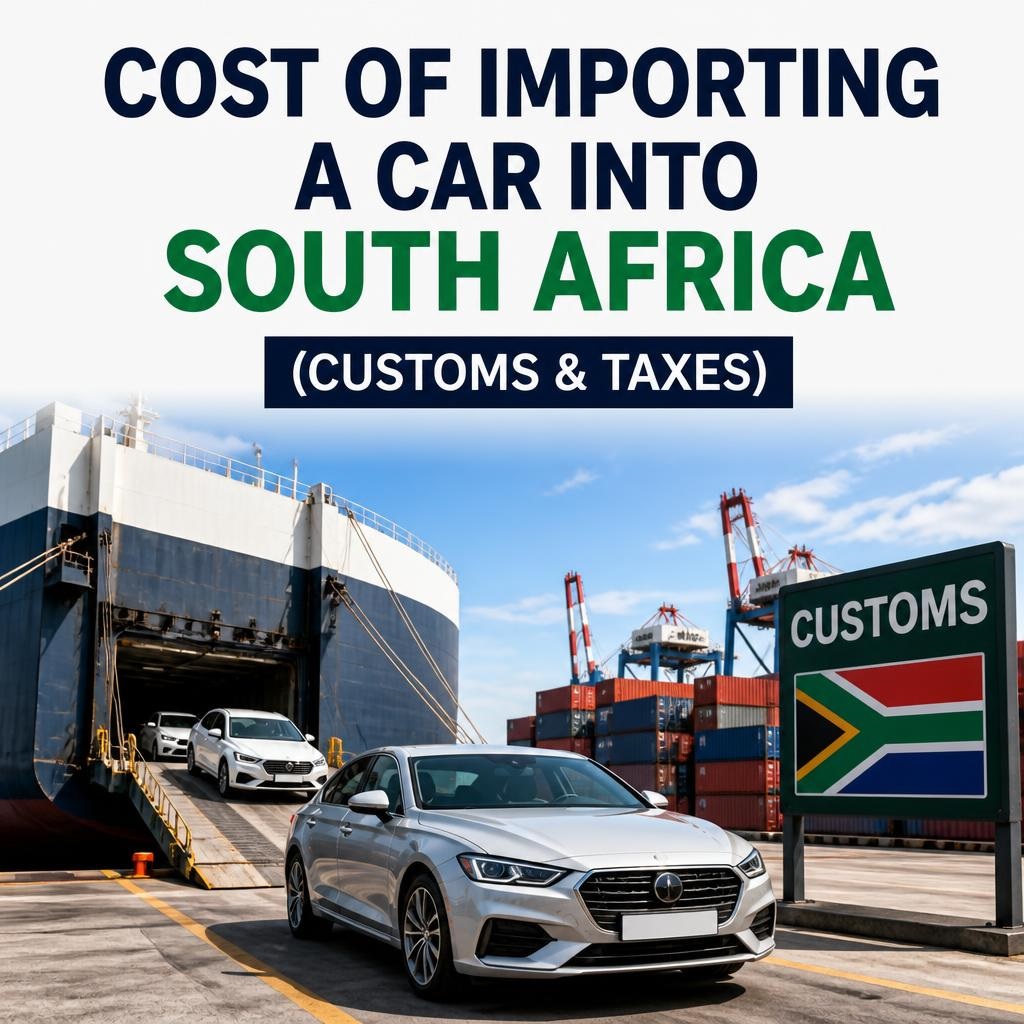
Import duties range from 18% to 25%, compounded by an Ad Valorem excise duty (up to 30%), a 10% statutory upliftment factor, and 15% import VAT. Total tax routinely adds 45% to 65% above the vehicle purchase price. Top Choice: Importing SADC-built light commercial vehicles (0% duty under SADC trade rules). Best Budget Option: Returning SA residents importing a owned vehicle with an ITAC permit exemption. Major Warning: Unregistered or illegal imports face permanent impoundment and destruction by SARS Customs without compensation.
SARS Vehicle Import Tax Calculation (Explained)
The Tax Calculation Formula
-
Customs Value (FOB / Free on Board): The purchase price of the vehicle.
-
Customs Duty: Standard rate is 25% for passenger vehicles (18% if originating from the EU under the SADC-EU EPA).
-
Ad Valorem Excise Duty: A sliding scale tax based on the vehicle’s retail value, ranging from 0% to 30%.
-
Added Tax Value (ATV) for VAT: Calculated as:
(FOB Value + 10% Upliftment) + Customs Duty + Ad Valorem Excise Duty. -
Import VAT: 15% levied directly on the ATV.
Total Cost Matrix: Direct SA Import Charges
| Expense Category | Charge Type / Rate | Applies To | Mandatory? | Value Impact |
| Customs Duty | 25% (General) / 18% (EU Origin) | Passenger Cars | Yes | High |
| Import VAT | 15% on ATV (Includes 10% upliftment) | All Imports | Yes | High |
| Ad Valorem Excise | 0% to 30% (Sliding scale) | Luxury & Passenger Vehicles | Yes | Very High |
| NRCS LOA Fee | ~R1,800 flat fee | Safety Compliance Clearance | Yes | Low |
| ITAC Import Permit | Free application (Restrictions apply) | Used Vehicles Only | Yes | Gatekeeper |
| CO2 Emission Levy | R146/g above 95g/km CO2 | Passenger Vehicles | Yes | Variable |
| Clearing Agent Fee | R2,500 – R6,000 | Port Clearance Services | Yes | Moderate |
| Sea Freight & Port Handling | R25,000 – R55,000 | RORO / Container Shipping | Yes | High |
The Legal Used Car Permit Barrier
Approved Categories for Used Imports
-
Returning SA Citizens: Must prove continuous permanent employment abroad for at least 12 months and have the vehicle registered in their name for that full duration.
-
Bona Fide Immigrants: Individuals holding permanent residency in South Africa who owned the vehicle before immigrating.
-
Special Vehicles: Vintage cars (older than 40 years), racing cars, or heavily modified vehicles for physically disabled individuals.
-
Left-Hand Drive Prohibition: Left-Hand Drive (LHD) vehicles cannot be imported or registered in South Africa. Only Right-Hand Drive (RHD) vehicles are eligible for registration.
-
NRCS Letter of Authority (LOA): The National Regulator for Compulsory Specifications must issue an LOA confirming the vehicle meets national safety and homologation standards. Without this ~R1,800 document, the vehicle cannot be registered on ENaTIS.
-
Shipping Port Delays: Ships arriving at Durban or Cape Town ports often face operational backlog delays, leading to unexpected storage and demurrage fees (R800 – R2,500 per day) if clearing agents do not process documents quickly.
-
Fuel & Maintenance Compatibility: High-performance grey imports tuned for European high-octane fuels may require ECU remapping to handle local 95 Unleaded or higher-sulfur local diesel grades.
Insider Savings Spotlight: Reducing Your Import Costs
Clearing Agent Strategy: Always request a clear breakdown of charges from a accredited SARS Customs clearing agent before shipping a vehicle. Avoid “all-inclusive” freight quotes that leave port storage, wharfage, and customs clearance line items unspecified.
-
Trade Agreement Rate Relief: If importing a new car manufactured within the European Union, ensure your clearing agent submits an EUR.1 Movement Certificate. This reduces your base Customs Duty from 25% down to 18%.
-
SADC Duty Exemption: Vehicles manufactured within SADC member states (with local content compliance) enter at 0% Customs Duty.
-
EFT vs. Financing: Banks in South Africa will not finance the purchase of an imported vehicle before it is cleared, landed, and issued an ENaTIS registration document. You must cover the purchase price, shipping, and SARS Customs duties via direct foreign exchange bank transfers before securing local insurance or roadworthy clearance.
Frequently Asked Questions
Can I import a cheap used car from Japan to drive in South Africa?
How long does the NRCS LOA approval take?
What consumer protection do I have under the CPA for imported cars?

Joseph Mathebula is a consumer tech analyst and market researcher at Prices in South Africa. He specializes in tracking smartphone prices and consumer electronics, helping everyday shoppers navigate the market to secure the best value.