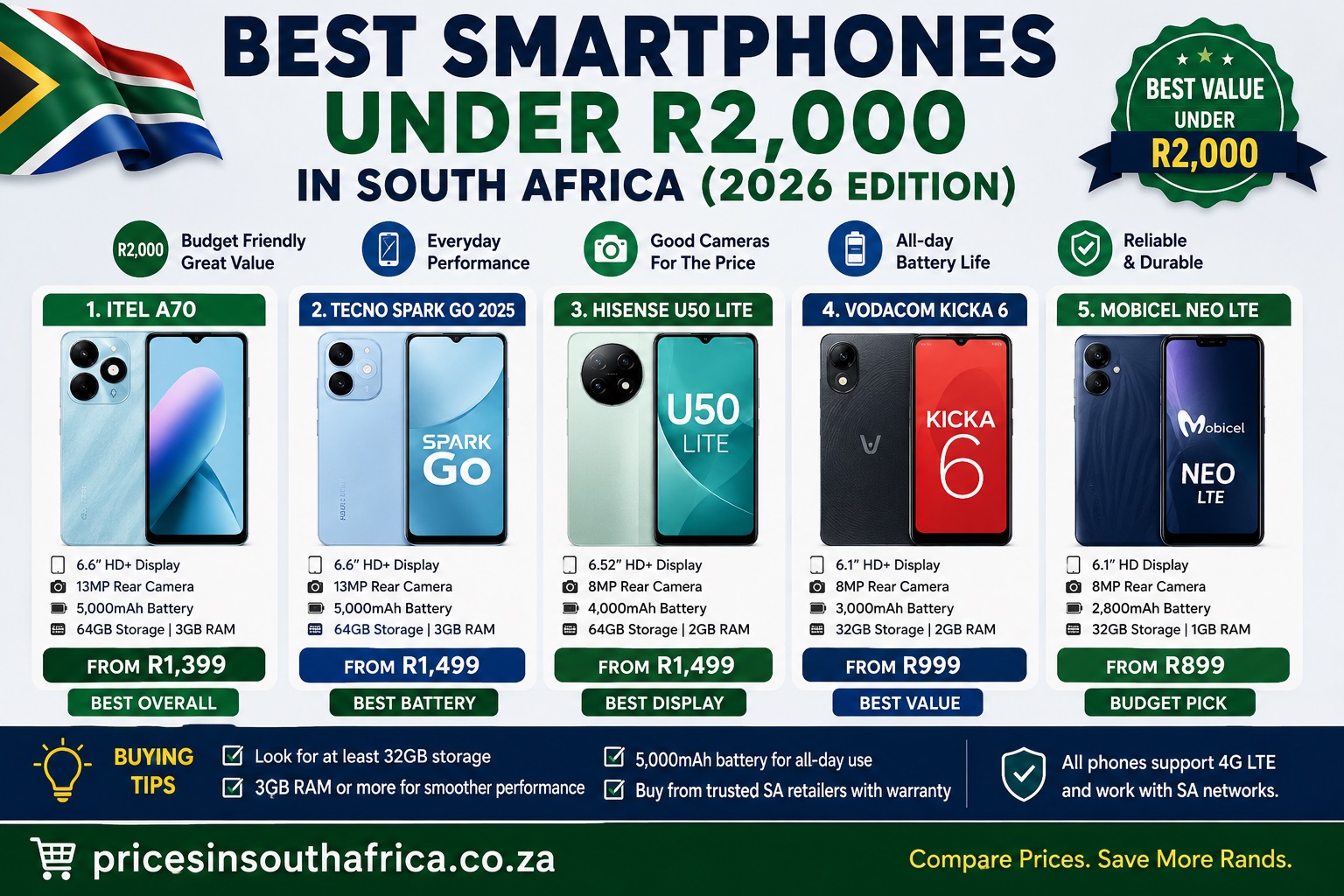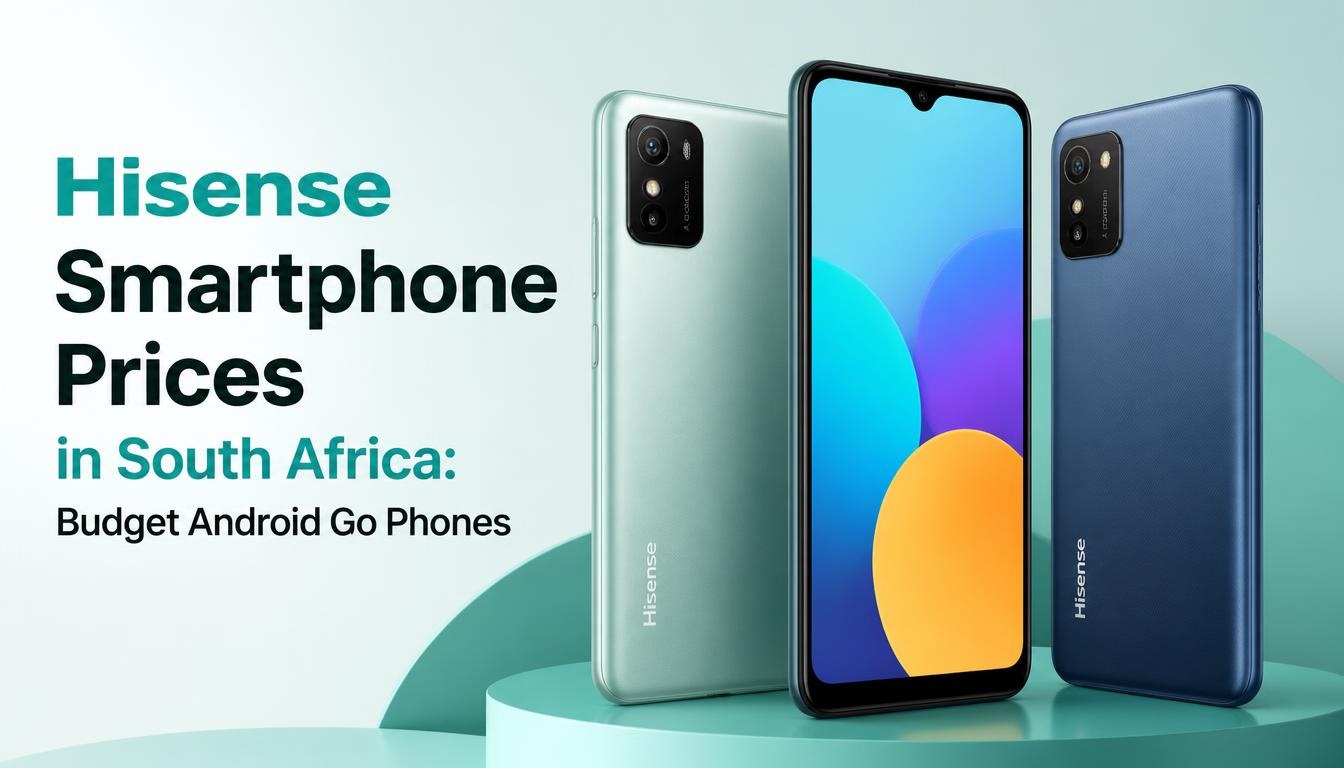
ZAR Price Bracket: R399 – R1,599 (VAT incl.)Top Recommendation: Hisense E32 Lite / E35 | Best Budget Pick: Hisense U607 / U963Buyer Warning: Watch out for network-locked units at spaza counters that lock both SIM slots to a single carrier, and avoid 8GB models unless you plan to run only basic calls and WhatsApp.
Surviving the South African retail grind means making every single Rand stretch as far as possible. With fuel hikes, municipal tariff jumps, and food inflation squeezing household budgets across urban townships and rural villages, dropping R5,000—or even R3,000—on a smartphone simply isn’t realistic for millions of South Africans. Enter the ultra-budget entry tier: Android Go smartphones by Hisense.
Walk into any PEP Cell, Ackermans, Shoprite, or local spaza store from Soweto to Bushbuckridge, and you will see Hisense budget smartphones dominating the glass counters. They promise full Android functionality, WhatsApp, banking apps, and 4G connectivity for less than the price of a weekly grocery run. But behind those shiny promo stickers lies a fine line between a genuine economic bargain and a frustrating hardware bottleneck.
As independent retail price analysts tracking the South African tech landscape, we took these entry-level Android Go units into the field to determine whether they survive real-world South African conditions—or leave you stranded with app crashes and full storage warnings.
Retail Price Comparison: Popular Models in ZAR
Prices vary widely depending on whether you purchase cash at a retail chain, buy online via Takealot, or pick up an “Any Network” unbranded variant. The table below breaks down current market values across South Africa.
| Model | Average Retail Price (ZAR) | Primary Retail Outlets | Key Specifications | Storage & RAM | Local Value Rating |
| Hisense U607 | R399 – R499 | PEP Cell, Ackermans | 5.0″ Screen, 4G, 3000mAh | 8GB ROM / 1GB RAM | 3.0 / 5 (Emergency/Basic) |
| Hisense U963 | R599 – R699 | Ackermans, JK Phones, PEP | 5.0″ Display, 5MP Rear Cam, 2000mAh | 8GB ROM / 1GB RAM | 3.5 / 5 (Strictly WhatsApp) |
| Hisense U54 | R749 – R799 | PEP, Vodacom Stores, Edgars | 5.0″ Display, Dual SIM, 4G | 32GB ROM / 1GB RAM | 4.0 / 5 (Solid Starter) |
| Hisense E35 | R899 – R999 | PEP, Shoprite, Takealot | 6.0″ Display, Dual SIM, 3000mAh | 64GB ROM / 2GB RAM | 4.5 / 5 (Best Overall Value) |
| Hisense E32 Lite | R999 – R1,299 | Takealot, LEGiT, Edgars | 6.52″ HD+ Screen, 4550mAh, 8MP Cam | 16GB ROM / 1GB RAM | 3.8 / 5 (Great Battery) |
| Hisense E70 Pro | R1,499 – R1,699 | Takealot, Makro, PEP Cell | 6.5″ Display, 13MP Cam, 5000mAh | 64GB ROM / 4GB RAM | 4.7 / 5 (Mid-Tier Champion) |
Note: All prices include 15% South African VAT. Prices may fluctuate based on store promotions, network lock agreements, and lay-by offerings.
Android Go Ecosystem: Trade-Offs & Durability
Android Go Edition is designed specifically for lower-tier hardware, operating with slimmed-down native system apps (like Google Go, YouTube Go, and Gallery Go) to maximize processor speeds on 1GB or 2GB RAM devices. However, hardware limitations mean you must evaluate trade-offs carefully before spending your money.
The Positives
-
Incredible Price Accessibility: Starting under R500, these devices provide lower-income households, scholars, and rural workers access to core digital services like online banking (Capitec, TymeBank), mobile communications (WhatsApp), and government services (Sassa status checks).
-
FM Radio Without Data: Unlike premium devices that have discarded analog radio receiver chips, Hisense budget units retain built-in FM radios that function offline with standard wired earphones. This keeps you connected to local radio broadcasts without wasting mobile data.
-
Resilient Plastic Builds: High-end glass-back phones shatter when dropped on gravel or concrete. Hisense budget models feature flexible, textured plastic casings that absorb impact during everyday handling.
-
Removable Batteries on Entry Models: Devices like the Hisense U963 feature easily removable back covers and swappable batteries. If a battery degrades after years of heavy use, replacing it costs a fraction of a new device without requiring professional repair tools.
The Downsides
-
Severe Storage Bottlenecks (8GB Models): Android Go uses roughly 4.5GB to 5.5GB of internal storage for system files. On an 8GB model (such as the U607 or U963), you are left with less than 2.5GB of usable space. After installing WhatsApp and a banking app, the phone will quickly prompt you with “Storage Almost Full” warnings unless a MicroSD card is inserted.
-
Sluggish Multi-Tasking: Models equipped with 1GB of RAM struggle when running multiple background services simultaneously. Switching between a browser tab and WhatsApp often forces the phone to reload the app from scratch.
-
Basic Low-Light Camera Performance: While camera modules (ranging from 5MP to 8MP) perform adequately in direct sunlight, nighttime or low-light photos display heavy visual noise and soft detail.
Retail Sales Windows & Loyalty Discounts
Never pay full sticker price for an entry-level Android phone if you can avoid it. South African cellular retailers operate on aggressive sales rotations:
Insider Savings Window:
Real-World South African Reality Test
To truly assess these devices, a phone must be tested under local living and environmental conditions across South Africa.
Local Conditions Evaluation
-
Load-Shedding & Network Resilience: 4550mAh-5000mAh models survive long power outages reliably. Smaller 2000mAh units drop battery quickly when searching for weak signal during local tower outages.
-
Dual-SIM & Coverage Strategy: Use Vodacom or MTN in SIM slot 1 for rural coverage, and Telkom or Cell C in SIM slot 2 for cheaper mobile data. Watch out for network-locked units that restrict SIM slot freedom.
-
Heat & Dust Stamina: Plastic shells handle direct sunlight exposure without cracking, while sealed port covers help prevent dust buildup in rural areas.
1. Power Outages & Battery Endurance
When power outages shut down local neighborhood towers, cellular radios work double-time searching for distant signals, draining battery life quickly. Models like the Hisense E32 Lite (4550mAh) and E70 Pro (5000mAh) comfortably survive extended blackouts while keeping hotspot routing active. Smaller 2000mAh units (like the U963) drop charge much faster during signal loss and require a budget power bank as backup.
2. Dual SIM Savings & Network Locking
Most Hisense units sold in SA feature Dual SIM slots. The optimal strategy for budget-conscious users is running Vodacom or MTN in SIM 1 for reliable voice coverage and nationwide connectivity, while placing a Telkom, Rain, or Cell C data SIM in SIM 2 for cheaper data packages.
Crucial Warning: If you buy a heavily subsidized unit from a carrier-branded counter (e.g., a network-locked box at PEP), SIM 1 may be locked strictly to that carrier for the first 12 months. Always check the packaging for the “Any Network” badge if you plan to switch providers freely.
3. Operating Temperature & Outdoor Resilience
Whether you’re working outdoors in northern Limpopo heat or commuting on crowded taxis across the Reef, Hisense devices manage heat distribution reasonably well. Because their plastic backings don’t trap heat the way glass and metal chassis do, thermal throttling remains minimal during simple daily tasks.
Consumer Rights & Repair Policies in South Africa
-
Consumer Protection Act (CPA) Coverage: Under Section 56 of the South African Consumer Protection Act, all new smartphones sold by authorized local retailers come with an implied 6-month statutory warranty against manufacturing defects. If your Hisense phone suffers an unprovoked motherboard failure or screen glitch within 6 months of purchase, you have the legal right to demand a repair, replacement, or full cash refund from the retailer—not just a repair attempt.
-
Standard Hisense Manufacturer Warranty: Hisense South Africa backs its smartphone lineup with a standard 24-month local warranty. Keep your original store till slip or tax invoice from PEP, Shoprite, or Takealot safely stored or digitally scanned to claim warranty support.
-
Local Repairs & Accessories: Replacement screens, protective gel covers, and charging cables for Hisense phones are widely available at local repair shops and street markets across South Africa at low costs.
Community Discussion
Have you recently picked up a Hisense Android Go phone at your local PEP, Ackermans, or Shoprite? What prices or stock availability are you seeing in your area? Drop your real-world user experiences, battery performance updates, or local store deal spots in the comments below!
Disclaimer: Smartphone prices, mobile network promotions, and retail stock availability fluctuate regularly across South African retailers. Figures presented in this guide reflect independent local market tracking and published store pricing at the time of publication.

Joseph Mathebula is a consumer tech analyst and market researcher at Prices in South Africa. He specializes in tracking smartphone prices and consumer electronics, helping everyday shoppers navigate the market to secure the best value.