SA Solar Cable Price Trap: Is 4mm, 6mm, or 10mm Wiring Worth It?
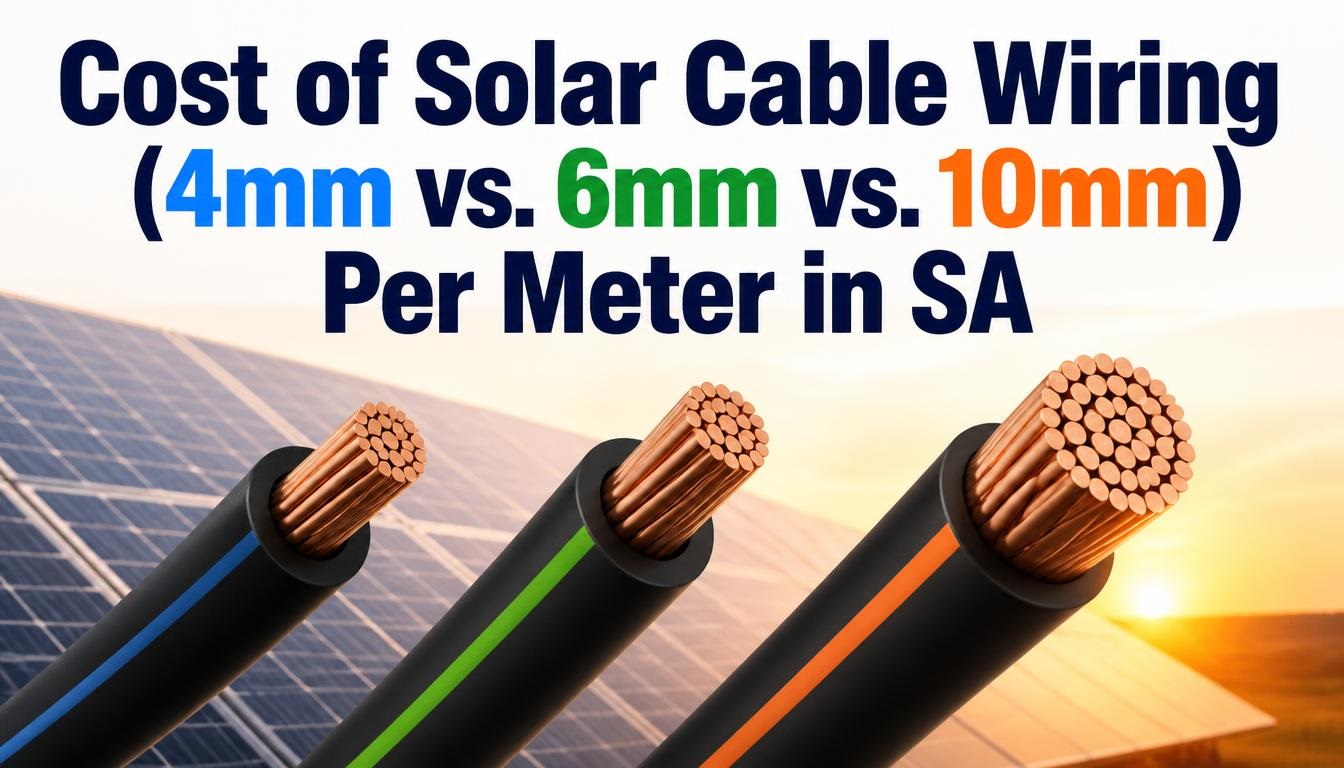
Installing solar on your roof to escape load-shedding is a massive investment, but skimping on your DC solar wiring is an expensive trap. A surprising number of South African installers use undersized 4mm wire on long rooftop runs to shave a few hundred Rand off their quote, causing high voltage drops, wasted panel output, and severe heat buildup during peak summer sun. Choosing between 4mm, 6mm, and 10mm cross-linked polyethylene (XLPE) double-insulated solar cables comes down to string voltage, run length, and total amperage—not just picking the cheapest roll on the shelf.
Solar Cable ZAR Quick-Answer Guide
Current South African Solar Cable Pricing Overview
Solar cables are sold either per meter or in 100m, 250m, and 500m rolls. Buying per meter gives flexibility for small add-ons, but contractor bulk rolls dramatically lower the unit cost. Below is a true market comparison of prices across major SA distributors and online electrical wholesalers.
| Cable Gauge | Average Price Per Meter (Inc. VAT) | 100m Roll Range | Max Continuous Current Rating | Direct Retailer Link |
| 4mm Twin/Single Core | R12.50 – R18.00 | R1,150 – R1,600 | ~55 Amps | Check Price on Takealot |
| 6mm Twin/Single Core | R18.50 – R24.00 | R1,650 – R2,150 | ~70 Amps | View Deals at Builders |
| 10mm Twin/Single Core | R34.00 – R42.00 | R3,100 – R3,900 | ~98 Amps | Order Price at Makro |
Note: Prices reflect tinned copper PV cables meeting EN50618 / SANS standards. Red (positive) and Black (negative) are priced identically per meter.
Sizing Breakdown: 4mm vs 6mm vs 10mm Solar Cable
4mm Solar Cable: Best for Short Runs and Micro-Arrays
-
Ideal Use: Short runs (under 15 meters total distance) with high-voltage string inverters (e.g., 300V–500V DC strings).
-
The Reality: 4mm cable carries up to 55A safely, but resistance adds up fast. On a low-voltage array (like 48V micro-inverters or parallel panel arrangements), running 20 meters of 4mm wire can burn off 3% to 5% of your total solar yield straight into heat loss.
-
Cost Factor: Cheap up-front (R12.50 – R18.00/m), but bad efficiency if overextended.
6mm Solar Cable: The Gold Standard for SA Homes
-
Ideal Use: Mid to long runs (15 to 35 meters) for standard 5kW and 8kW residential inverter setups (Sunsynk, Deye, Luxpower, Growatt).
-
The Reality: 6mm cable is the benchmark choice for reputable SA installers. It offers significantly lower internal resistance, handling up to 70A with under 1% voltage drop over moderate distances.
-
Cost Factor: Moderate (R18.50 – R24.00/m). The price jump over 4mm pays for itself within two years in recovered solar generation.
10mm Solar Cable: High-Amperage and Long-Distance Monster
-
Ideal Use: Heavy-duty commercial systems, 12kW+ high-amperage parallel arrays, or roof-to-inverter runs exceeding 40 meters.
-
The Reality: 10mm cable is stiff, harder to pull through conduit, and costs significantly more per meter (R34.00 – R42.00/m). However, if your inverter sits in a garage 50 meters away from a double-storey roof array, 10mm is mandatory to prevent massive efficiency losses and dangerous cable heating.
SA Environmental Stress-Testing: Harsh Sun and Load-Shedding Cycles
Solar infrastructure in South Africa faces extreme operational conditions compared to European or North American installations:
-
High UV Index: The Highveld and Karoo regions experience intense solar radiation. Standard PVC electrical flex will crack, degrade, and expose bare copper within two years. Always demand cross-linked polyolefin (XLPE) outer jackets rated for 25+ years of direct UV exposure.
-
Thermal Spikes: Rooftops in Gauteng or the Free State reach ambient temperatures over 50°C under tin sheet roofs. Cable current ratings drop as heat rises (thermal derating). A 6mm cable rated for 70A at 25°C drops to roughly 50A effective capacity at peak midday heat—making undersized 4mm cable a genuine fire risk under sustained full-power generation.
-
Continuous High-Amp Cycles: During load-shedding, your solar system runs flat out to top up batteries before the next power outage grid slot drops. This causes sustained, maximum-amp loads on your DC wiring for hours on end, testing terminal connections and insulation integrity.
SA Retail Loyalty & Smart Buying Hacks
-
eBucks & Discovery Miles: Retailers like Takealot – View Deals and Makro – Check Prices allow you to pay using eBucks or Discovery Miles. Stocking up on full 100m rolls using loyalty rewards can effectively lower your out-of-pocket installation cost to zero.
-
PayFlex / PayJustNow: If you are buying your own installation kit bit-by-bit, several online electrical supply shops accept 4-instalment, interest-free payment solutions like PayFlex and PayJustNow.
-
Delivery Fees & Weight: A 100m coil of 6mm cable weighs around 9–10 kg. Keep courier costs in mind when ordering online. Using Takealot Pickup Points or choosing click-and-collect at Builders – View Offers avoids heavy-item delivery surcharges.
-
Payday Bulk Sales: Wholesalers run steep promotional discounts during the last week of the month and Black Friday. If your installer lets you supply your own materials, buying 100m bulk reels during sales cycles saves up to 30% over per-meter pricing.
Local Consumer Protections and Warranty Terms
Under the South African Consumer Protection Act (CPA), electrical equipment supplied for residential installations carries an implied 6-month warranty against manufacturing defects. However, solar cables also carry crucial compliance obligations:
-
SANS 10142-1 Compliance: To get a valid Certificate of Compliance (CoC) for your solar system, your installer must use cables certified to EN 50618 / IEC 62930 / SANS specifications. Using unrated or general-purpose wire will fail the electrical inspection and invalidate your home insurance cover in the event of a fire.
-
Tinned Copper Requirement: Cheap knock-off cables use plain bare copper or copper-clad aluminium (CCA). True PV solar cable uses tinned multi-stranded copper. Tinning prevents oxidation at connection points, especially in humid coastal regions like KwaZulu-Natal and the Western Cape.
Local FAQs: Solar Cable Wiring in SA
Can I use standard GP house wire inside conduit for my solar panels?
No. GP (General Purpose) building wire is designed for AC indoor circuits, not high-voltage DC current. It lacks UV stabilization, lacks double insulation, and will violate SANS compliance rules—invalidating your home insurance and CoC inspection.
How do I know if I need 4mm or 6mm solar cable?
If your solar string run from the roof panels to the inverter is under 15 meters and runs at a high voltage (above 200V DC), 4mm is sufficient. If the run is between 15 and 35 meters or carries high current (over 18A), you should upgrade to 6mm cable to keep energy losses under 1%.
Is red and black solar cable actually different on the inside?
No. The internal tinned copper conductor and insulation specs are identical. The red outer jacket denotes positive (+) and black denotes negative (-) to make installation polarity obvious and prevent catastrophic short-circuiting at the inverter.
SA Solar Community Discussion
What cable gauge did your installer use for your inverter setup, and what prices were you quoted per meter in your region? Have you noticed voltage drop issues on longer roof runs? Share your store finds, installer quotes, and regional stock updates in the comments below!
Disclaimer: Prices fluctuate and reflect independent market research at the time of publication. We may earn a small affiliate commission through retailer links at no extra cost to you.

Joseph Mathebula is a consumer analyst and market researcher at Prices in South Africa. He specializes in tracking local service costs, retail pricing, and travel budgets, helping everyday shoppers navigate the market to secure the best value.