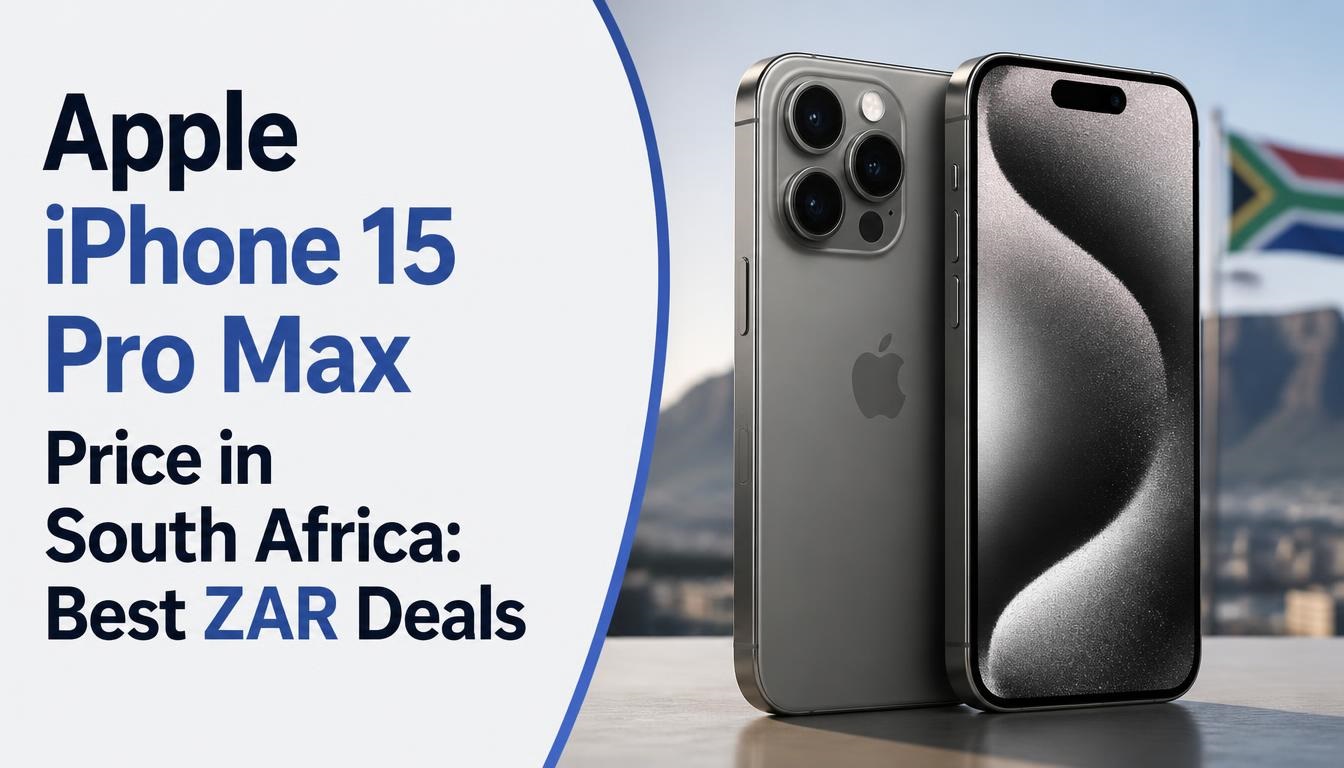
Buying an iPhone 15 Pro Max in South Africa in 2026 feels like navigating a minefield. With the launch of newer iterations, the market is flooded with grey imports, refurbished units disguised as “new,” and aggressive carrier contracts that hide the true cost of ownership behind 36-month interest rates.
After tracking retail fluctuations across Takealot, iStore, Incredible, and Makro over the last six months, we have identified a clear trend: the “Pro Max” premium is shrinking, but retailer markups remain volatile. Whether you are hunting for a contract upgrade or a cash-buy steal, this guide exposes exactly what you should pay—and which “deals” are actually financial traps.
ZAR Pricing at a Glance
If you are looking for the current market equilibrium for a brand-new, local-stock iPhone 15 Pro Max, use these ranges as your benchmark. Prices include 15% VAT.
| Storage Capacity | Average New Price (Cash) | Recommended “Good” Deal |
| 256GB | R22,499 – R24,999 | Under R21,500 |
| 512GB | R26,999 – R29,500 | Under R25,500 |
| 1TB | R31,999 – R34,999 | Under R29,999 |
Quick Takeaway:
-
Best Value: The 256GB model is the sweet spot for 90% of SA users.
-
Avoid: Paying over R25,000 for a base model; it’s a retailer markup trap.
-
Budget Hack: Look for “Open Box” or “Certified Refurbished” units at iStore to save R3,000–R5,000 instantly.
The Retailer Landscape: Where to Buy (and Where to Run)
Not all stock in South Africa is created equal. Understanding the difference between Core Group (iStore/Official) stock and Grey Imports is critical for your warranty peace of mind.
Purchasing from an iStore is the “gold standard” for support. You get full local warranty backing, no questions asked during trade-ins, and eligibility for iCare Plus.
-
Pros: Guaranteed genuine local stock, top-tier trade-in values.
-
Cons: Highest upfront cash prices; rarely discounts current models aggressively.
The Aggregator Market (Takealot & Incredible)
Takealot is the wild west of iPhone pricing. You will find “Sold by Takealot” units (official) sitting next to third-party Marketplace sellers.
-
Warning: Always check the “Sold by” tag. If it’s a third-party seller, ensure they offer a local warranty, not an international one. International warranties are often non-functional in South Africa.
The Contract Trap (Vodacom, MTN, Telkom)
Telcos lure you with low monthly premiums. However, a 36-month contract for an iPhone 15 Pro Max often results in a total cost of ownership 30% higher than a cash purchase.
-
The Math: If a contract costs R1,299 x 36, you are paying R46,764. That is an effective interest rate of over 20% on the device value.
The Pro-User Buying Workflow: How to Secure the Best Price
Follow this procedural logic to ensure you aren’t overpaying for 2023 flagship tech in 2026.
-
Check the Serial Number: Before handing over cash at a non-authorized dealer, ask for the box serial number. Run it through Apple’s Official Check Coverage to ensure it hasn’t been activated yet.
-
Prioritize “Local Stock”: Ensure the model number is A3106. This is the international/regional version certified for all South African 4G/5G bands. Avoid US-only models (A2849) as they lack a physical SIM tray.
-
Use Payment Flexibility: If you must finance, use platforms like PayFlex or Mobicred on sites like Takealot or Bash. They allow for interest-free installments over 4–6 weeks, which is far cheaper than a 36-month network contract.
-
Leverage Trade-Ins: The iStore Trade-in program is currently the most aggressive way to lower your entry price. Trading in an iPhone 13 Pro Max can drop your upgrade cost by as much as R8,000–R10,000.
Pro/Con Feature Grid: Is It Still Worth It?
The A17 Pro chip remains a powerhouse, outperforming many 2026 mid-range devices.
| Feature | The Pro Advantage | The South African Reality |
| Titanium Build | Lighter, premium feel. | Handles heat better during SA’s summer loads. |
| USB-C Port | Faster data transfer. | Finally ditching the Lightning cable clutter. |
| 5x Optical Zoom | Pro-level photography. | Excellent for safari/wildlife shots. |
| Battery Life | 16+ hours active use. | Essential for surviving stage 4 load shedding. |
Real-World Deal Spotlight: Timing Your Purchase
Retail Analyst Insight: Prices for the iPhone 15 series hit their lowest point roughly 3 weeks after the annual September Apple Event. If you are reading this between August and September, wait. Retailers will aggressively clear 15 Pro Max stock to make shelf space for the newest generation. Expect “flash sales” on Takealot dropping the 256GB model below R20,000 for the first time.
Targeted Local FAQs
Does an international iPhone warranty work in South Africa?
Generally, no. While Apple has a global warranty policy, local service providers like Digicor or iStore often refuse repairs on grey imports unless you can provide a global purchase receipt, and even then, it is subject to local parts availability. Stick to local stock.
How long does a screen repair take at a local iStore?
If you have iCare Plus, same-day or next-day turnaround is standard. Without it, you are looking at 5–7 working days for official screen replacement, costing between R6,500 and R9,000 depending on the damage severity.
Is it safe to buy a “Demo” unit?
Buying a demo unit from Incredible or iStore is a fantastic way to save 20%. These units are usually pristine, come with a full warranty, and have been tested. Just ensure you check the battery health percentage—anything above 95% is a “buy.”
Have you spotted a sub-R20,000 deal on the iPhone 15 Pro Max recently, or did you get burned by a grey import seller? Use the comment section below to name the retailer and the price you paid. Help your fellow South Africans avoid the “mark-up traps” and find the legitimate liquidators.
Disclaimer: Pricing data provided is an independent evaluation based on current retail market trends in South Africa as of August 2026. Prices fluctuate daily based on exchange rates and stock availability. Always verify the final checkout price on the retailer’s official website.

Joseph Mathebula is a consumer tech analyst and market researcher at Prices in South Africa. He specializes in tracking smartphone prices and consumer electronics, helping everyday shoppers navigate the market to secure the best value.