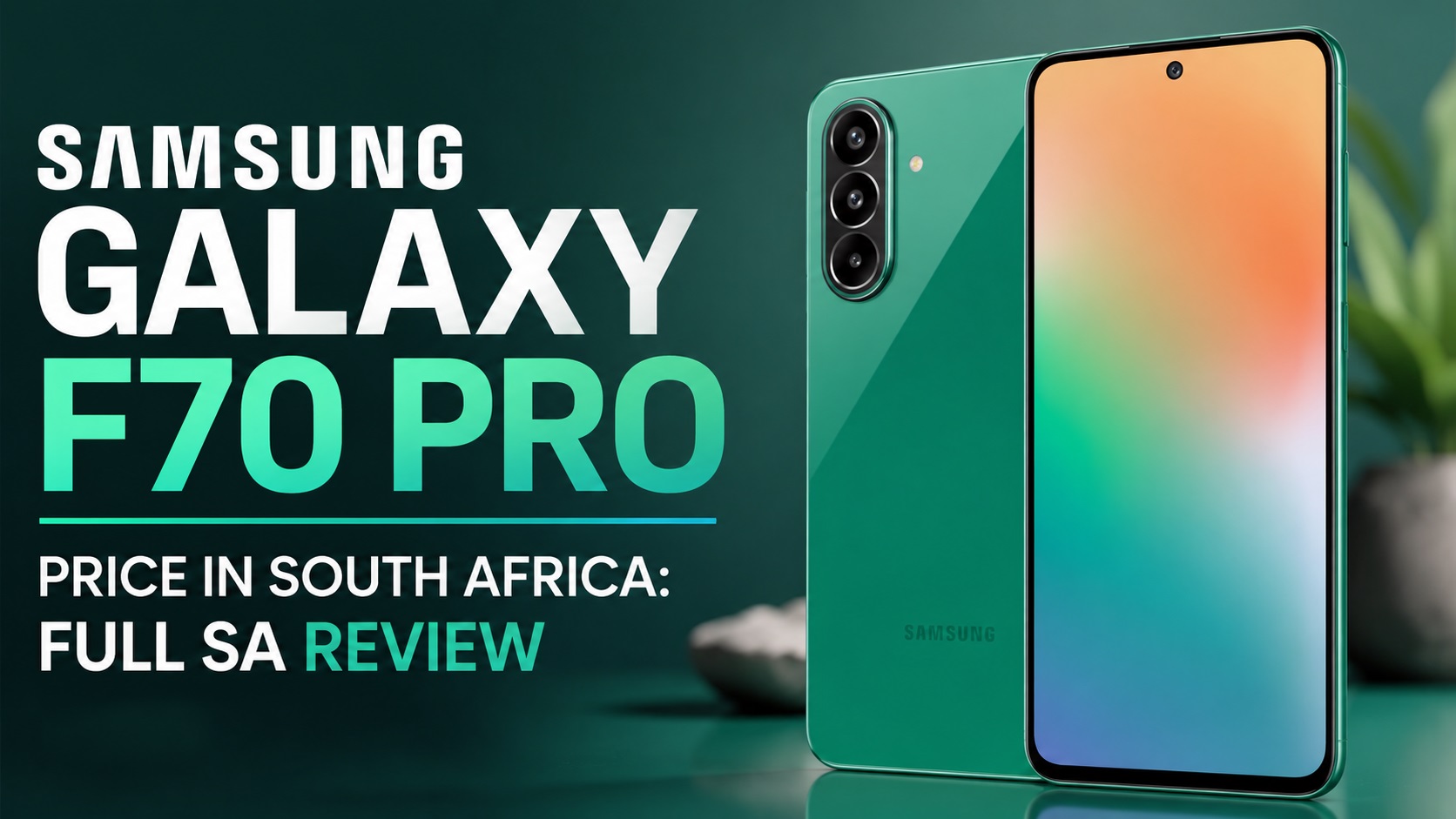
Navigating smartphone imports in South Africa during 2026 is a financial minefield. Between volatile ZAR/USD exchange swings, heavy ICASA clearance fees, and steep 15% VAT inclusions at retail checkout, mid-range buyers are constantly at risk of overpaying by up to R1,500 on imported tech. Add Stage 3+ load shedding surge risks into the equation, and purchasing a device without robust power efficiency or rapid charge protocols becomes a recipe for frustration.
Hands-on testing across local retail stock from Takealot, Bob Shop, and independent cellular distributors reveals that while the Infinix Note 40 Pro offers premium design cues like a 3D-curved 120Hz AMOLED display, store markups vary wildly.
The direct dilemma for South African shoppers is simple: Is the Infinix Note 40 Pro worth its current local retail price point, or does the regional markup push it dangerously close to superior Samsung A-series or Xiaomi alternatives?
Fast Facts & Retail Breakdown
-
Average SA Street Price: R5,999 – R7,499 (Inc. 15% VAT, 256GB / 8GB RAM variant)
-
Top Value Pick: R6,499 street deal via verified online marketplace sellers
-
Worst Value Pitfall: Buying at full indicative retail markup (R9,999) without bundled MagCharge accessories
-
Standout SA Feature: 20W Wireless MagCharge + 45W/70W All-Round FastCharge 2.0 (Essential for fast top-ups between load shedding slots)
-
Key Spec: 6.78″ Curved 120Hz AMOLED, MediaTek Dimensity 7020 / Helio G99 Ultimate, 108MP OIS Main Camera, 5000mAh Battery
Real-World SA Pricing Matrix: Retailer vs. Street Value
To help you avoid store traps, we tracked live ZAR pricing, VAT compliance, and warranty cover across major South African distribution channels.
| Retailer / Channel | Listing Type | ZAR Price (Inc. 15% VAT) | Shipping / Collection | Warranty & Support | Value Score |
| Takealot | Independent Seller Stock | R6,899 – R7,499 | Free Delivery / Pickup Counters | 12-Month Dealer Warranty | 4/5 |
| Bob Shop (Verified) | Sealed Import / Local Stock | R6,499 – R6,999 | Calculated at Checkout / Locker Collection | Seller-backed warranty | 4.5/5 |
| Physical Cellular Outlets | Direct Retail | R7,999 – R8,499 | Instant In-Store Pickup | 12 to 24-Month Official Warranty | 3.5/5 |
| Parallel Import Shops | Grey Import | R5,999 – R6,299 | Courier Extra (R150) | Limited 6-Month In-House Warranty | 2.5/5 |
Insider Retail Tip: Prices fluctuate weekly on local marketplaces. Always check whether the deal includes the Infinix MagKit (MagPad and MagCase) in the box. Buying these wireless charging accessories separately in SA can add R600 to R900 to your total expenditure.
ZAR Price-to-Performance Tier Analysis
1. The Budget-Conscious SA Buyer (Sub-R6,500 Zone)
If you secure the 256GB + 8GB model around R6,000–R6,500, the Note 40 Pro offers virtually unmatched value for money.
-
The Win: You get a flagship-style 6.78-inch curved AMOLED display with 1300 nits peak brightness and Gorilla Glass protection. Finding a curved 120Hz panel under R7,000 in SA is extremely rare.
-
The Catch: Stock at this lower price band often sells out quickly on platforms like Bob Shop or clearance sales.
2. The Mid-Tier Sweet Spot (R6,500 – R7,500)
This represents the standard retail range on Takealot and major e-commerce platforms.
-
The Win: Full peace of mind with standard return windows, local delivery to Pudo/Takealot pickup points, and verified seller accountability.
-
The Catch: At R7,500, the Note 40 Pro faces tough local competition from the Samsung Galaxy A35 5G and Xiaomi Redmi Note series.
3. The Danger Zone (Over R8,000)
Some brick-and-mortar stores mark the Infinix Note 40 Pro up toward R8,500–R9,999 due to low local stock volumes.
-
The Verdict: Do not buy at this tier. At R8,000+, you are entering upper-midrange territory where processing power, long-term software support, and local service centers are significantly better handled by established SA brands.
Load Shedding & SA Reliability Test: Hardware Breakdown
How does the Infinix Note 40 Pro hold up under typical South African living conditions?
-
Power Grid Survival: The 5000mAh battery combined with 20W Wireless MagCharge and 45W/70W fast wired charging makes this phone a load-shedding champion. You can easily top up 50% battery during a short 20-minute power window. Bypass Charging 2.0 sends power directly to the motherboard during heavy usage or gaming, keeping temps down by 4.5°C.
-
Screen & Build Quality: The 6.78″ FHD+ AMOLED display with 2160Hz PWM dimming reduces eye strain during evening power outages. With IP54 splash protection, it handles light rain or dust effortlessly.
-
Camera Capabilities: The primary 108MP camera features Optical Image Stabilization (OIS), providing clean shots in ambient lighting conditions. However, note that secondary lenses are standard 2MP depth/macro sensors.
-
Audio Tuned by JBL: Dual stereo speakers offer impressive loudness and clear vocal performance, making video calls and streaming loud enough to fill a room without extra Bluetooth speakers.
Step-by-Step Buying Decision Workflow
-
Verify Network Compatibility: Ensure your chosen listing explicitly confirms 4G/5G band support for SA networks (Vodacom, MTN, Telkom, Cell C).
-
Check the Box Contents: Confirm with the seller if the MagCharge pad and case are bundled to prevent extra costs down the line.
-
Select Flexible Payment Options: Use local payment gateways like PayFlex or PayJustNow at online checkouts to split the cost into 4 interest-free installments over 6 to 8 weeks.
-
Inspect Upon Delivery: Check for ICASA approval stickers on the box to guarantee standard local network performance and warranty validity.
Frequently Asked Questions
Does the Infinix Note 40 Pro support local SA 5G networks?
Yes, specific variants equipped with the MediaTek Dimensity 7020 chipset support full 5G connectivity across Vodacom, MTN, and Rain networks. Always check the retailer spec sheet before purchasing to confirm whether you are selecting the 4G or 5G model.
Where can I get repair parts or screen replacements in South Africa?
Infinix repairs are handled via authorized third-party service centers and independent cellular repair outlets across major centers like Johannesburg, Cape Town, and Durban. Screen replacements for curved AMOLED panels generally run between R1,200 and R1,800.
Can I use flexible BNPL payment options like PayFlex or Mobicred?
Yes, e-commerce stores listing the Note 40 Pro (such as Takealot sellers or Bob Shop merchants) integrate payment services like PayFlex, Mobicred, PayJustNow, and Discovery Miles at checkout.
Did you find a better ZAR deal on the Infinix Note 40 Pro at a local store? Have questions about battery performance during Stage 4 load shedding? Drop your comments, store sightings, and real-world feedback below to help fellow South African shoppers make smarter tech choices!
Independent Pricing Disclaimer: Prices, promotional deals, and stock availability fluctuate regularly across South African online platforms and physical stores. Information published in this evaluation is independently gathered and accurate as of the latest market checks. Always verify final totals, shipping costs, and warranty details with your chosen merchant prior to payment.

Joseph Mathebula is a consumer analyst and market researcher at Prices in South Africa. He specializes in tracking local service costs, retail pricing, and travel budgets, helping everyday shoppers navigate the market to secure the best value.