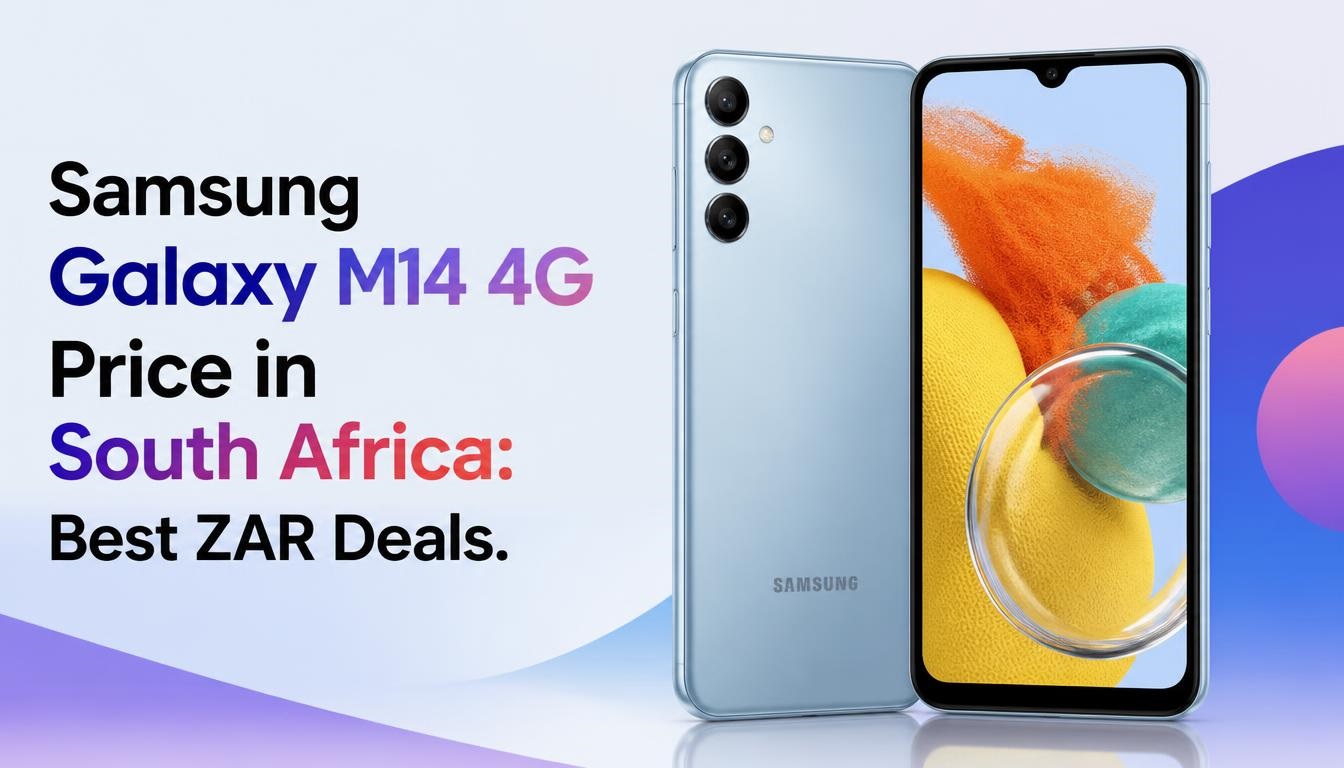
Shopping for a reliable smartphone on a tight budget in South Africa feels like navigating a minefield of overhyped specs and sneaky hidden costs. Between soaring inflation and fluctuating exchange rates, dropping several thousand Rand on a new phone requires careful thought. The Samsung Galaxy M14 4G sits right at the center of the budget entry-level conversation, promising long-lasting battery life, clean software support, and everyday dependability without breaking the bank.
Quick Market Summary: Expect to pay between R2,299 and R2,799 (15% VAT included) for the 64GB/128GB variants. Top pick for overall value; best budget alternative is the Galaxy A05. Buyer Warning: Watch out for grey imports online that lack Samsung South Africa’s 24-month local warranty.
Why the Galaxy M14 4G Is Catching Attention in Mzansi
With household budgets under continuous pressure, South African consumers are increasingly turning to practical 4G devices instead of paying a heavy premium for 5G coverage they might not even use daily. The Samsung Galaxy M14 4G hits a sweet spot by focusing on what actually matters for day-to-day survival: a massive 5,000mAh battery, a clear 6.7-inch FHD+ 90Hz display, and a capable 50MP main camera.
Unlike cheap white-label smartphones that flood local online marketplaces and breakdown within six months, Samsung’s M-series brings structured build quality, reliable local repair network access through Samsung Express Service centers, and regular security updates.
SA Retail Pricing Matrix & Where to Buy
When looking for the best ZAR deals, prices fluctuate across major brick-and-mortar stores and online retailers. Here is a breakdown of current market rates and buying conditions across South Africa.
| Retailer / Provider | Model Variant | Price (ZAR) | VAT Included | Payment Options | Warranty & Support | Value Rating |
| Takealot | 64GB / 4GB RAM | R2,299 | Yes (15%) | PayFlex, Mobicred, Direct EFT | 24-Month Official SA Warranty | 4.8 / 5 |
| Makro / Game | 128GB / 4GB RAM | R2,699 | Yes (15%) | Makro Credit, PayJustNow, Lay-by | 24-Month Official SA Warranty | 4.7 / 5 |
| Vodacom 4U | 64GB Prepaid Pack | R2,399 | Yes (15%) | Cash, Card, Vodacom Pay | 24-Month Network Warranty | 4.5 / 5 |
| Shoprite / Checkers | 64GB Prepaid | R2,249 | Yes (15%) | Cash, Xtra Savings Card Deals | 24-Month Official SA Warranty | 4.9 / 5 |
| Unverified Marketplace Sellers | 128GB (Import) | R1,999 | Varies | Instant EFT, Credit Card | 6-Month Store Warranty (Grey Import) | 2.5 / 5 |
Tip: Always confirm that the box carries the official Samsung South Africa ICASA sticker before finalizing payment, especially when buying through third-party marketplace sellers.
Value, Hardware Performance, and Daily Durability
Evaluating a budget smartphone means looking past fancy marketing specs to see how the phone holds up under heavy daily use.
What Makes It Worth Buying
-
5,000mAh Heavy-Duty Battery: Easily lasts up to two full days on a single charge under normal usage. It handles long commutes, WhatsApp voice notes, and streaming without forcing you to constantly hunt for a power bank.
-
Smooth 90Hz Display: The large 6.7-inch screen provides sharp visuals and smooth scrolling, making it great for watching videos, browsing news feeds, or reviewing documents on the go.
-
50MP Primary Camera: Captures sharp, vivid photos in daylight, suitable for family photos, social media updates, and scanning documents.
-
Expandable Storage: Comes with a dedicated microSD card slot supporting up to 1TB, letting you keep photos, offline music, and videos without running out of space.
-
Clean One UI Software: Powered by Samsung’s refined software interface, offering intuitive navigation, built-in security features, and fewer unwanted apps out of the box.
Trade-Offs to Keep in Mind
-
No Wall Adapter Included: The retail box only contains a Type-C to Type-C cable. You will need to buy a 15W or 25W charging brick separately if you don’t already have a compatible USB-C charger (adds roughly R200–R350 to your upfront cost).
-
Plastic Back & Frame: While durable against minor drops, the glossy plastic finish scratches easily. Investing in a protective case and screen guard immediately is strongly recommended.
-
Modest Low-Light Camera Performance: Photos taken indoors under low light or at night can look grainy or lose detail compared to higher-end series.
Local Savings, Rewards, and Deal Cycles
Insider Deal Spotlight: You can lower your out-of-pocket costs on the Galaxy M14 4G by leveraging local retailer loyalty programs and flexible pay-later plans.
SA Reality Test: Daily Performance Under Local Conditions
How does the Samsung Galaxy M14 4G cope with everyday South African life?
Load-Shedding & Battery Resilience
When the power goes out for hours at a time, having a phone with dependable battery retention is essential. With moderate use—including mobile data hotspotting, light social media navigation, and phone calls—the M14 4G consistently maintains high power efficiency. It safely handles multiple power-cut cycles on a single charge.
Network Reception & Dual-SIM Utility
Equipped with full support for local LTE band frequencies across Vodacom, MTN, Telkom, and Cell C, the device delivers solid signal reception in both urban centers and rural areas. The true Dual-SIM slot lets you keep one SIM for cheap data bundles and another for primary voice calls without sacrificing your microSD memory expansion slot.
Thermal Control & Build Toughness
During hot summer afternoons, the phone handles basic navigation and streaming without severe overheating. While it lacks an official IP water-resistance rating, its sturdy plastic unibody holds up well against everyday knocks and bumps when paired with a basic bumper cover.
Frequently Asked Questions
Does the Samsung Galaxy M14 4G come with a local South African warranty?
Yes, when purchased from authorized local retailers like Takealot, Makro, Game, Vodacom, or Shoprite, it includes a standard 24-month Samsung South Africa warranty. Keep your original proof of purchase to claim repair support at authorized service centers.
Can I buy the Galaxy M14 4G on lay-by or split payments?
Yes. Physical stores like Game, Makro, and Ackermans offer traditional 3-month lay-by options. Online shoppers can use buy-now-pay-later (BNPL) services like PayFlex or PayJustNow at checkout for interest-free payment splits.
How does the 4G version differ from the 5G version?
The 4G version uses a reliable octa-core processor focused on battery efficiency and everyday tasks, making it more affordable upfront. The 5G version costs significantly more and offers higher network speeds, but requires 5G coverage in your area to see the benefit.
Retail Community Check-In
Have you recently bought the Samsung Galaxy M14 4G at your local store or spotted a better ZAR deal online? Drop your local store location, prices, and personal user feedback in the comments below to help fellow South African shoppers make informed decisions!
Disclaimer: Prices, store stock, and promotional offers change frequently across retailers. Figures listed in this guide reflect independent market tracking at the time of publication.

Joseph Mathebula is a consumer analyst and market researcher at Prices in South Africa. He specializes in tracking local service costs, retail pricing, and travel budgets, helping everyday shoppers navigate the market to secure the best value.