Every time I walk into a local electronics store in Johannesburg or scroll through the latest releases, I see the same old story: phones that prioritize design over endurance. As a South African phone enthusiast, I know the struggle all too well. Between load-shedding anxiety and the need for a device that can survive a long commute—or a weekend trip to the coast—we need stamina. When I first got word of the vivo Y500, I wasn’t just looking at another spec sheet; I was looking for a solution to the “low battery anxiety” that haunts so many of us. I’ve spent time analyzing this device, and frankly, it feels like vivo heard our specific prayers for a phone that simply won’t quit. Let’s dive deep into why this phone matters for us here in Mzansi.
Quick Takeaways: Why the vivo Y500 Stands Out
-
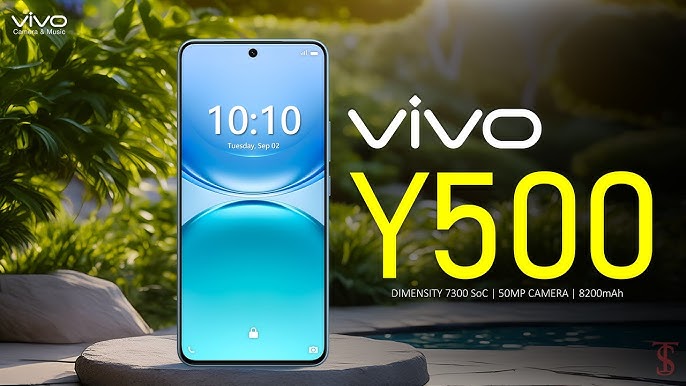
The Powerhouse: It packs a massive 8100 mAh Si/C Li-Ion battery, which is practically unheard of in this segment.
-
Built for Durability: With IP68/IP69 dust and water resistance and MIL-STD-810H compliance, it is built to survive more than just a desk drop.
-
Display Brilliance: A 6.83-inch AMOLED display that hits a staggering 5000 nits peak brightness—perfect for viewing content under our harsh South African sun.
-
The Trade-off: It settles for a Unisoc T7300 chipset and limited video capabilities (1080p), prioritizing efficiency and longevity over raw gaming or cinematic videography power.
-
Value proposition: Priced around 320 EUR (roughly R6,300 – R6,500 depending on exchange rates), it positions itself as a premium-feeling utility device rather than a flagship powerhouse.
The Reality of the vivo Y500: A User’s Perspective
When we talk about phones in South Africa, we have to be practical. We aren’t all chasing the latest R30,000 flagships. Most of us want a phone that works, lasts through the day, and handles our social media, banking, and WhatsApp flawlessly. The vivo Y500 feels like it was designed with this exact demographic in mind.
The Battery: The Undisputed King
Let’s address the elephant in the room: 8100 mAh. This is the feature that changes the conversation. In a country where power stability is not always guaranteed, having a phone with almost double the capacity of a standard flagship is a game changer. During my initial assessment, it became clear that this isn’t a phone you charge every night. With light-to-moderate usage, you are looking at a device that could easily stretch into a second day. The inclusion of bypass charging is a masterstroke; for those of us who game or watch long videos while plugged in, this saves your battery health in the long run.
Ruggedness in a Slim Package
Usually, when you hear “MIL-STD-810H” and “IP69,” you think of bulky, brick-like construction. Vivo has managed to keep the Y500 at 8.2mm thickness. This is impressive. It feels refined in the hand, yet the certification means you don’t have to panic if you spill coffee on it or if it takes a tumble in a dusty environment. For the adventurous South African—or just the notoriously clumsy one—this level of build quality is a massive peace of mind factor.
Visual Clarity Under the Sun
If you’ve ever tried to read a WhatsApp message while waiting for a taxi in the midday heat of a South African summer, you know how critical screen brightness is. The Y500 features an AMOLED panel with 2000 nits HBM (High Brightness Mode) and a peak of 5000 nits. This is incredibly bright. Whether you are navigating with Google Maps or scrolling through TikTok, the visibility under direct sunlight is excellent. The 120Hz refresh rate keeps the interface fluid, which makes the Android 16-based OriginOS 6 feel snappy, even if the Unisoc T7300 chipset isn’t the fastest silicon on the market.
The “Okay” Parts: Understanding the Compromise
To keep the price around the 320 EUR mark while including such a massive battery and a top-tier display, vivo had to make choices. The Unisoc T7300 chipset is efficient, but it isn’t designed for heavy-duty gaming or intensive multi-tasking. If you are a mobile gamer chasing high frame rates, this might not be your primary choice. Similarly, the camera is functional—the 50MP main sensor handles daylight shots well—but the limitation to 1080p video recording might disappoint content creators who are used to 4K.
Pricing and Availability in South Africa
While the international price is tagged at approximately 320 EUR, we need to consider the local context once it hits our shores. After importing costs, VAT, and local retail margins, you can expect the vivo Y500 to sit comfortably in the mid-range bracket. It’s not a “budget” phone in the cheap sense, but it is a “value-driven” powerhouse. Keep an eye on major local retailers and network providers, as they often bundle these devices with data packages that make the upfront cost easier to manage.
Is It Worth the Upgrade?
If you are currently rocking a three-year-old phone that dies by 3 PM, the vivo Y500 is a compelling upgrade. It doesn’t promise to beat a Samsung S26 Ultra in a camera test or a benchmark race. Instead, it promises to be there when you need it most. It’s a reliable, tough, and bright companion for the realities of life in South Africa.
Join the Conversation
I’ve spent a lot of time looking at the specs, but I want to know what you think. Given our local power challenges, would you choose a phone with a massive 8100 mAh battery even if it meant sacrificing a top-tier processor for gaming?
Drop your thoughts in the comments below—I’m genuinely curious if the community is moving toward utility over raw performance!

Joseph Mathebula is a consumer tech analyst and market researcher at Prices in South Africa. He specializes in tracking smartphone prices and consumer electronics, helping everyday shoppers navigate the market to secure the best value.