There is something undeniably quiet about the way the world feels when you aren’t fighting a notification-heavy screen every three minutes. As someone who spends his days deep in the weeds of digital entrepreneurship—monitoring web analytics, configuring job portals, and managing domain performance—I usually live in a world of constant digital noise. But lately, I’ve found myself looking at my smartphone and feeling… exhausted. Does that resonate with you?
That is exactly why the announcement of the Nokia 235 4G (2026) caught my eye. It isn’t trying to be a pocket-sized supercomputer. It isn’t asking for my biometrics, tracking my location history for an AI model, or begging me to switch between five different social media apps. In a South African market that is obsessed with the latest Huawei Pura or the newest OPPO foldables, there is a bold, nostalgic, and honestly practical argument for a device that just works—for calling, for basic connectivity, and for the sheer peace of mind that comes with a battery that doesn’t demand a charger before the sun sets. Let’s dive into why this “feature phone” might actually be the smartest tool in your pocket this year.
Quick Takeaways: Why the Nokia 235 4G (2026) Matters
-
Purpose-Driven Tech: This is not for doom-scrolling. It is a communication tool built for those who prioritize battery life, durability, and essential connectivity over app ecosystems.
-
Regional Suitability: With its 4G LTE capability, this device is future-proofed for South African networks, ensuring you stay connected even as older 2G/3G infrastructures face limitations.
-
The “Anti-Smartphone” Advantage: The removal of heavy operating systems and power-hungry apps translates to a device that is reliable, lightweight, and intentionally distraction-free.
-
Modern Touches: Despite its retro aesthetic, you get a USB Type-C port and Bluetooth 5.0, bridging the gap between old-school reliability and modern convenience.
-
Economic Choice: For those managing tight budgets or needing a secondary “work-only” phone to keep business and personal life separate, this represents a low-risk, high-value investment.
The Anatomy of a Reliable Companion
When we talk about price points in South Africa, we often get caught up in the race for the highest megapixels or the fastest processor. But let’s step back. Most of us, at some point during the work day, just need to make a clear call.
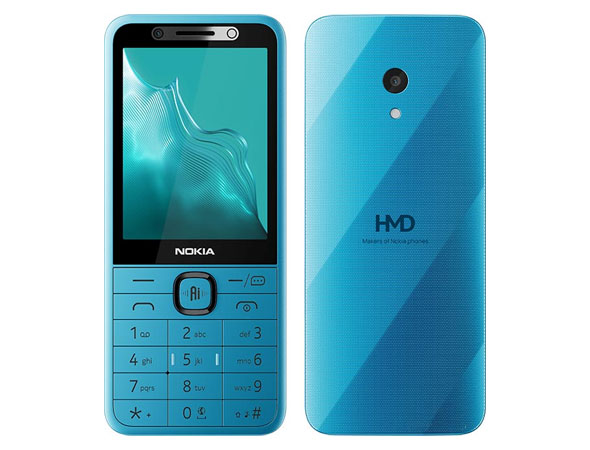
The Nokia 235 4G (2026) comes with a 1450 mAh battery. In a world where I am constantly checking the battery health of my own devices, the beauty of a removable battery like this cannot be overstated. When the battery eventually degrades after a few years, you don’t go to a repair shop to pay half the phone’s value for a screen-off battery replacement; you simply pop the back cover off, slot in a new one, and you are back to full capacity for the price of a takeout meal.
The dimensions—128.9 x 55.8 x 12.9 mm—mean this phone sits in the palm of your hand like a tool, not a slab. It weighs only 106 grams. If you work in industries like construction, logistics, or field services where your phone needs to be rugged, light, and reliable, this is the form factor that actually works. It doesn’t crack when you drop it on a concrete floor as easily as a glass-sandwich flagship does.
Connectivity Without the Overload
One of the most frequent technical questions I get—especially from those running small businesses or managing job vacancy boards—is about network compatibility. Will it work with our local providers?
With 4G bands including 1, 3, 5, 7, 8, 20, 28, 38, 39, 40, and 41, this device is well-equipped to handle the frequencies used by major South African networks. This is critical. We are seeing a steady migration toward LTE and 5G, and having a device that supports modern 4G bands means you won’t experience the dead zones that older, 2G-only feature phones are increasingly facing.
And let’s talk about that USB Type-C port. Nokia has done something right here. Finally, we are moving away from the proprietary charging cables that used to clutter our drawers. Now, you can use the same cable that charges your laptop or your power bank to keep this little powerhouse running. It’s a small detail, but for someone who values streamlined workflows, it’s a game-changer.
Why I’m Considering It for My Own Workflow
I operate multiple websites and deal with constant data flow. Sometimes, I find that my primary smartphone is a liability—it’s just too tempting to check emails, Slack, or web metrics when I should be focusing on a single task.
I see the Nokia 235 4G as a “focus device.” I can set it up with a SIM card purely for important calls from clients or family, leaving my main smartphone in another room or turned off. It allows for a level of mental compartmentalization that modern smartphones actively fight against.
Furthermore, the 2.8-inch TFT LCD display is perfectly legible for its intended purpose. It isn’t meant for streaming 4K video—it’s meant for reading a contact name, checking a text message, or taking a quick, functional photo with the 2 MP camera. The addition of a 3.5mm headphone jack and wireless FM radio is a massive win for those of us who still enjoy terrestrial radio broadcasts in the morning or want to listen to podcasts without draining a high-end smartphone’s battery.
Examining the “AI” Inclusion
There has been some discussion online regarding the inclusion of a “smart voice assistant” and a “cloud apps portal” on a device like this. Is it necessary? Some users argue it is bloat. I look at it differently: if the goal is to make the feature phone more accessible for those transitioning from older devices or wanting basic conveniences without the full weight of a smartphone OS, these tools act as bridges.
They don’t replace the experience of a dedicated computer, but they add utility to a device that would otherwise be purely analog. Whether you choose to use the cloud apps portal or not, the core promise of the device—stability and simplicity—remains intact.
Pricing and Availability Strategy
While official South African pricing is subject to retail markups and import fluctuations, the target market for a device like this usually falls within the R800 to R1,200 bracket. For a brand-new device in 2026, this is a competitive entry point.
If you are looking to purchase, keep an eye on major local tech retailers and mobile network operator stores. Because this is a Nokia product, the distribution network is typically robust across the country. My advice? Don’t just look at the price tag. Look at the total cost of ownership. With a removable battery and a durable plastic chassis, this is a phone you won’t need to replace in 12 months. That, in my experience, is where the real savings happen.
The Human Value
Technology is at its best when it serves our needs without commanding our attention. We are living through an era of extreme screen fatigue. I talk to people every day who are looking for ways to disconnect, to reclaim their time, and to find a way to interact with the world that feels more deliberate.
The Nokia 235 4G isn’t going to solve the world’s problems, and it certainly won’t replace your high-performance laptop or your current high-end daily driver. But it might just save you from the digital burnout that so many of us are quietly struggling with. It is a reminder that a phone’s primary job is to connect people, not to trap them in a loop of endless scrolling.
Final Thoughts for the South African User
If you are tired of the daily chase for battery life, frustrated by the fragility of modern smartphones, or simply looking for a secondary device that helps you focus on what actually matters, the Nokia 235 4G (2026) is a refreshing, honest piece of hardware. It respects your time, it’s built for the realities of our local network environment, and it carries the weight of a legendary brand history without trying to be something it’s not.
I’m curious to hear your take: If you had to switch to a device like this for one week to escape the digital noise, what is the one “smartphone” app or habit you think you would miss the most, and which one would you be relieved to leave behind? Let’s discuss in the comments below.

Joseph Mathebula is a consumer tech analyst and market researcher at Prices in South Africa. He specializes in tracking smartphone prices and consumer electronics, helping everyday shoppers navigate the market to secure the best value.