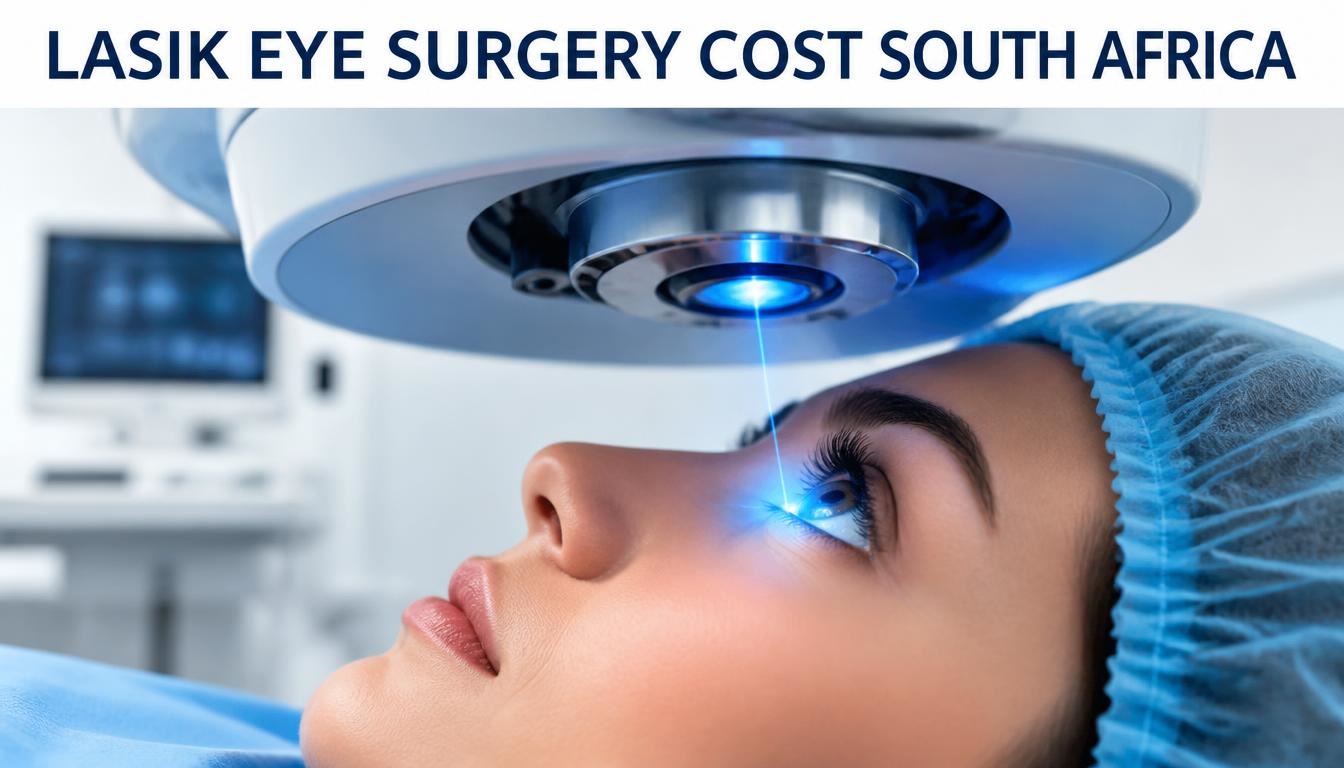
South Africans navigating private healthcare are all too familiar with the relentless creep of medical inflation, where out-of-pocket gap payments routinely catch patients off guard. When considering laser vision correction, the financial hurdle often appears daunting at first glance. With premium prescription spectacles and multi-focal lenses easily exceeding R8,000 to R15,000 every two years at major retail optometry chains, and daily contact lens subscriptions running into thousands of Rands annually, consumers are forced to calculate whether permanent laser surgery is a luxury expenditure or a smarter long-term financial strategy. Navigating the actual out-of-pocket expenses for Laser-Assisted in Situ Keratomileusis (LASIK) across South Africa requires looking past flashy promotional headlines and understanding exact clinical line items—from diagnostic corneal mapping to post-operative antibiotic regimen drops. Having analyzed verified quotes, hospital fee structures, and specialist billing rates across Johannesburg, Cape Town, and Durban, this definitive guide provides a transparent, data-driven breakdown of what LASIK costs in South Africa today, how medical aid schemes handle refractive benefits, and how to evaluate clinic technology to ensure maximum visual returns on your investment.
At a Glance: ZAR Price Breakdown
-
Average Cost Per Eye: R15,000 to R26,500 depending on procedure type (Bladeless Femto-LASIK vs. Wavefront Contoura vs. Standard PRK).
-
Total Both Eyes (Bilateral): R30,000 to R53,000 for standard to high-definition custom treatments.
-
Diagnostic & Consultation Fees: R2,500 to R5,200 (billed separately from surgery; includes Pentacam/Galilei corneal topography and fundus exams).
-
Medical Aid Coverage: Most schemes classify LASIK as elective, but high-tier options (e.g., Discovery Health Executive/Comprehensive, Bestmed Beat 3/4) offer optical sub-limits ranging between R6,600 and R11,350 per eye.
-
Financing Options: MediWallet, Mobicred, and specialized clinic payment plans allow monthly installments over 12 to 36 months.
Expert Insider Commentary on Timing & Financing Your Surgery:“If you plan to leverage your medical aid savings account or sub-limits for refractive surgery, timing your procedure between October and November offers a distinct strategic advantage. Unused Medical Savings Account (MSA) balancesroll over, but reaching your annual Above Threshold Benefit (ATB) late in the year means your out-of-pocket threshold may already be met. Furthermore, medical expense claims not covered by your scheme can be submitted to SARS under section 6B for the Additional Medical Expenses Tax Credit during eFiling season, effectively subsidizing up to 25% of your out-of-pocket costs depending on your tax bracket.”
Comprehensive SA LASIK & Laser Clinic Price Matrix
Evaluating the cost of laser vision correction requires comparing not just the headline quote, but the specific technological tier, theater facility fees, and included post-operative care. The table below provides a verified market comparison across leading South African eye clinics and specialist refractive centers.
| Eye Specialist / Clinic Network | Primary Region | Technology Tier Offered | Average ZAR Cost Range (Per Eye) | Inclusive Post-Op Care Window | Value & Transparency Rating |
| Sandton Eye Clinic | Sandton, Gauteng | Femto-LASIK, TransPRK, Custom Wavefront | R25,000 – R26,800 | 6 Weeks Complimentary Care | 5 / 5 (All-Inclusive High Tech) |
| Atlantic Eye Centre | Cape Town, Western Cape | Bladeless Femto-LASIK, Custom PRK | R16,000 – R26,597 | 4 to 6 Weeks Post-Op Included | 4.8 / 5 (Interest-Free Financing) |
| Constantia Eye Clinic | Southern Suburbs, WC | Femtosecond LASIK, Wavefront-Guided | R17,500 – R22,500 | 6 Weeks Included Care | 4.7 / 5 (Transparent Billing) |
| Visiomed Laser Centre | Northcliff, Gauteng | Standard LASIK, Femto-LASIK, PRK | R15,500 – R21,000 | 30 Days Post-Op Included | 4.6 / 5 (Competitive Base Rates) |
| Pretoria Eye Institute | Arcadia, Gauteng | Bladeless Femto-LASIK, Contoura Vision | R16,500 – R24,000 | 6 Weeks Post-Op Included | 4.8 / 5 (Dedicated Eye Hospital) |
| Durban Eye Hospital | Umhlanga / Durban, KZN | Femto-LASIK, Surface PRK | R15,000 – R22,000 | 4 Weeks Post-Op Included | 4.5 / 5 (Solid Regional Pricing) |
Breakdown of Laser Vision Technologies: Cost vs. Performance
Not all laser eye procedures are identical, and the price tag is directly linked to the sophistication of the hardware used. Clinics in South Africa utilize different generations of laser platforms, which dictates recovery speed, discomfort levels, and suitability for complex prescriptions.
| Procedure Tier & Name | Core Technology & Surgical Method | Visual Recovery Timeline | ZAR Price Range (Both Eyes) | Worth-It Performance Index |
| Surface Ablation (PRK / LASEK) | No corneal flap created; outer epithelial layer removed and naturally regrows. Laser reshapes surface. | 3 to 7 days (mild to moderate discomfort during epithelial healing). | R28,000 – R36,000 | High for Thin Corneas: Ideal for athletes or patients with thin corneal tissue unsuitable for flap creation. |
| Conventional / Mechanical LASIK | Microkeratome (automated blade) creates flap; excimer laser reshapes corneal bed. | 24 to 48 hours (minimal discomfort). | R30,000 – R38,000 | Moderate: Budget-friendly, but higher risk of flap irregularities compared to laser creation. |
| Bladeless Femto-LASIK | Femtosecond laser creates precise corneal flap; second excimer laser performs customized reshaping. | 12 to 24 hours (rapid visual restoration). | R38,000 – R48,000 | Exceptional (Gold Standard): Highest safety profile, predictable outcomes, and fast return to work. |
| Topography-Guided (Contoura / Custom LASIK) | Maps over 22,000 individual elevation points on the cornea to smooth microscopic irregularities. | 12 to 24 hours (superb night vision contrast). | R42,000 – R53,000 | Maximum: Essential for high astigmatism or patients seeking sharper night-driving clarity. |
| Small Incision Lenticule Extraction (SMILE) | Femtosecond laser creates a thin tissue lenticule inside the cornea removed via a tiny 2mm keyhole. | 24 to 48 hours (virtually zero dry-eye sensation). | R48,000 – R55,000 | Premium: Best for severe dry-eye sufferers or contact sports enthusiasts needing no flap risks. |
| Phakic ICL (Implantable Collamer Lens) | A soft biocompatible lens is permanently inserted inside the eye without removing corneal tissue. | 24 hours. | R59,000 – R93,000 | High for Extreme Prescriptions: Perfect for extreme myopia (-10D+) where laser removal is unsafe. |
When reviewing a LASIK advertisement or initial quotation, caution is required. Discounted marketing promotions often quote base surgical costs while excluding vital diagnostic workups, theater fees, and post-operative medications. Understanding these potential hidden add-ons ensures your total financial commitment matches your expectations.
-
Pre-Operative Comprehensive Diagnostic Assessment (R2,500 – R5,200):Before touching a laser, an ophthalmologist must perform exhaustive corneal mapping (Pentacam or Galilei topography), pachymetry (corneal thickness measurement), pupillometry, and fundus examination. This assessment determines whether your cornea is thick enough to safely undergo treatment without risking ectasia (corneal weakening). Most clinics bill this separately from the surgery, though some claim a portion back from your medical aid day-to-day savings.
-
Day-Clinic & Surgical Theater Fees (R3,500 – R7,500):Laser suites require high-tech climate and humidity control to maintain laser calibration. Some standalone refractive clinics bundle theater fees into their surgical rate, whereas procedures performed inside formal day-hospitals (such as Mediclinic or Netcare day theaters) may invoice theater consumables separately. Always ask for a written, all-inclusive quote.
-
Post-Operative Medicated Eye Drops (R600 – R1,200):Following surgery, you will be prescribed antibiotic drops (such as Vigamox), steroid anti-inflammatory drops (Pred Forte or Lotemax), and preservative-free artificial tears to prevent infection and manage temporary dry eye. These prescriptions are filled at retail pharmacies (Dis-Chem, Clicks) and are rarely included in the base surgical package.
-
Corneal Cross-Linking (CXL) Combination (R8,000 – R14,000 extra):If diagnostic mapping reveals a slightly borderline corneal thickness or minor structural irregularity, your surgeon may recommend combining LASIK with Corneal Cross-Linking (LASIK Extra). This involves applying Vitamin B2 (riboflavin) drops and UV light to strengthen corneal collagen bonds during the procedure, adding to the baseline cost.
-
Enhancement Touch-Up Policies (R0 – R8,000 after year one):While over 96% of LASIK patients achieve 20/20 vision after a single procedure, subtle regression or residual astigmatism can occur. Leading clinics include a free 12-month visual refinement enhancement guarantee in their initial price. Cheaper operators may charge full theater consumables for touch-up procedures performed after six months.
The Buyer’s 5-Step Evaluation Framework
Choosing to undergo laser vision correction is a permanent decision. To ensure safety, cost-transparency, and optimal visual acuity, follow this structured buying process before paying a deposit.
Step 1: Verify Your Candidacy Profile Before Booking
Not everyone is a suitable candidate for LASIK. Patients under 18 years old, pregnant or breastfeeding mothers (due to hormonal fluctuations affecting corneal shape), individuals with fluctuating optical prescriptions, or those suffering from severe dry eye syndrome, keratoconus, or uncontrolled autoimmune diseases will be turned away. Save yourself unnecessary diagnostic expense by ensuring your prescription has remained stable for at least 12 consecutive months.
Step 2: Audit the Clinic’s Laser Platform & Equipment
Always inquire about the exact make and model of the laser suite. Modern clinics utilize advanced femtosecond and excimer systems like the Wavelight EX500, Schwind Amaris, or Zeiss VisuMax. Older mechanical microkeratome blades carry higher risks of flap complications. Confirm that your procedure is 100% bladeless (Femto-LASIK) and includes topography-guided mapping for superior visual contrast.
Step 3: Demand a Written All-Inclusive Quotation
Request a itemized quotation detailing every single line item. The quote should explicitly specify whether it covers:
-
Pre-operative diagnostic scans and surgeon consultations.
-
The laser royalty licensing fees (paid per eye to software manufacturers).
-
All follow-up checkups (typically 1-day, 1-week, 1-month, and 3-month visits).
-
Retreatment/enhancement policy terms if visual target is missed.
Even if your medical scheme plan does not cover elective refractive surgery from overall risk benefits, pre-authorizing the procedure allows the clinic to bill your Medical Savings Account (MSA) directly or process the claim correctly for tax deduction records. Obtain procedure tariffs and ICD-10 codes from the clinic’s billing manager prior to your appointment.
Step 5: Structure Payment Options & Tax Offsets
If paying out of pocket, compare clinic financing solutions. Platforms like MediWallet offer structured repayment plans over 12, 24, or 36 months. Alternatively, check if your credit card issuer offers budget facility rates. Keep every receipt and statement; non-reimbursed medical expenses can be claimed against your income tax on your annual SARS eFiling submission under section 6B.
Medical Aid Coverage & Financing Realities in South Africa
A common misconception among South African patients is that medical aid schemes will fully cover laser vision correction. Because medical schemes classify myopia, hyperopia, and astigmatism as conditions treatable by non-surgical means (spectacles or contact lenses), LASIK is categorized as an elective or cosmetic procedure.
However, coverage varies across medical schemes and plan tiers:
1. Discovery Health
-
Executive & Comprehensive Plans: Include a dedicated optical / refractive surgery benefit limit (typically ranging between R7,250 and R10,550 per person per year). This benefit pays up to 100% of the Discovery Health Rate for excimer laser treatment, disbursed from available Optical Benefits or Medical Savings Accounts (MSA).
-
Priority, Saver, & Smart Plans: Refractive surgery is generally not covered from major medical risk funds. Payments must be funded entirely out of day-to-day MSA funds or paid out-of-pocket.
2. Bestmed Medical Scheme
-
Beat 3 & Beat 4 Plans: Bestmed is among the most generous schemes in South Africa for refractive benefits, offering explicit coverage up to R10,055 – R11,349 per eye under scheme tariffs, subject to pre-authorization and clinical protocol approval.
-
Pace & Rhythm Plans: Provide varying optical sub-limits that can be applied toward laser correction upon motivation by an ophthalmologist.
3. Fedhealth & Momentum Health
-
Fedhealth: Treats laser eye surgery under day-surgery or specialized procedure protocols. While procedure coverage requires pre-authorization, using a non-network day-clinic facility may incur co-payments starting at R2,100 to R2,630.
-
Momentum: Refractive surgery is paid strictly from Savings or Health Saver accounts unless specific high-tier optical riders are attached to the option.
Alternative Payment Financing: MediWallet & Mobicred
When medical aid benefits fall short, specialized healthcare financing bridges the gap:
-
MediWallet: Allows patients to fund medical procedures through pre-approved credit repaid over 3 to 18 months. Approval requires proof of income and a clean South African credit score.
-
Clinic-Direct Payment Plans: Several premium centers (such as Atlantic Eye Centre) partner with financial institutions to offer interest-free financing options over 12 months, spreading a R40,000 bilateral procedure into predictable monthly repayments of roughly R3,330.
10-Year Long-Term Financial Comparison: LASIK vs. Spectacles vs. Contacts
To determine whether a R40,000 investment in LASIK makes economic sense, we must model the cumulative cost of conventional optical correction over a 10-year horizon for an average South African consumer.
-
Designer Frames & High-Index Lenses (every 2 years): R9,500
-
Optometrist Consultation Fees (every 2 years): R1,100
-
Prescription Sunglasses (every 3 years): R4,500
-
Total 10-Year Expense: R63,000
Option B: Monthly Disposable Contact Lenses
-
Monthly Toric Lenses & Cleaning Solutions (R650/month): R7,800 annually
-
Annual Optometrist Checkups: R1,100 annually
-
Backup Pair of Glasses (replaced twice in decade): R10,000
-
Total 10-Year Expense: R99,000
Option C: Bladeless Femto-LASIK Surgery
-
Initial Bilateral Procedure & Diagnostics: R42,000
-
Post-Op Medications & Lubricant Drops: R1,200
-
Follow-up Maintenance / Lubrication over 10 Years: R3,000
-
Total 10-Year Expense: R46,200
Financial Takeaway: Over a 10-year period, undergoing Bladeless Femto-LASIK saves the average South African consumer approximately R16,800 compared to wearing spectacles, and over R52,800 compared to wearing contact lenses. Beyond the raw financial return, visual independence eliminates ongoing expenses for lost contacts, broken frames, and annual lens upgrades.
Frequently Asked Questions
Is LASIK eye surgery painful during or after the procedure?
The procedure itself is entirely painless. Before surgery begins, topical anesthetic numbing drops are applied to the eye, ensuring you feel no sharp sensation. You may feel mild pressure on the eye for 10 to 20 seconds while the laser creates the corneal flap or reshapes the tissue. Post-procedure, mild scratchiness, watery eyes, or light sensitivity may persist for 4 to 6 hours, which subsides after resting with your eyes closed.
How long does recovery take before returning to work and driving?
Most patients undergoing Bladeless Femto-LASIK achieve 20/20 driving vision within 24 hours and return to work or regular daily activities the next day. If you undergo surface ablation (PRK), complete visual restoration takes slightly longer, typically requiring 4 to 7 days off work while the outer layer of the eye heals. Swimming, contact sports, and eye makeup should be avoided for two weeks post-surgery.
What happens if I move my eye during the laser treatment?
Modern excimer lasers feature ultra-fast 3D eye-tracking systems operating at speeds exceeding 1,000 frames per second. The tracking system follows the microscopic movements of your pupil in real time. If you move your eye too far, sneeze, or cough, the laser automatically pauses instantly and resumes precisely where it left off once your eye is repositioned.
Can astigmatism be corrected with LASIK in South Africa?
Yes, modern topography-guided LASIK platforms (such as Contoura Vision) easily correct high levels of astigmatism along with nearsightedness (myopia) and farsightedness (hyperopia). During your diagnostic consultation, the surgeon maps the oval curvature of your cornea to customize a laser ablation pattern that restores a natural spherical shape.
Have Your Say: What Did Your LASIK Cost?
Choosing to undergo laser vision correction is a major financial and health decision. Have you recently received a quote or undergone LASIK in Johannesburg, Cape Town, Durban, or Pretoria?
Which clinic did you choose, and what was your total out-of-pocket expense after medical aid contributions? Did you utilize financing like MediWallet, or claim a portion back from SARS during tax season? Drop your experiences, price quotes, and tips in the comment section below to help fellow South Africans navigate their optical choices!
Important Price & Independent Medical Review Disclaimer
This article is an independent consumer pricing review and informational guide written strictly for analytical and educational purposes. Prices, medical aid tariffs, and clinical billing policies across South Africa are subject to change based on inflation, exchange rates, manufacturer software licensing fees, and individual patient requirements. This publication does not constitute professional medical or financial advice. Always consult a registered South African ophthalmologist or eye specialist to perform a comprehensive diagnostic examination before making medical decisions.

Joseph Mathebula is a consumer tech analyst and market researcher at Prices in South Africa. He specializes in tracking smartphone prices and consumer electronics, helping everyday shoppers navigate the market to secure the best value.
Post Disclaimer
Prices and availability are subject to change without notice and may vary by store or region. pricesinsouthafrica.co.za is an independent informational platform; we do not sell products directly, nor are we responsible for third-party pricing errors.