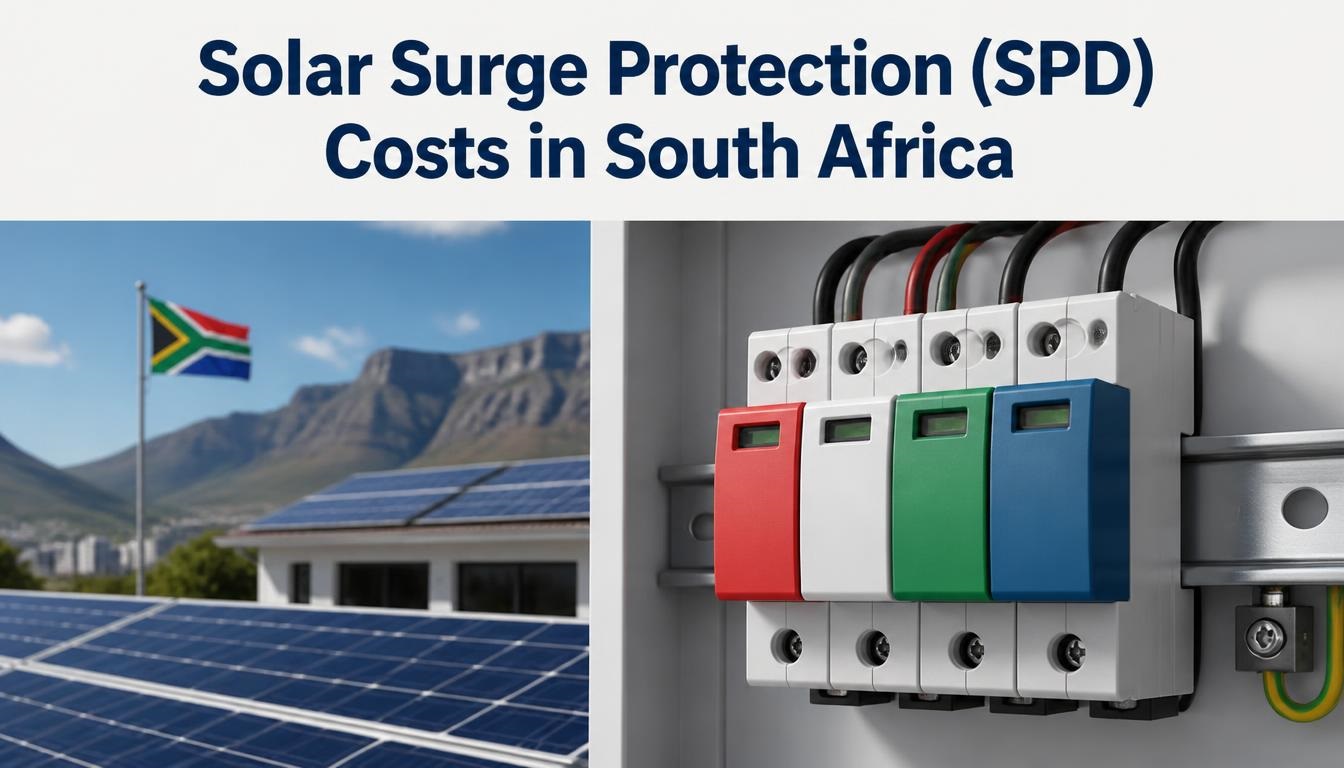
Spending tens of thousands of Rands on high-end solar panels, lithium batteries, and a hybrid inverter only to see it scorched by a high-voltage grid spike or Highveld lightning strike is every South African homeowner’s nightmare. With power grid switching spikes and seasonal electrical storms, a Solar Surge Protection Device (SPD) is not an optional extra—it is your system’s essential insurance policy.
Quick Price Summary (ZAR):
Real-World Solar SPD Costs Across South African Retailers
Whether you are retrofitting protection onto an existing string setup or purchasing components for a brand-new off-grid build, current market prices vary based on voltage capacity (600V vs 1000V DC), surge current rating (20kA to 40kA), and enclosure integration.
| Retailer / Supplier | Model & Specifications | Current ZAR (R) Price | Delivery / Stock | VAT Included? | Overall Rating | Direct Buy Link |
| Takealot | 1000V DC Type 2 40kA SPD Module | R450 – R650 | Standard / Express available | Yes (15%) | 4.3 / 5 | Takealot – View Deal |
| Makro | Generic 1000VDC Solar PV System SPD | R915 – R1,015 | Regional Delivery / Pickup | Yes (15%) | 4.0 / 5 | Makro – View Price |
| Builders Warehouse | AC/DC DIN Rail Surge Arrester Unit | R550 – R1,200 | In-Store Pickup / Courier Guy | Yes (15%) | 4.4 / 5 | Builders – Check Stock |
| Inverter Warehouse | ZJBeny PV DC Type II 600V BUD-40/2 | R595 | Meadowdale JHB / Countrywide | Yes (15%) | 4.8 / 5 | Inverter Warehouse – Buy Now |
| Sonop Solar | Citel DC/PV Type 2 600VDC SPD | R430 | Western Cape / Countrywide | Yes (15%) | 4.7 / 5 | Sonop Solar – View Deal |
Key Hardware Categories: What You Are Actually Paying For
When budgeting for protection, remember that a complete installation requires surge protection on both sides of the system: the DC side (between solar panels and the inverter) and the AC side (between the inverter, DB board, and Eskom/Municipal grid input).
System Protection Flow
-
Solar Roof Panels: High-voltage DC electricity flows down from the panels via array cables.
-
DC SPD (PV Combiner Box): Located between the rooftop panels and the inverter, this clamps extreme transient voltages from lightning strikes and diverts them to the earthing rod.
-
Hybrid Inverter: Converts direct current (DC) into alternating current (AC) for household use.
-
AC SPD (Main DB Board): Installed on the AC side to shield the inverter’s power electronics from incoming grid switching spikes, voltage surges, or power-restoration kicks after load-shedding.
-
Home Appliances & Municipal Grid: Clean, clamped electricity is safely distributed throughout your home.
1. Standalone DC Surge Protection Devices (R350 – R850)
These individual DIN-rail modules clip straight into your existing distribution box or combiner enclosure. Rated specifically for high-voltage direct current (typically 600V DC to 1000V DC), these arresters redirect excess voltage from roof panels down to the earth spike before it hits the inverter.
2. Standalone AC Surge Protection Devices (R400 – R1,100)
Installed inside your home’s main distribution board, AC SPDs protect your system from voltage spikes originating from the municipal grid. When Eskom returns power after a load-shedding block or localized fault, the sudden voltage spike will trip an AC SPD rather than frying your inverter’s sensitive power electronics.
3. Pre-Wired PV Combiner Boxes (R1,800 – R4,500+)
For new installations, buying a pre-built combiner box is the safest and most compliant route. These include weather-rated IP65 enclosures, integrated DC isolator switches, fused protection, and pre-wired Type 2 SPDs. While pricier upfront, they significantly reduce installation labor costs and ensure SANS 10142-1 electrical compliance.
Load-Shedding & Highveld Storms: Testing SPDs Against SA Realities
South Africa presents a brutal operating environment for solar electronics. Understanding how SPDs perform in local conditions ensures you do not buy inadequate protection.
-
Grid Switching Spikes: Constant power switching causes transient voltage surges every single day. A quality Type 2 SPD clamps these spikes in nanoseconds, absorbing smaller daily surges before they degrade your inverter capacitors over time.
-
Highveld Lightning Intensity: Areas across Gauteng, Mpumalanga, and KZN experience some of the world’s highest ground-strike lightning densities. If your solar array sits on a metal roof, a Type 2 40kA SPD is the absolute minimum requirement; properties in high-exposure areas should consider combined Type 1+2 lightning arresters.
-
Earthing Impedance Issues: An SPD is completely useless without proper ground bonding. If your installer fails to sink a dedicated copper earth rod or tie the array earth directly to the main earthing terminal, the SPD cannot discharge excess voltage safely.
Smart Buying Strategies: How to Save on Solar Protection
-
Bundle with Main Kits: Retailers like Takealot – View Deal and Makro – View Price often offer bundled discount pricing when purchasing DC combiners alongside fuses and isolator switches.
-
Utilize Rewards Points: Major solar component purchases can be funded using eBucks, Discovery Miles, or store loyalty programs. Purchasing through Takealot allows you to offset hardware costs using eBucks during promotional cycles.
-
Replace Cartridges, Not Entire Units: Most quality SPDs (such as ZJBeny or Citel) feature modular plug-in cartridges. When a severe surge strikes, the optical indicator window turns from green to red. You only need to purchase a replacement cartridge (typically R180 – R300) rather than rewiring the entire device.
Local South African Consumer Rights & Warranties
Under the South African Consumer Protection Act (CPA), all new electrical hardware carries an implied 6-month warranty against manufacturing defects. However, when dealing with surge arresters, understand how warranties operate in practice:
-
Sacrificial Component Reality: SPDs are designed to destroy themselves to save your expensive inverter. A blown SPD window (turned red) after a direct lightning strike is evidence of the device doing its job, not a product defect.
-
CoC Requirement: To lodge any insurance claim for lightning damage with SA providers (like Santam, OUTsurance, or Hollard), your system must have a valid Certificate of Compliance (CoC) signed by a registered electrician, proving that compliant AC and DC SPDs were correctly installed.
Frequently Asked Questions
Do I need an SPD if my hybrid inverter has built-in protection?
Yes. Most hybrid inverters only feature basic internal varistors that handle tiny fluctuations. They cannot withstand external lightning strikes or heavy grid surges. External SPDs act as the primary line of defense outside the inverter casing.
What is the difference between a Type 1 and Type 2 SPD?
Type 1 SPDs are designed to handle direct lightning currents and are installed where a building has an external lightning protection system (lightning rod). Type 2 SPDs handle indirect lightning strikes and grid switching surges, making them the standard choice for residential solar setups in SA.
How often do solar surge arresters need to be replaced?
Inspect your combiner box monthly. The status window on the front of the cartridge displays Green when operational. Once it turns Red, the device has absorbed a critical surge and must be replaced immediately.
Join the Community Discussion
Have you recently installed solar protection or had an insurer inspect your setup? Share your quotes, preferred local suppliers, or regional stock finds in the comments below to help fellow South African homeowners stay protected.
Disclaimer: Prices fluctuate and reflect independent market research at the time of publication. We may earn a small affiliate commission through retailer links at no extra cost to you.

Joseph Mathebula is a consumer analyst and market researcher at Prices in South Africa. He specializes in tracking local service costs, retail pricing, and travel budgets, helping everyday shoppers navigate the market to secure the best value.