Quick Overview
Verified Real Price Range: R1,500 – R2,500 (Basic Counterbalance Forklift) | R4,500 – R5,500 (Excavator Operator).
Primary Cost Drivers: SAQA Unit Standard alignment (US 242974 for Forklifts / US 262744 for Excavators), machine tonnage rating, diesel consumption for practical field hours, and CETA or TETA accreditation.
Lowest-Price Accredited Options: Specialized private machinery academies in Gauteng (e.g., Germiston, Benoni, Pretoria CBD) and KZN industrial hubs.
Immediate Bottom-Line Verdict: A 5-day novice forklift certification costs R1,500 to R2,500, while a 1-to-2-week earthmoving excavator course runs between R4,500 and R5,500. Always verify TETA/CETA accreditation and ensure practical machine hours are fully included to avoid hidden diesel surcharges.
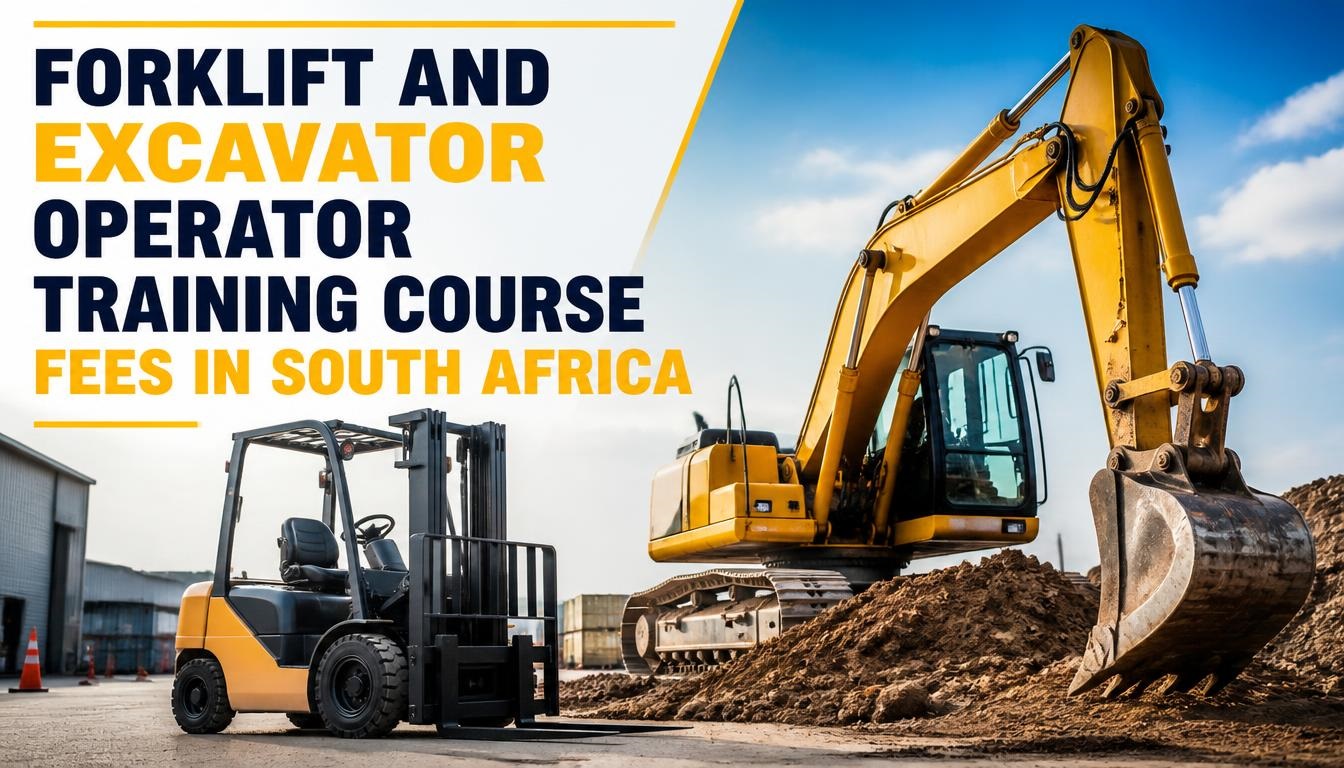
Forklift and Excavator Operator Training Course Fees in South Africa
South Africa’s logistics, warehousing, construction, and mining sectors run on skilled heavy equipment operators. Obtaining a recognized machine operator license is one of the fastest, most cost-effective pathways to secure employment in industrial hubs across Gauteng, KwaZulu-Natal, the Western Cape, and Mpumalanga. However, course fees vary widely depending on whether you are learning to drive a standard warehouse counterbalance forklift or operate a 20-tonne tracked excavator on a civil construction site.
Navigating training school quotes requires evaluating regulatory compliance under the Transport Education Training Authority (TETA), Construction Education and Training Authority (CETA), Quality Council for Trades and Occupations (QCTO), and the Occupational Health and Safety Act (OHSA).
Heavy Equipment Operator Accreditation and Training Dynamics
The South African heavy machinery training sector is governed strictly by the National Qualifications Framework (NQF) and the Department of Employment and Labour. A genuine, legally recognized license card and Certificate of Competency cannot be bought off the shelf; it requires structured theoretical modules and hands-on practical hours supervised by registered assessors.
The standard progression through an accredited training program follows five core steps:
-
Learner Registration & Safety Theory: Classroom modules covering health and safety acts, load dynamics, and mechanical theory.
-
Pre-Operational Inspections & Controls: Hands-on orientation on machine components, safety checks, and basic control operations.
-
Supervised Practical Field Machine Hours: Actual yard operating time navigating simulated work environments under direct assessor supervision.
-
Summative Assessment: Final practical driving evaluation and written theory examination.
-
Certification: Issuance of a valid 2-year operator license card and official SETA registration.
Understanding Classifications and Unit Standards
Training institutions price their programs according to machine capacity and complexity:
-
Forklifts (F1 to F3): F1 covers capacity up to 3 tonnes, F2 up to 7 tonnes, and F3 covers capacity over 15 tonnes. Basic counterbalance forklift training centers on SAQA Unit Standard 242974 (Operate counter-balanced lift truck).
-
Reach Truck (F5): Specifically used in high-density cold storage and narrow-aisle distribution centers (e.g., Takealot, Shoprite distribution yards). Because reach trucks operate at elevated height levels (often 8 to 12 meters), training commands a higher fee than basic counterbalance trucks.
-
Tracked Excavator: Aligned with SAQA Unit Standard 262744 (Operate an excavator). This course requires intensive diesel fuel utilization, hydraulic control mastery, trenching safety, and earthmoving techniques.
Novice vs. Renewal Pricing Models
Courses fall into two pricing categories:
-
Novice Training (First-Time Operators): Designed for individuals with zero prior machine operating experience. It includes complete classroom theory (safety, load charts, maintenance logs) combined with extensive practical yard maneuvers.
-
License Renewal / Re-Certification: Under South African Driven Machinery Regulations, forklift operator certificates expire every two years. Re-certification takes 1 day and costs significantly less (R650 to R850 for forklifts; R1,200 to R1,500 for excavators).
Real-World Practical Field Insights and Cost Factors
Operating heavy machinery requires hands-on spatial awareness, tactile muscle memory, and strict adherence to workplace safety regulations.
Standard Excavator Course Cost Structure
When evaluating course tuition for heavy machinery, training centers allocate fees across four main operating costs:
-
Diesel Fuel & Machine Wear (45%): The primary expense covering machine operating hours and engine maintenance.
-
Accredited Assessor & Practical Supervision (30%): Qualified instructor hourly rates and practical evaluation fees.
-
TETA / CETA Registration & Card Printing (13%): Formal administrative processing and official card issuance.
-
Learning Materials & Manuals (12%): Study guides, logbooks, and written examination materials.
The Diesel Consumption Factor in Machine Pricing
The pricing difference between a R1,600 forklift course and a R4,500 excavator course is driven by operational running costs. An electric warehouse forklift consumes minimal power during training drills.
In contrast, a 20-tonne diesel excavator running at 1,800 RPM consumes between 14 to 22 liters of 50ppm diesel per hour. During a 1-week course, practical yard time accounts for a substantial portion of the tuition fee in fuel costs alone.
Common Surprises on the Practical Training Yard
-
Shared Machine Time: Unaccredited “fly-by-night” training centers often charge low fees (e.g., R800 for a forklift course) but group 15 learners onto a single machine. This results in each student receiving less than 15 minutes of actual operating time. Reputable accredited centers cap practical groups to ensure adequate time on the controls.
-
Medical Fitness Certificates: Major construction and mining employers require a working-at-heights or heavy machine operator medical certificate (including eye tests and audiometrics) issued by an Occupational Health Practitioner registered with the Health Professions Council of South Africa (HPCSA). Some academies bundle this medical assessment into their fee, while others require you to pay an extra R350 to R600 independently.
-
License Card Fees: Ensure the quoted price includes the plastic, wallet-sized operator card and official TETA/CETA database registration. Unethical operators sometimes request an additional “card printing fee” of R200 to R400 upon course completion.
Regional Provider and Industry Fee Comparison
Machinery training pricing varies across South Africa’s major economic and industrial regions.
Gauteng Industrial Hubs (Johannesburg, Germiston, Pretoria)
Gauteng features the highest concentration of heavy equipment training centers in South Africa. Competition keeps prices affordable:
-
Novice Counterbalance Forklift: R1,500 – R2,000
-
Novice Excavator Course: R4,500 – R5,000 (often including basic site accommodation packages for out-of-town learners)
-
Combination Packages (Forklift + TLB): R5,500 – R6,200
KwaZulu-Natal Logistics Corridors (Durban, Pinetown, Richards Bay)
Driven by port activity and massive warehousing hubs along the N3 corridor, KZN providers focus heavily on container handling and warehouse logistics machinery:
-
Novice Counterbalance Forklift: R1,600 – R2,200
-
Reach Truck (High Reach): R2,800 – R3,400
-
Excavator Training: R4,600 – R5,400
Western Cape Commercial Zones (Cape Town, Blackheath, Paarl)
Due to higher commercial property overheads and site operational costs, Western Cape training institutions generally price 10% to 15% higher than Gauteng rates:
-
Novice Counterbalance Forklift: R1,800 – R2,500
-
Novice Excavator Course: R4,800 – R5,800
Cost-Saving Strategies for Heavy Equipment Learners
Investing in machinery certification can yield strong career returns—with average certified forklift operators earning R8,000 to R15,000 monthly, and experienced excavator operators commanding R12,000 to R25,000+ per month in civil engineering and mining projects. Use these strategies to maximize your training budget:
-
Book Multi-Machine Combination Bundles: If you are planning to enter the earthmoving industry, booking a dual course (e.g., Excavator + TLB) simultaneously can save between R1,000 and R2,000 compared to booking each machine independently.
-
Verify Seta Accreditation Before Paying Any Deposit: Always request the training provider’s TETA or CETA accreditation number. Cross-check this number on the official SETA portal or call their verification department. Paying R1,000 to an unaccredited institution results in a fraudulent certificate that major site safety officers will reject during site inductions.
-
Capitalize on Off-Peak or Corporate Group Discounts: If you have colleagues or friends seeking certification, booking as a group of 3 or more often qualifies for group discounts of 10% to 15%. Additionally, ask centers if they offer discounted rates during mid-month slots when student intakes are lower.
-
Confirm Accommodation and Transport Terms: Many major training yards located in industrial areas (such as Germiston, Benoni, or Pretoria CBD) offer free basic hostel accommodation for rural learners enrolled in 1-to-2-week earthmoving courses. Choosing a school with free accommodation saves up to R1,500 in weekly boarding costs.
Frequently Asked Questions
How long is a forklift or excavator operator license valid in South Africa?
A heavy equipment operator certificate and license card issued under TETA/CETA guidelines is valid for exactly 2 years from the date of assessment. Before the 24-month period expires, operators must complete a 1-day refresher training course to maintain legal compliance under the Driven Machinery Regulations.
Can I drive a forklift or excavator with a standard Code 8 (B) driver’s license?
A standard Code 8 (Code B) or Code 10 (Code C1) motor vehicle driver’s license does not legally authorize you to operate lifting machinery or heavy earthmoving equipment in South Africa. You must hold a specific Certificate of Competency and operator card aligned with SAQA Unit Standards (US 242974 for forklifts or US 262744 for excavators).
What is the minimum educational requirement to register for training?
To enroll in a forklift (NQF Level 3) or excavator (NQF Level 2) operator course, learners must be at least 18 years old and possess basic literacy and numeracy skills (equivalent to Grade 9 or ABET Level 4). No formal matric certificate is required to enter novice training.
How much does it cost to renew an expired forklift license?
Renewing a counterbalance forklift operator license costs between R650 and R850, provided the license has not been expired for an extended period. If the license has been expired for over 90 days or several years, the training center may require you to undergo a full 2-day Recognition of Prior Learning (RPL) assessment at a cost of R1,200 to R1,500.
Do I need to pay extra for my practical operating hours?
At accredited machinery training centers, all practical machine time, diesel fuel, learning manuals, and assessment fees must be included in the upfront tuition price. Always request a written invoice stating that practical operating hours and certificate issuance fees are fully covered.
Disclaimer: Prices listed in this guide reflect real-world retail rates and verified shelf prices at the time of publication. Actual store rates may fluctuate due to regional store promotions, stock availability, or installer call-out charges. Always confirm final figures directly with your preferred retailer or service provider before purchasing.
Securing an accredited operator certification opens immediate career opportunities across South Africa’s logistics yards, distribution warehouses, mining operations, and civil infrastructure projects. Whether you are starting out with a basic 5-day forklift certificate or advancing your career with a heavy earthmoving excavator qualification, choosing a fully SETA-accredited provider guarantees that your qualifications are legally valid and recognized on duty sites nationwide.
Have you recently completed your machine operator training or renewed your license card in Gauteng, KZN, or the Western Cape? Share your training experience, school recommendations, or cost questions in the comments below to help fellow South African job seekers navigate their career path!

Joseph Mathebula is a consumer analyst and market researcher at Prices in South Africa. He specializes in tracking local service costs, retail pricing, and travel budgets, helping everyday shoppers navigate the market to secure the best value.