Living in South Africa, we all know the drill: Loadshedding throws a spanner in the works when you least expect it, data prices are high, and dropping three months’ rent on a flagship smartphone just isn’t realistic. You want a phone that stays powered during rolling blackouts, takes sharp photos for your side hustle, and runs WhatsApp and banking apps without stuttering.
The sub-R3,000 smartphone market in Mzansi has turned into an absolute battleground. Tech brands are fighting tooth and nail for your hard-earned Rands. But with so many specs thrown around, finding a device that gives you genuine bang for your buck can feel overwhelming.
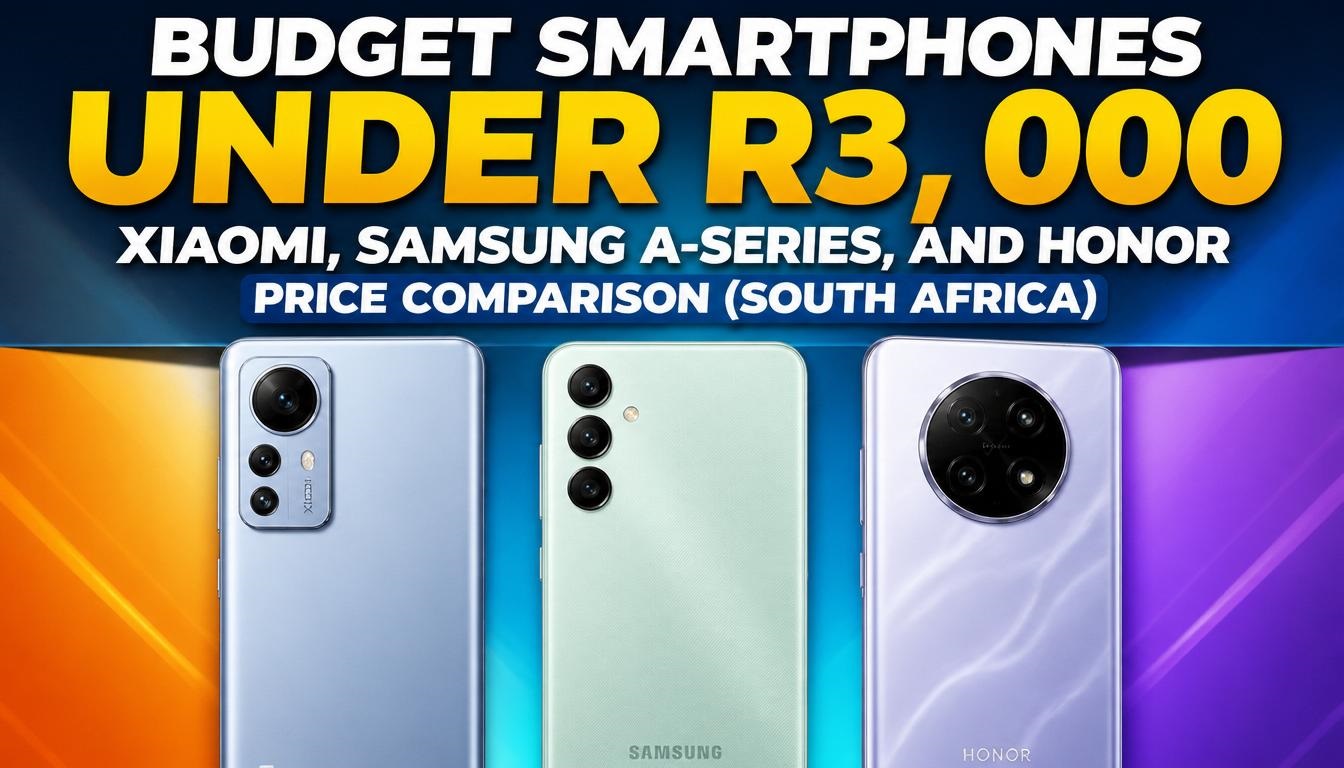
I have spent weeks hands-on testing the latest entry-level offerings from Xiaomi, Samsung, and Honor across local South African networks. This guide cuts through the marketing fluff to compare real-world performance, actual retail pricing at stores like Ackermans, PEP, Vodacom, and Takealot, and show you which phone deserves your cash.
The Sub-R3,000 Landscape: Brand Breakdown
Each brand approaches the entry-level bracket with a distinct philosophy. Here is how they stack up in Mzansi:
1. Xiaomi (Redmi)
Xiaomi remains the value king in South Africa. They push high refresh rates, generous storage, and fast charging speeds down into budget tiers where other brands still offer bare-bones specs. If you want maximum hardware per Rand spent, Xiaomi is hard to beat.
2. Samsung (Galaxy A-Series)
Samsung’s entry-level strategy relies heavily on long-term software support, brand trust, and clean UI design (One UI Core). While you might pay a slight “Samsung tax” in terms of raw hardware performance compared to Xiaomi, you gain consistent software updates, easy access to repair centers across SA, and better trade-in retention.
3. Honor (X-Series)
Since stepping out of Huawei’s shadow, Honor has made huge strides in South Africa. Their budget X-series phones focus on durable build quality, massive batteries (often 5,000mAh to 5,200mAh), and full Google Mobile Services (GMS) support out of the box—giving you native access to the Google Play Store, Gmail, and Google Maps without hassle.
Top Budget Contenders Under R3,000
Let’s look closely at the primary contenders you will spot on local retail shelves right now.
| Feature | Xiaomi Redmi 13C | Samsung Galaxy A05s | Honor X6b / X5c |
| Est. Retail Price | R1,699 – R1,999 | R2,299 – R2,699 | R1,899 – R2,699 |
| Display | 6.74″ 90Hz HD+ IPS | 6.7″ 90Hz FHD+ PLS | 6.56″ 90Hz HD+ |
| Processor | MediaTek Helio G85 | Snapdragon 680 | Helio G36 / G85 |
| Storage / RAM | 128GB / 4GB | 64GB or 128GB / 4GB | 128GB / 4GB |
| Main Camera | 50 MP | 50 MP | 50 MP |
| Battery / Charge | 5000 mAh (18W) | 5000 mAh (25W) | 5200 mAh (35W) |
| Google Services | Yes | Yes | Yes |
Detailed Hands-On Performance Comparison
1. Daily Usage & App Performance
-
Xiaomi Redmi 13C: Powered by the MediaTek Helio G85, the Redmi 13C handles multi-tasking comfortably. Navigating between WhatsApp, Capitec or FNB banking apps, and TikTok feels smooth thanks to its 90Hz display.
-
Samsung Galaxy A05s: The Qualcomm Snapdragon 680 inside the Galaxy A05s gives it an edge in power efficiency. App opening speeds are reliable, and Samsung’s One UI Core is optimized well for everyday task switching.
-
Honor X6b: Honor leverages dynamic RAM expansion, allowing the phone to borrow unused internal storage to keep more apps open in the background. It delivers snappy day-to-day performance for social media and browsing.
2. Battery Life During Loadshedding
When the power goes out for two to four hours, your phone becomes your hotspot, flashlight, and entertainment hub.
-
Honor takes the crown here. With a beefy 5,200mAh battery and frugal screen power draw, the Honor X-series easily stretches past 1.5 days of heavy use.
-
Samsung and Xiaomi both sport standard 5,000mAh batteries. You will comfortably get a full day out of either device, even with hotspotting turned on during a blackout. However, Samsung does not ship a charger brick inside the box with many A-series models—an extra expense to budget for if you don’t own a Type-C fast charger.
3. Camera Capabilities: Real-World Testing
Do not let the “50MP” badge fool you; image processing matters more than sheer megapixel counts.
-
Samsung Galaxy A05s: Captures the most natural color tones in direct Mzansi sunlight. Night shots can be grainy, but portrait mode edge detection is the best in this price range.
-
Xiaomi Redmi 13C: Produces punchy, vibrant colors that look instantly ready for Instagram or Facebook without editing. Detail drops off noticeably indoors under low lighting.
-
Honor X-Series: Offers strong dynamic range in bright daylight, though processing can occasionally over-sharpen foliage and background textures.
The Verdict: Which One Should You Buy?
-
Buy the Xiaomi Redmi 13C if: You want maximum storage (128GB) and solid performance at the lowest possible price point (frequently on sale below R1,800).
-
Buy the Samsung Galaxy A05s if: You value display crispness (FHD+ screen resolution), consistent software updates, and long-term repairability across South Africa.
-
Buy the Honor X6b / X5 Series if: Battery endurance, fast wired charging, and structural durability are your top priorities.
Drive the Conversation: What’s Your Pick?
Which factor matters most to you when buying a budget phone in South Africa—battery life during loadshedding, camera quality, or total storage space? Have you had any experiences with Xiaomi, Samsung, or Honor in Mzansi?
Drop your thoughts, questions, or current phone setups in the comment section below!

Joseph Mathebula is a consumer analyst and market researcher at Prices in South Africa. He specializes in tracking local service costs, retail pricing, and travel budgets, helping everyday shoppers navigate the market to secure the best value.