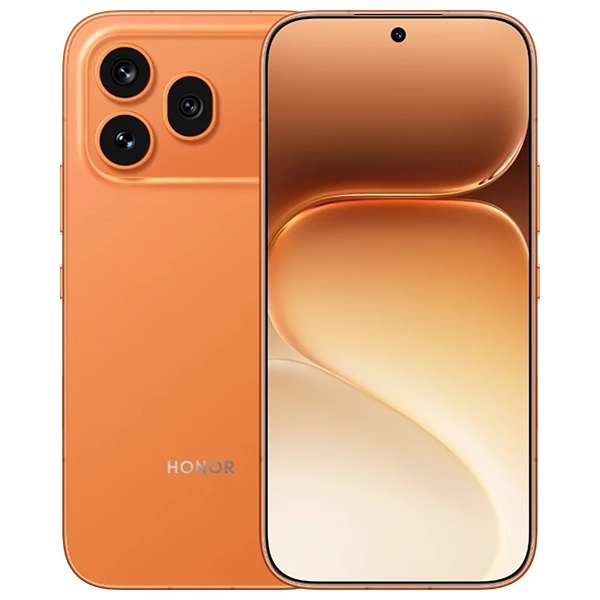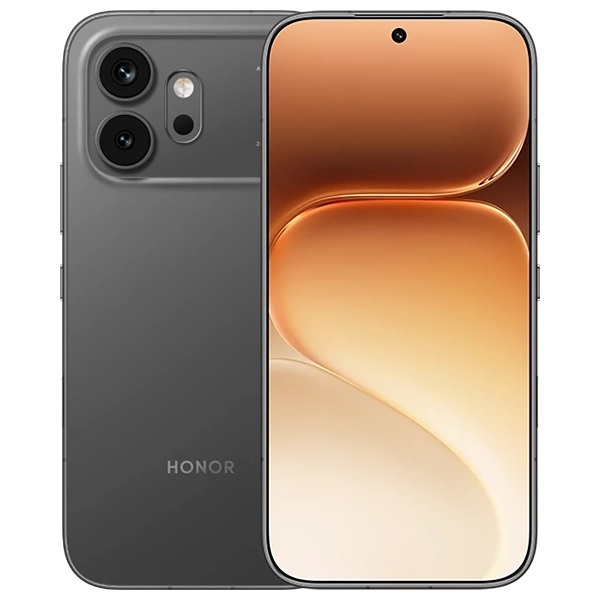
Honor 600 Price in South Africa: Deals & Contracts
The mid-range smartphone market in South Africa is intensely competitive. South African consumers face a tough choice: they want premium features like excellent low-light cameras, robust water and dust resistance, and multi-day battery life, but economic pressures mean local buyers demand real value for every Rand spent.
Honor’s strategic focus on the local market has shaking things up, and their latest release aims to bridge the gap between high-end flagships and accessible mid-rangers. If you are looking for local pricing, actual performance realities under South African network conditions, and deep technical context, this comprehensive breakdown details everything you need to know about the device.
Honor 600 Price in South Africa: Estimated Retail and Carrier Positioning
When looking at the Honor 600 Price in South Africa, it is essential to understand where this device sits in the broader retail ecosystem. Honor has structured its lineup to offer tiered options, ranging from the accessible Lite model to the premium Pro version.
Recommended Retail Pricing (RRP) Matrix
While global pricing launched at approximately €549.99 for base models, localized import structures, ad valorem duties, and local logistics shape the final shelf price in South Africa. The standard model positions itself cleanly as an upper mid-range contender, while its sibling, the Honor 600 Pro, pushes firmly into premium territory.
| Model Variant | Internal Storage / RAM | Estimated RRP (ZAR) | Primary Market Competitors |
| Honor 600 Lite | 256GB ROM / 8GB RAM | R7,499 to R8,499 | Samsung Galaxy A35, Xiaomi Redmi Note series |
| Honor 600 (Standard) | 256GB ROM / 8GB RAM | R11,999 to R13,999 | Samsung Galaxy A55, Nothing Phone (2a), Vivo V-series |
| Honor 600 (Premium Storage) | 512GB ROM / 12GB RAM | R14,499 to R15,999 | Xiaomi T-Series, older generation base flagships |
| Honor 600 Pro | 512GB ROM / 12GB RAM | R19,999 (Official Launch) | iPhone 15/16 base, Samsung Galaxy S26 base |
Postpaid Contract Options (Vodacom, MTN, Telkom, Cell C)
For the vast majority of South Africans, purchasing a device outright can heavily strain cash flow. The standard version is primarily structured around 24-month and 36-month contracts.
-
36-Month Postpaid Contracts: Expect the standard model to range between R499 and R599 per month, typically bundled with mid-tier data packages (e.g., 1GB to 2GB anytime data plus night-owl allocations).
-
24-Month Postpaid Contracts: Stepping up to a shorter contract brings the monthly obligation to roughly R699 to R849 per month, depending on the network service provider and additional airtime value added.
Local Buyer Advice: Always cross-reference the total cost of ownership (Monthly Subscription × Contract Term) against the cash retail price. In the mid-range tier, purchasing the device outright via cash or interest-free retail store cards can sometimes save you up to 20% over a 36-month period, while keeping your monthly cellular bills highly flexible.
Technical Specifications: A Deep Dive into the Hardware
The device avoids generic configurations by focusing on core components that significantly affect long-term daily usability. Below is the full official specification breakdown for the standard edition distributed within the region.
+------------------------+-------------------------------------------------------------+
| Feature                | Technical Specification                                      |
+------------------------+-------------------------------------------------------------+
| Mobile Platform        | Qualcomm Snapdragon 7 Gen 4 (4nm Architecture) |
| CPU Configuration      | Octa-core (1x 2.8GHz + 4x 2.4GHz + 3x 1.84GHz)   |
| Graphics Processor     | Adreno 722                                             |
| Base Configuration     | 8GB LPDDR5X RAM / 256GB UFS Storage     |
| Display Technology     | 6.57-inch AMOLED Curved Panel                |
| Native Resolution      | 2728 x 1264 pixels (458 PPI density)    |
| Dynamic Refresh Rate   | 120Hz Peak                                             |
| Peak Brightness (HDR)  | Up to 8000 nits                                        |
| Primary Rear Sensor    | 200MP Main (f/1.9, Optical Image Stabilization)|
| Secondary Rear Sensor  | 12MP Ultra-Wide & Macro Combo Lens        |
| Front-Facing Sensor    | 50MP Portrait Selfie Camera (f/2.0)      |
| Battery Chemistry      | 7000mAh Silicon-Carbon High-Density Battery|
| Wired Charging Speed   | 80W HONOR SuperCharge (Charger included in box)|
| Ingress Protection     | Complete IP68, IP69, and IP69K ratings   |
| Software Environment   | MagicOS 10 running on Android 16        |
+------------------------+-------------------------------------------------------------+
The Battery Performance Factor: Addressing Power Constraints
In South Africa, power reliability is a constant consideration for any smartphone user. When electricity grids face unexpected interruptions or municipal maintenance blackouts occur, your smartphone becomes your primary window to work, family safety, and entertainment.
Real-World Longevity Tests
The standard model comes equipped with a 7000mAh silicon-carbon battery. Silicon-carbon anode technology allows manufacturers to compress immense energy capacity into tight physical dimensions, maintaining a chassis thickness of just 7.8mm.
Daily Power Consumption Profile (7000mAh Battery)

[==================================================] 100% (6:00 AM)

 █ Work Commute (Streaming audio, GPS navigation)
 █ Office Work (Push emails, WhatsApp Business, Slack via 5G)
 [=======================================-----------] 78% (1:00 PM)

 █ Content Creation & Hotspot (Sharing 5G connectivity to a laptop)
 █ Casual Gaming & Social Media (Tiktok, Instagram scrolling)
 [==========================------------------------] 52% (6:00 PM)

 █ Evening Streaming (YouTube playback, Netflix background casting)
 [======================----------------------------] 44% (10:00 PM)
With this capacity, the phone transitions from a standard “one-day device” to a genuine two-day operational powerhouse for moderate users. Even under intensive digital workloads—such as utilizing the phone as a mobile Wi-Fi hotspot for a laptop during extended working sessions—the phone comfortably finishes a full day with more than 40% battery remaining.
Charging Speeds: Back to Full in Minutes
When you do need to top up, the 80W wired SuperCharge system offers a fast turnaround.
-
0% to 50%: Takes approximately 22 to 25 minutes. This means a quick charge during a brief power window provides enough juice to last well into the next day.
-
0% to 100%: Achieved in roughly 55 minutes, as the charging curve intelligently throttles power down in the final 10% to protect long-term battery cell health.
Processing Power and Network Compatibility
At the heart of the system is the Qualcomm Snapdragon 7 Gen 4 mobile platform. Built on an efficient 4nanometer node fabrication process, this chipset balances processing power with thermal efficiency.
System Responsiveness and Thermal Management
The combination of an advanced CPU configuration and MagicOS 10 optimization ensures smooth background app management. Apps remain resident in memory without aggressive killing, and navigating through long, media-heavy document feeds occurs without micro-stutters.
For mobile gaming, the Adreno 722 GPU handles popular titles smoothly. Games run at stable frame rates without causing the back glass to become uncomfortably hot, proving that the internal cooling layout efficiently dissipates heat away from the core processor logic.
South African 5G and LTE Band Support
Network hardware configuration is a critical detail that spec sheets frequently skip over. A phone can possess the fastest processor globally, but if its radio modems struggle to latch onto local base stations, battery drain escalates rapidly as the device constantly searches for signal.
The device features extensive network profile integration tailored for local infrastructure:
-
5G NSA/SA Bands: Fully supports bands n1, n3, n28, n41, and n78. This ensures complete compatibility with the ultra-fast mid-band 5G spectrum deployed across major urban centers like Johannesburg, Cape Town, and Durban.
-
4G LTE Fallback: Comprehensive support for bands 1, 3, 7, 8, 20, and 38/40. This coverage is particularly vital for rural connectivity when traveling between provinces, where network connections often drop back to older bands.
-
Carrier Aggregation: The onboard modem reliably combines multiple local carrier frequencies simultaneously, allowing for stable download speeds even in high-density areas during peak network usage.
Display Excellence: Eye Care for Extended Use
Up front, the device features a 6.57-inch curved AMOLED panel featuring a resolution of 2728 x 1264 pixels. The panel stands out for two distinct reasons: outdoor legibility and advanced eye-care engineering.
   Honor 600 Display Stack Performance
  +--------------------------------------------+
  | Peak HDR Brightness: 8000 nits             |  <-- Clear visibility under direct sunlight
  +--------------------------------------------+
  | Native Resolution: 2728 x 1264 (458 PPI)   |  <-- Crisp text and fine detail rendering
  +--------------------------------------------+
  | High-Frequency PWM Dimming: 3840Hz         |  <-- Reduces eye strain in low-light environments
  +--------------------------------------------+
High-Flicker Mitigation for Eye Health
Most mobile AMOLED panels regulate screen brightness by turning the display pixels on and off rapidly—a process known as Pulse Width Modulation (PWM). At lower screen brightness levels, this flickering frequency can drop, causing subtle eye fatigue, headaches, or physical strain for sensitive users.
Honor addresses this by implementing a 3840Hz high-frequency PWM dimming cycle. This rapid rate operates well above the flicker perception threshold of the human eye, substantially diminishing visual fatigue when reading text or viewing content late at night in a dark room.
Outdoor Visibility Under the African Sun
The display hits a peak HDR brightness of 8000 nits. While that peak is reserved for targeted highlights in high-dynamic-range content, the display’s overall sustained brightness mode ensures that text remains legible even under bright, direct outdoor sunlight. Colors stay saturated, and contrast values remain sharp without the washed-out effect that often plagues lower-tier mid-range options.
Camera Engineering: 200 Megapixels and Generative AI
The rear camera layout centers around a striking 200-megapixel primary image sensor ($1/1.4\text{-inch}$ physical size) outfitted with an $f/1.9$ aperture lens and true hardware Optical Image Stabilization (OIS).
  Rear Camera Housing Configuration
  +--------------------------------------------+
  |                                            |
  |   [ 200MP Main Sensor ]                    |  <-- 1/1.4" Sensor, f/1.9 Aperture, Hardware OIS
  |   Pixel Binning: 16-in-1 output            |
  |                                            |
  |   [ 12MP Ultra-Wide ]                      |  <-- 112° Field of View, Macro Focus Support
  |                                            |
  +--------------------------------------------+
Main Sensor Performance Mechanics
By default, the camera does not capture raw 200MP files for standard point-and-shoot photography, as this would quickly fill up internal storage. Instead, it utilizes an advanced 16-in-1 pixel binning process. This combines sixteen adjacent light-gathering sites on the sensor into a single large pixel, outputting clear, well-exposed 12.5-megapixel images.
-
Daylight Landscapes: Images show excellent dynamic range. The sky highlights stay balanced without overexposing, and dark shadows beneath trees retain clean detail without turning muddy.
-
Low-Light Environments: The large physical sensor area combined with OIS allows the shutter to stay open slightly longer without introduction of hand-shake blur. The phone captures evening street scenes cleanly, suppressing digital noise without over-softening structural details.
-
Lossless Zoom Capabilities: While the device omits a dedicated physical telephoto lens, the high native resolution of the main sensor allows for a 2x and 3x in-sensor crop. This approach crops directly into the center of the 200MP canvas, delivering sharp zoom shots that easily outperform typical low-resolution secondary zoom lenses.
Generative AI Editing Tools
Running on MagicOS 10, the camera software includes helpful generative utility features:
-
AI Object Eraser: Allows you to trace an organic shape around background clutter, photobombers, or unwanted elements in your image. The on-device NPU analyzes surrounding textures and intelligently replaces the space.
-
Image-to-Video 2.0: Converts up to three static images into short, fluid video clips based on text prompts. This tool is highly useful for local digital creators who need to quickly generate dynamic content for social platforms on the move.
Long-Term Value: Software Longevity and Everyday Durability
A vital part of assessing the overall value of a mid-range phone is considering how long it will remain relevant and usable.
Up to Six Years of Software Upgrades
Honor has committed to supporting this device with up to six major Android operating system upgrades. Launching out of the box with Android 16, this extended support window ensures the device will continue to receive critical security patches and feature updates well into the future, preserving your initial financial investment.
Durability Ratings: IP68, IP69, and IP69K
A standout design achievement for this mid-range option is its exceptional ingress protection profile. Devices at this price point typically settle for basic splash resistance, but this model features full triple certification:
-
IP68: Protects against complete, continuous submersion in fresh water up to a depth of 1.5 meters for up to 30 minutes.
-
IP69: Certifies resistance against close-range, high-pressure water jets and intense spray cleaning.
-
IP69K: A specialized industrial rating confirming protection against high-temperature steam-jet washdowns.
Whether you get caught in a sudden torrential downpour, accidentally drop your device into water, or work in challenging dust-heavy environments, the phone’s internal electronics remain fully sealed against moisture and debris.
Detailed Competitor Comparison
To see how the device holds up against its closest market alternatives in South Africa, consider this direct structural breakdown:
| Evaluation Metric | Honor 600 (Standard) | Samsung Galaxy A55 | Xiaomi 14T (Base Edition) |
| Processor Platform | Snapdragon 7 Gen 4 | Exynos 1480 | MediaTek Dimensity 8300-Ultra |
| Battery Capacity | 7000mAh | 5000mAh | 5000mAh |
| Wired Power Input | 80W SuperCharge | 25W Charging | 67W HyperCharge |
| Primary Camera | 200MP with OIS | 50MP with OIS | 50MP with OIS |
| Ingress Rating | IP68 / IP69 / IP69K | IP67 Only | IP68 Only |
| OS Update Lifecycle | Up to 6 Years | 4 Years | 4 Years |
Strategic Takeaways from the Comparison
-
Where it Wins Unconditionally: It outpaces its immediate peers in pure battery capacity (7000mAh vs the standard 5000mAh competitors) and physical durability ratings. The long-term software upgrade roadmap also matches or exceeds what most brands offer in this price bracket.
-
Where Competitors Hold Ground: The Xiaomi 14T series may offer a slight edge in raw, sustained graphic processing benchmarks for high-end mobile gaming enthusiasts, while the Samsung Galaxy A55 remains a strong option for buyers seeking a classic flat display design over a curved glass panel.
Verdict: Is the Honor 600 Worth Your Money?
The phone establishes itself as a highly practical device designed to handle the realities of everyday use. It avoids unnecessary gimmicks, choosing instead to focus on the features that matter most to users over a long ownership cycle.
Pros
-
Substantial Battery Reserves: The 7000mAh battery delivers a dependable two-day lifespan, offering peace of mind when you’re away from a charger during power cuts.
-
Advanced Eye Protection: The 3840Hz PWM dimming significantly cuts down on eye strain during late-night reading sessions.
-
Excellent Build Quality: Complete IP68/IP69/IP69K sealing provides top-tier protection against water and dust.
-
Strong Main Camera: The 200MP sensor outputs crisp, clean low-light photos and offers a genuinely usable in-sensor zoom crop.
Cons
-
No Physical Telephoto Lens: Long-range zoom relies entirely on digital cropping from the main sensor, with a true optical telephoto lens reserved for the pricier Pro model.
-
No Expandable MicroSD Storage: Buyers are limited to the internal storage option chosen at purchase (256GB or 512GB).
-
Curved Screen Protectors: Finding perfectly fitting aftermarket tempered glass screen protectors can sometimes be a bit tricky due to the curved edges of the panel.
If you are looking for a phone in the R12,000 to R14,000 price range, need a device that can easily handle long power outages, want a great point-and-shoot camera, and value a long software support window, this device earns a top recommendation for your shortlist.

Joseph Mathebula is a dedicated consumer technology analyst and market researcher at Prices in South Africa. With a keen eye for detail and a passion for helping shoppers make informed financial decisions, Joseph specializes in tracking the latest trends in smartphone pricing, home electronics, and digital services. His goal is to cut through the marketing noise to ensure you get the best value for your money.
Post Disclaimer
The information contained in this post is for general information purposes only. While we endeavour to keep the information up to date and correct, we make no representations or warranties of any kind, express or implied, about the completeness, accuracy, reliability, or availability of the information, products, or services mentioned. This post may contain affiliate links; we may earn a commission on purchases, which helps support our site at no additional cost to you. Always verify details directly with the seller before making a purchasing decision.