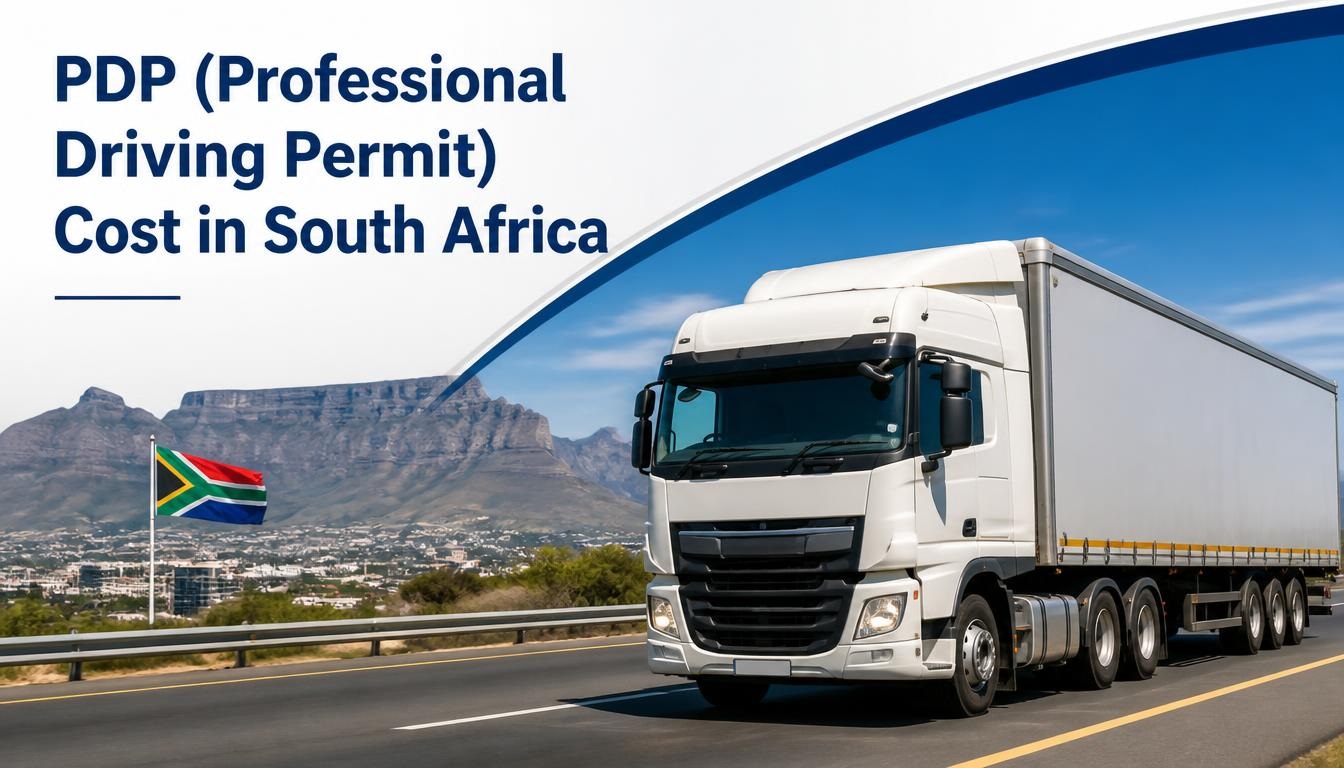
A basic Goods (G) or Passenger (P) PrDP application currently costs between R600 and R1,400+ in total, while Dangerous Goods (D) permits run from R2,500 to R5,000+. Budget strictly for hidden add-ons: Afiswitch criminal checks (R110), medical certificates (R250–R750), passport photos (R40–R80), and temporary permits (R84). Beware of expired MED 1 forms, municipal fee differences, and Afiswitch clearance processing delays before booking your eNaTIS slot.
If you are stepping into the South African transport economy—whether signing up to drive for Uber or Bolt, delivering for Takealot, operating a fleet truck, or running local courier routes—obtaining a Professional Driving Permit (PrDP) is your primary operational hurdle.
Many first-time applicants walk into a Driving Licence Testing Centre (DLTC) assuming they only need R324 for the transaction. They quickly get hit by a cascade of unbudgeted add-ons: unexpected private GP bills for the official MED 1 physical, distinct electronic fingerprint fees routed through Afiswitch, passport photo printing, and temporary driver permits to bridge card printing backlogs.
This guide maps out every single expense, step, and practical shortcut required to secure or renew your PrDP without losing money or burning time in queues.
The Real ZAR Bill: Breaking Down Every Cent From Doctor to DLTC
Calculating your total out-of-pocket investment requires adding statutory municipal tariffs to third-party vetting and medical costs.
The table below provides a full baseline comparison for low-budget vs. high-budget scenarios across standard and specialized categories:
| Outlay Component | Mandatory / Optional | Low-End Estimate (ZAR) | High-End Estimate (ZAR) | Direct Payee / Processing Channel |
| PrDP DLTC Application Fee | Mandatory | R220 | R324 | Local Municipal DLTC / eNaTIS |
| Afiswitch Background Check | Mandatory | R110 | R110 | Afiswitch (EFT / ABSA Branch Deposit) |
| Medical Form (MED 1) | Mandatory | R250 | R750 | Public/Occupational Clinic vs Private GP |
| Passport Photos (Set of 4) | Mandatory | R40 | R80 | Local Kodak / DLTC Photo Booth |
| Temporary PrDP Permit | Optional (Recommended) | R84 | R84 | Municipal Licensing Cashier |
| HAZCHEM Training Course | Category D Only | R1,500 | R3,500 | TETA-Accredited Training Provider |
| Total (Category G / P) | Standard Applicant | R704 | R1,348 | All Combined Standard Outlays |
| Total (Category D) | Dangerous Goods | R2,204 | R4,848 | All Combined Specialized Outlays |
-
Step 1: Medical Exam & Form MED 1 (Valid for 2 months maximum)
-
Step 2: Book Slot via eNaTIS (Gauteng/Western Cape) or direct DLTC walk-in
-
Step 3: Eye Test & Afiswitch Fingerprints captured at the DLTC counter
-
Step 4: Pay Afiswitch (R110 via EFT or ABSA deposit using unique reference)
-
Step 5: Wait 5–10 Days for background verification results
-
Step 6: Collect Temporary Permit (R84) and await final printed card
1. Medical Certificate (Form MED 1) Pitfalls
The official Medical Fitness Certificate (Form MED 1) must be filled out, signed, and stamped by a registered general practitioner.
-
The Danger Zone: The MED 1 form is valid for no longer than 60 days from the date your doctor signs it. If your appointment gets pushed back, you will have to pay for a second consultation.
-
Cost Strategy: Avoid city-center private medical practices that charge general consultation rates (R650–R850). Look for occupational health clinics or community panel doctors who perform standard fleet driver physicals for R250 to R350.
2. Fingerprints & The Afiswitch EFT Loophole
During your DLTC application, your biometric fingerprints are captured digitally for the mandatory criminal record check.
-
Rather than settling the fee directly with the DLTC cashier, this payment (R110) goes to the Department of Transport’s background-check contractor, Afiswitch.
-
You will be handed an administrative slip with a unique payment reference number.
-
You must pay this R110 via EFT or cash deposit at an ABSA branch. If you use the wrong reference number or delay payment, your application sits idle in the system indefinitely.
3. Payment Reality at Municipal Counters
DLTC card terminals frequently suffer network dropouts or load-shedding issues.
-
Always keep R400 to R500 in physical cash in your wallet to cover application and temporary permit fees.
-
Check municipal rules beforehand: certain centers run strict cashless policies, whereas others require exact cash for temporary permits.
Real-World SA Stress Test: Waiting Times, Card Backlogs, and Red Tape
While official schedules suggest a 4 to 6-week turnaround for new card processing, real-world timelines vary significantly depending on local administrative conditions (actual runtime often reaches 6 to 12 weeks due to card printing and transport backlogs).
-
Slot Bottlenecks: In Gauteng (covering Johannesburg, Tshwane, and Ekurhuleni), securing an eNaTIS booking slot can take 1 to 3 weeks during peak usage. In contrast, smaller Western Cape and KZN stations often accept walk-ins but feature longer physical queues on-site.
-
Afiswitch Turnaround: Fingerprint processing normally completes within 5 to 10 working days after your payment reflects. If you have minor SAPS records or common name matches, manual verification can extend this step to 3 weeks.
-
Card Printing Delays: Production at the national printing facility in Pretoria can encounter equipment maintenance backlogs, often dragging card delivery out to 8 to 12 weeks.
-
The Temporary Permit Bridge: If you rely on driving for daily income (e.g., e-hailing or logistics delivery), apply for a Temporary PrDP (R84) immediately once your Afiswitch status updates to cleared. This temporary paper authorization remains legally valid for 6 months.
Category Breakdown: Goods, Passengers, and Dangerous Goods
To select the correct PrDP category without overpaying, match your intended work type against the statutory requirements:
1. Category G (Goods)
-
Minimum Age: 18 Years
-
Target Drivers: Unladen heavy vehicles, light commercial delivery vans, Takealot/courier logistics drivers, and breakdown tow truck operators.
-
Key Exemption: Standard light motor vehicles transporting personal items do not require a PrDP.
2. Category P (Passengers)
-
Minimum Age: 21 Years
-
Target Drivers: Uber, Bolt, and InDrive platform operators, minibus taxi drivers, scholar transport operators, and charter bus drivers.
-
Key Requirement: Includes all requirements of Category G automatically. You do not need to apply for both separately.
3. Category D (Dangerous Goods)
-
Minimum Age: 25 Years
-
Target Drivers: Drivers hauling fuel tankers, compressed gas cylinders, industrial chemicals, or toxic waste products.
-
Additional Expense: Requires an accredited HAZCHEM / Dangerous Goods Certificate from a TETA-approved training provider (R1,500–R3,500) before visiting the DLTC.
Smart Cost-Saving Strategies for Fleet Operators and Drivers
-
Use Group Occupational Medicals: Fleet operators renewing multiple drivers should arrange on-site occupational health visits. Bulk consultations lower individual medical costs from R600 down to roughly R200–R250 per driver.
-
Time the Renewal Grace Window: Submit your PrDP renewal at least 60 days prior to card expiration. If you submit before the card expires, your current permit remains legally extended under South African road traffic rules until the new card is produced, saving you the R84 temporary permit fee.
-
Avoid Unaccredited Agency Markups: Do not pay third-party registration agencies R1,500 to R2,500 promising to “fast-track” your PrDP. Fingerprints must still be captured in person at a DLTC, and third-party shortcuts often lead to fraudulent documents or application rejections.
Frequently Asked Questions
Can I legally drive for Uber or Bolt with only a Temporary PrDP receipt?
Yes. A legally issued Temporary PrDP (Form DCT) paired with your valid South African driving licence card allows you to operate commercially while your permanent card is being printed. Upload clear photographs of both the temporary permit and payment receipt to your e-hailing platform portal to pass document verification.
What criminal convictions disqualify you during the Afiswitch background check?
Applications are automatically flagged and rejected if you have convictions within the past 5 years for driving under the influence (DUI), reckless or negligent driving involving serious injury, culpable homicide, assault, theft, fraud, or sexual offences. Minor traffic fines or administrative infringements under AARTO do not trigger disqualification.
Does the Consumer Protection Act protect me if DLTC card delays cause loss of income?
No. Municipal licensing authorities and the Department of Transport operate under statutory public law rather than commercial service-level agreements covered by the CPA. To protect your earnings, apply for a Temporary PrDP (R84) as soon as your Afiswitch clearance is processed.
DLTC Price & Queue Discussion
Are you applying for or renewing your PrDP in Gauteng, the Western Cape, or KZN? Share your recent experiences in the comments below:
-
What did your local GP charge for the MED 1 medical form?
-
How long did your Afiswitch fingerprint clearance take to process?
-
Did your local DLTC accept card payments, or was cash required?
Disclaimer: Municipal traffic department application fees and third-party service charges fluctuate periodically based on provincial gazetted updates. The pricing details in this guide reflect independent South African transport market data as of mid-2026.

Joseph Mathebula is a consumer tech analyst and market researcher at Prices in South Africa. He specializes in tracking smartphone prices and consumer electronics, helping everyday shoppers navigate the market to secure the best value.