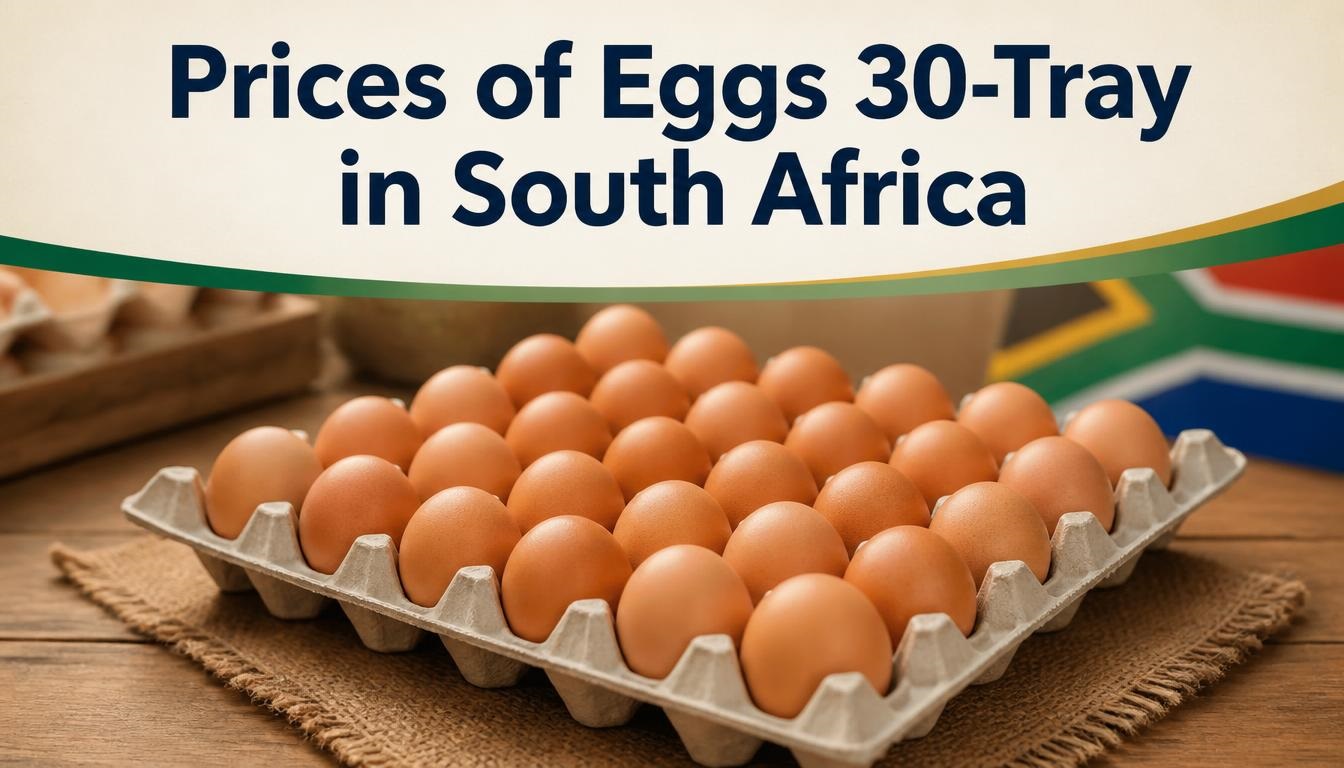
Walking into a local supermarket nowadays feels like a lesson in financial endurance. The humble 30-egg tray—once the undefeated champion of budget family protein and post-workout meal prepping—has turned into a volatile commodity. Following the lingering aftershocks of Avian Influenza outbreaks, rising poultry feed costs driven by grain inflation, and diesel generator levies passed down from packhouses during high load-shedding stages, South Africans are paying significantly more for a simple carton of eggs.
At pricesinsouthafrica.co.za, our daily retail price-tracking reveals massive pricing disparities across major retailers, size categories, and farming methods. Choosing the wrong retailer or falling for clever store-brand sizing tricks can silently drain your monthly grocery budget.
SA Egg Price Snapshot:A standard 30-egg tray in South Africa currently costs between R84.99 and R129.99 for caged/barn eggs (Medium to Extra Large) and R135.00 to R179.99 for free-range alternatives.Top Recommendation: Shoprite Ritebrand / Checkers Housebrand 30 Large Eggs (~R84.99 – R99.99).Best Budget Alternative: Direct local farm stall purchases or wholesale bulk buying at Makro / Boxer.Major Buyer Warning: Watch out for “Size-Squeeze” shrinkflation—retailers often discount 30-trays of Medium eggs to match historical Large egg price points. Always check the egg size grade on the side label before tapping your card!
The True Cost Breakdown: SA Retailer Comparison Matrix
Comparing 30-egg tray prices requires looking beyond the main display sticker. Retailers frequently shift between Grade A Medium, Large, and Extra Large stock to manage shelf margins. All standard retail prices in South Africa include 15% VAT, but non-vatable essential food items rules mean plain fresh eggs carry zero-rating status, meaning the price you see on the shelf is exempt from VAT—giving consumers a direct saving.
| Retailer / Supplier | Egg Grade & Type | Average Price Range (ZAR) | Value Rating | Primary Payment / Rewards Perks |
| Shoprite (Ritebrand) | Large 30-Pack (Caged/Barn) | R84.99 – R94.99 | 5/5 | Xtra Savings Instant Discounts |
| Checkers (Housebrand) | Large 30-Pack (Caged/Barn) | R89.99 – R99.99 | 4.5/5 | Sixty60 delivery, Xtra Savings, Discovery Vitality |
| Pick n Pay (No Name) | Large 30-Pack (Caged/Barn) | R89.99 – R104.99 | 4/5 | Smart Shopper points, TymeBank cashback |
| Makro / Massmart | Extra Large 30-Pack (Commercial) | R109.99 – R124.99 | 4/5 | mCard discounts, Bulk Business Accounts |
| Woolworths | Free Range Large 30-Pack | R149.99 – R169.99 | 3.5/5 | WRewards, Discovery Vitality HealthyFood (up to 25% back) |
| Local Farm Stalls / Outlets | Mixed/Large Fresh Farm 30-Tray | R75.00 – R90.00 | 4.5/5 | Direct Cash, EFT, PayJustNow (select vendors) |
Quality vs. Cost: Breaking Down Egg Utility and Durability
Buying in bulk only makes financial sense if every egg makes it to the frying pan without spoiling or breaking prematurely.
Commercial Caged vs. Free-Range Trays
-
Caged/Barn Eggs (Standard Trays):
-
Pros: Cheapest cost-per-gram of protein in SA (~R2.83 to R3.33 per egg); consistent sizing; long shelf life.
-
Cons: Variable yolk color intensity depending on commercial layer feed quality; ethical concerns surrounding battery cage systems.
-
-
Free-Range Trays (Woolworths, Shadowlands, Local Free-Range):
-
Pros: Richer yolk pigment, thicker natural shell walls (reducing hairline fractures in transit), superior welfare standards.
-
Cons: Significantly higher cost-per-egg (~R4.50 to R5.60 per egg); store promotions on 30-trays are extremely rare.
-
Shell Integrity & Packaging Realities
-
Pulp (Cardboard) Trays: Standard across 30-egg bulk buys. They absorb natural moisture and protect eggs during rough road transport better than thin plastic. However, they are prone to tearing at the corners if stacked more than three high in your pantry.
-
Plastic Wrapped Outer Shells: Supermarket chain trays (like Nulaid or Eggbert) feature heat-sealed plastic wrap over cardboard trays. Always inspect the bottom of the tray through the plastic for leaked yolk before putting it in your trolley.
Insider Hacks: Local Retail Sales Cycles and Loyalty Savings
You do not need to pay full retail price for your weekly or monthly egg run if you align your shopping with South African retail cycles.
The SA Grocery Loyalty Strategy:
Real-World SA Conditions: Heat, Storage, and Supply Fluctuation
Buying eggs in South Africa comes with unique practical challenges that don’t apply to European or North American consumers.
Storage and Quality Factors
-
Counter Storage (Room Temp): Rapid egg degradation in high summer heat; higher risk of spoiling; best used within 7 to 10 days.
-
Refrigeration (Cold Storage): Preserves air cell depth and internal egg freshness; prevents bacterial growth; extends shelf life up to 4 to 6 weeks.
1. The Summer Heat Factor & Pantry Storage
In South African summer months—where inland temperatures routinely cross 30°C in Gauteng, Limpopo, and the North West—leaving a 30-egg cardboard tray on your kitchen counter drastically speeds up air pocket expansion inside the egg. This thin-outs the egg white and ages the egg three times faster than cold storage. Always refrigerate your 30-tray immediately upon returning from the shop.
2. Load-Shedding & Cold-Chain Disruptions
While fresh eggs do not technically require refrigeration on supermarket shelves if kept at a stable ambient temperature, abrupt heat spikes inside distribution centers or retail stores during prolonged power outages can affect freshness. If a store’s climate control fails during load-shedding, ambient egg trays sweat under plastic wrapping, creating surface moisture that allows bacteria to penetrate the porous shell. Look for dry cardboard packaging and firm shells.
3. Consumer Protection Act (CPA) Rights on Spoiled Trays
Under Section 56 of the South African Consumer Protection Act (CPA), consumers have an implied warranty of quality. If you open a newly purchased 30-egg tray at home and discover rotten, cracked, or severely undersized eggs:
-
Keep your physical till slip or digital app receipt (Sixty60 / PnP ASAP).
-
Take a clear photo of the batch number and expiry date printed on the tray seal.
-
Return the product to the store’s customer service desk. Retailers like Shoprite, Checkers, and Pick n Pay are legally bound to offer a full refund or an immediate replacement for compromised food items.
Local FAQs: SA Egg Buying Guide
Are fresh raw eggs zero-rated for VAT in South Africa?
Yes. Raw, unprocessed hen eggs are listed as zero-rated essential foodstuffs under South African tax law. You do not pay 15% VAT on standard egg purchases, whether buying a 6-pack or a 30-egg tray.
What should I do if half my 30-egg tray is cracked inside the plastic wrapping?
Do not throw the tray away. Return the entire tray along with your store slip or digital order invoice to the issuing store under CPA guidelines for a full exchange. Most store managers will replace the entire tray immediately without friction.
Is buying a 30-egg tray really cheaper than buying two 15-packs or five 6-packs?
In 90% of cases, yes. Buying a 30-egg tray saves you between 15% and 25% per egg compared to buying 6-packs. However, during flash sales on 18-packs (e.g., Shoprite Fairacres or Checkers Housebrand promos), two 18-packs (36 eggs) can occasionally work out cheaper per egg than a single 30-tray. Always divide the total price by the number of eggs to confirm the unit price.
What Are You Paying for Eggs in Your Area?
Egg prices vary widely across South African provinces—a 30-tray in rural Eastern Cape often carries extra freight costs compared to suburban Western Cape or Gauteng stores. What are 30-egg trays currently selling for at your local Shoprite, Makro, or neighborhood farm stall? Drop your location, the retailer name, egg size, and the price you paid in the comments below to help fellow South Africans track store markups!
Disclaimer: Prices, promotions, and stock availability fluctuate across regions and retailers. The figures presented in this guide reflect independent market tracking across South African retail outlets at the time of publication.

Joseph Mathebula is a consumer tech analyst and market researcher at Prices in South Africa. He specializes in tracking smartphone prices and consumer electronics, helping everyday shoppers navigate the market to secure the best value.