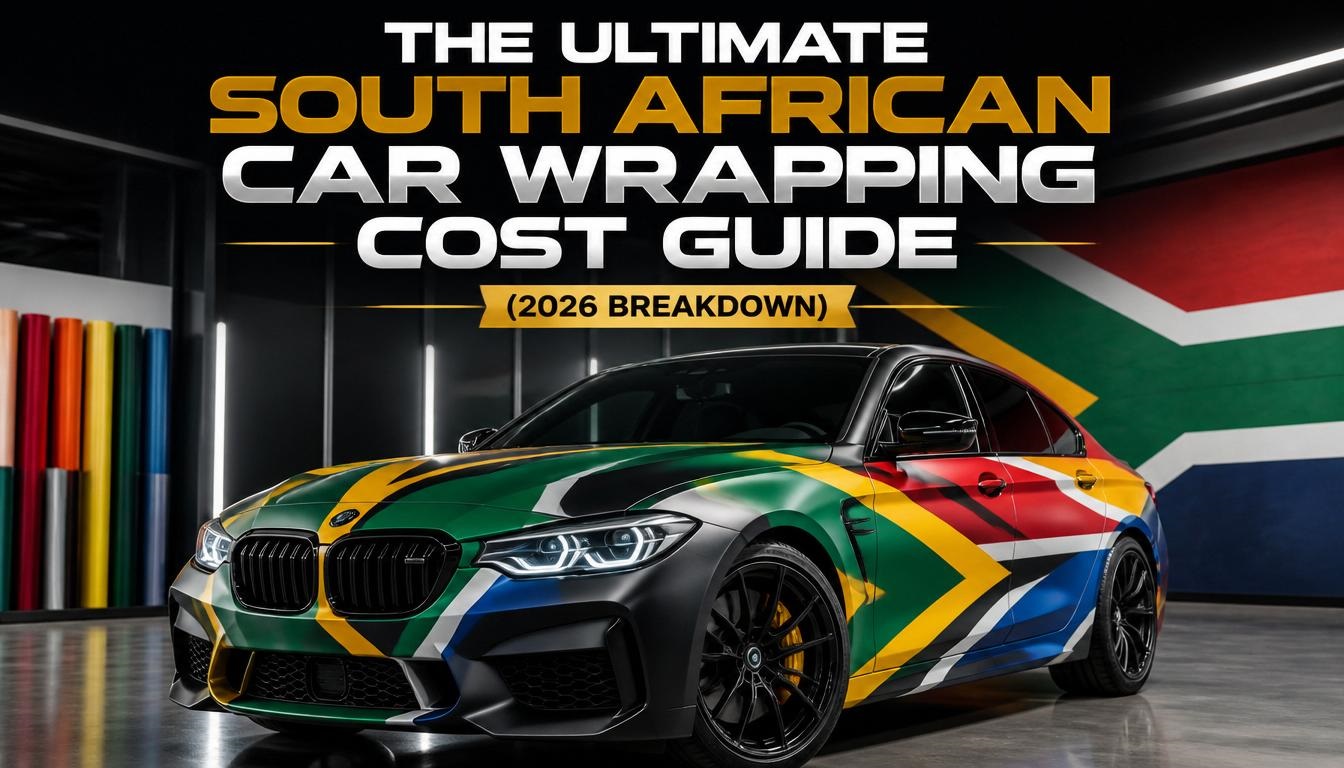
If you have driven around Sandton, Century City, or Umhlanga recently, you have undoubtedly noticed the rise in satin stealth double-cabs, matte black hatchbacks, and eye-catching color-shifting sedans. Transforming your vehicle with a vinyl wrap has become the gold standard for drivers looking to customize their ride or protect their factory paint without committing to a permanent spray job.
However, walking into an auto-styling shop or requesting a quote online often leaves vehicle owners confused. Prices across Johannesburg, Cape Town, and Durban can range anywhere from R2,500 for a quick roof contrast wrap to well over R50,000 for high-end specialty films.
This comprehensive guide breaks down exact market rates in South African Rand (ZAR), explains what drives installation costs, compares vinyl wraps against repainting and Paint Protection Film (PPF), and outlines critical steps to ensure your investment survives the harsh African sun.
Quick Summary: Average Car Wrapping Costs in South Africa
The table below outlines current realistic market pricing across major South African metropolitan areas for professional vinyl installation using recognized cast vinyl materials (such as 3M, Avery Dennison, and Hexis).
| Vehicle Type / Service | Typical Examples | Estimated Price Range (ZAR) |
| Compact Hatchback | VW Polo, Hyundai i10, Kia Picanto | R14,000 – R20,000 |
| Medium Sedan / Hatch | VW Golf, Toyota Corolla, Ford Focus | R16,000 – R23,000 |
| Executive / Large Sedan | BMW 3 Series, Mercedes C-Class, Audi A4 | R18,000 – R26,000 |
| SUV / Crossover | Toyota Fortuner, VW Tiguan, Haval H6 | R22,000 – R32,000 |
| Double-Cab Bakkie | Toyota Hilux, Ford Ranger, Isuzu D-Max | R22,000 – R34,000 |
| Supercar / Luxury Exotic | Porsche 911, Audi R8, BMW M4 | R28,000 – R45,000+ |
| Chrome / Flip / Chrome Delete | Specialty Metallic, Chameleon, Chrome | R35,000 – R65,000+ |
| Partial Wrap (Roof or Bonnet) | Panoramic Black Roof, Hood Accents | R1,600 – R3,500 |
| Chrome Delete (Trim Trim) | Window Trim, Front Grille, Badges | R1,800 – R4,500 |
Note on Pricing: Quotes under R12,000 for a full vehicle wrap usually indicate the use of low-grade calendered signage vinyl or DIY-grade materials. These materials lack air-release channels, pull back around curves, and run a high risk of destroying your clear coat during removal.
Detailed Cost Breakdown by Vehicle Category
1. Compact Hatchbacks & Entry-Level Cars
-
Estimated Cost: R14,000 – R20,000
-
Popular Models: VW Polo, Suzuki Swift, Hyundai i10, Renault Kwid
Smaller vehicles require less total linear meters of material (typically around 15 to 18 meters). However, smaller hatchbacks often feature tight curves around air intakes, fog light recesses, and sharp rear hatches that demand precise panel heating and manipulation.
2. Sedans & Executive Saloons
-
Estimated Cost: R16,000 – R26,000
-
Popular Models: BMW 3 Series, Mercedes-Benz C-Class, Audi A4, Toyota Corolla
Sedans feature smoother, longer body panels, which allow vinyl to be laid relatively quickly over doors and bonnets. The pricing variation comes down to bumper complexity—an M-Sport or AMG bumper takes significantly more labor to dissemble and inlay than a standard trim bumper.
3. SUVs & Double-Cab Bakkies
-
Estimated Cost: R22,000 – R34,000
-
Popular Models: Toyota Hilux, Ford Ranger, Toyota Fortuner, BMW X5
Bakkies and SUVs dominate South African roads, but they are among the most labor-intensive vehicles to wrap. A double-cab bakkie features deep door handles, complex tub contours, load-bin step edges, roof rails, and large front grilles. They consume 20 to 24 meters of premium film, pushing material and labor costs higher.
4. Specialty Finishes & Exotics
-
Estimated Cost: R35,000 – R65,000+
-
Finishes: High-Gloss Chrome, Color Shift / Chameleon, Satin Metallic, Forged Carbon
Specialty films require advanced installation techniques. Chrome vinyl, for instance, has virtually zero stretch capability compared to standard cast vinyl. If overstretched, chrome turns cloudy and leaves visible heat scars. Installers must work slowly, using seam overlays and specialized torching methods.
Primary Factors Influencing Your Quotation
Why do two installers in the same city quote wildly different prices for the exact same vehicle? Five critical factors determine the final price tag:
1. Film Grade: Cast vs. Calendered Vinyl
-
Cast Vinyl (Professional Grade): Poured as a liquid during manufacturing, resulting in a thin, relaxed film with no inherent memory. It conforms smoothly around deep recesses, handles heat cycles without shrinking, and lasts 5 to 7 years. Leading brands include 3M (2080 Series), Avery Dennison (Supreme Wrapping Film), Hexis (Skintac), and Oracal (970RA).
-
Calendered Vinyl (Signage Grade): Extruded through rollers like dough. It retains physical tension and constantly tries to shrink back to its original flat shape. When forced into car curves, it pops out of recesses, lifts along edges within months, and leaves adhesive residue during removal.
2. Extent of Vehicle Disassembly
A budget wrapper will trim vinyl directly along door seams and tuck edges using plastic squeegees with minimal teardown. A high-end installer will safely remove:
-
Headlights and taillights
-
Door handles and side mirrors
-
Roof rails and bumper covers
-
Badges and trim pieces
This level of teardown ensures the vinyl wraps around every edge inside door jambs, eliminating visible original paint gaps. Disassembly alone can add 6 to 10 hours of skilled labor.
3. Surface Preparation & Paint Condition
Vinyl wrap is an aesthetic layer, not a filler. It mirrors every imperfection beneath it. If your car has stone chips, deep scratches, oxidation, or peeling clear coat, those areas must be sanded smooth, cleaned with isopropyl alcohol, and primed prior to wrapping. Wrapping over rust or failing clear coat will cause immediate adhesion failure.
4. Color & Texture Selection
Basic gloss colors (black, white, red) are the most economical. Satin, matte, and metallic finishes sit in the mid-tier price range. High-gloss ultra-smooth liquid wraps, carbon fiber textures, and chrome occupy the top pricing bracket due to raw material costs.
Partial Wrapping & Accents: Budget-Friendly Options
If a full wrap exceeds your current budget, targeted partial wraps offer a subtle accent upgrade:
| Accent Area | Purpose & Visual Impact | Typical Price (ZAR) |
| Roof Wrap (Gloss/Satin Black) | Creates a panoramic glass roof appearance | R1,600 – R2,800 |
| Bonnet / Hood Wrap | Adds a sporty contrast or carbon fiber accent | R1,800 – R3,500 |
| Chrome Delete Package | Covers factory chrome trim in sleek gloss black | R2,000 – R4,500 |
| Side Mirrors (Pair) | Accent coloring (e.g., carbon style, satin silver) | R800 – R1,500 |
| Interior Dashboard Trim | Refreshes worn wood grain or scratched plastic | R1,500 – R3,500 |
Comparing Your Options: Vinyl Wrap vs. Full Repaint vs. PPF
Understanding how vinyl wrapping stack up against conventional bodywork painting or Paint Protection Film helps clarify where your budget is best allocated:
| Parameter | Vinyl Wrap | Quality Body Repaint | Paint Protection Film (PPF) |
| Primary Purpose | Styling, color change, branding | Restoring damaged paint, permanent finish | Maximum paint protection against rock chips |
| Cost Range (Sedan) | R16,000 – R23,000 | R25,000 – R40,000+ | R28,000 – R48,000+ |
| Lifespan in SA | 3 to 6 years | 10+ years | 7 to 10 years |
| Reversibility | 100% reversible back to OEM paint | Permanent (lowers resale if non-OEM color) | 100% reversible |
| Impact Protection | Light surface scratches | None (chips easily) | High (self-healing topcoat against stone impacts) |
| Turnaround Time | 3 to 5 business days | 10 to 20 business days | 3 to 5 business days |
Key Takeaway: If your primary goal is shielding your bumper and bonnet from stone chips on the N1 or N3 highways, Paint Protection Film (PPF) is the correct material. Vinyl wrap is significantly thinner (around 80 to 100 microns) compared to PPF (180 to 200+ microns) and is designed for aesthetic transformation rather than impact resistance.
How long does a vinyl wrap last in South Africa?
South Africa’s high UV index (particularly in Gauteng, the Free State, and inland provinces) places severe stress on vehicle vinyls. Extreme solar exposure breaks down the plasticizers inside the film, making it brittle over time.
Factors Affecting Lifespan
-
Vertical vs. Horizontal Panels: Hoods, roofs, and trunk lids receive intense direct overhead sunlight throughout the day. Horizontal surfaces usually show wear 18 to 24 months earlier than vertical side panels.
-
Garaging vs. Street Parking: Vehicles parked under cover or inside garages routinely enjoy a wrap lifespan of 5 to 7 years. Vehicles left parked outdoors continuously under the sun typically last 3 to 4 years before showing signs of discoloration or edge lifting.
-
Coastal Salt & Humidity: In coastal cities like Durban and Cape Town, salt air accelerates edge corrosion if moisture gets underneath unsealed wrap borders. Proper edge sealing during installation is essential.
Crucial Aftercare & Maintenance Tips
To maximize the longevity of your vinyl investment, follow these maintenance rules:
-
Hand Wash Only: Avoid automated drive-through brush washes. The stiff nylon bristles can catch edge seams and cause fine swirl marks on gloss or satin vinyl.
-
Mind the Pressure Washer: Keep high-pressure wash nozzles at least 30 to 50 cm away from film seams and edges. Holding high pressure close to an edge can lift the film off the paint.
-
Clean Contaminants Promptly: Bird droppings, tree sap, and diesel soot contain acid compounds that bake into vinyl under heat, causing permanent staining. Clean them off immediately with wrap-safe detail spray and clean microfiber cloths.
-
Apply Ceramic Coating: Applying a vinyl-specific ceramic coating over gloss or matte wraps adds hydrophobic protection and blocks harmful UV rays, extending the wrap’s lifespan by up to two additional years.
South African Legal & Insurance Requirements
Changing the visual appearance of your vehicle comes with administrative and insurance responsibilities:
1. eNaTIS Registration Adjustments
If you change your car’s primary color via vinyl wrap by more than 50%, you are legally required to update your vehicle registration details with your local licensing department (eNaTIS).
-
The Process: Take your vehicle to a police clearance station along with your original registration documentation, proof of identity, and the wrap installation invoice. Once verified, apply for a notification of change of particulars (RPC form) to update the color on your license disk.
2. Notifying Your Vehicle Insurer
You must notify your short-term motor insurance provider (such as Outsurance, Discovery, Santam, or King Price) as soon as the wrap is installed.
-
Why It Matters: Vinyl wrapping is considered a vehicle modification. Failing to disclose it can lead to claim repudiation in the event of an accident.
-
Valuation: Adding a full wrap increases the insured value of the vehicle. Ensure the quote cost is added under specified accessories so that the insurer covers wrap re-application on affected panels in the event of a crash.
Crucial Questions to Ask Before Choosing an Installer
To protect yourself from poor workmanship, ask the shop these questions before making a deposit:
-
Which exact brand and series of vinyl will be installed on my car? (Demand specific product codes, e.g., 3M 2080 or Avery SWF).
-
Do you provide a written warranty covering both material failure and installation lifting? (Reputable shops offer a 1-to-2 year installation warranty alongside manufacturer film warranties).
-
Will you be removing handles, lights, and trim panels, or wrapping around them?
-
Is the installation bay dust-free and climate-controlled? (Vinyl requires controlled temperatures between 18°C and 23°C during application to set the adhesive properly).
-
Can I view recent in-house projects or inspect close-up seam finishes on completed cars in the shop?
What Is Your Experience with Car Wrapping?
Every vehicle styling project is unique, and real-world results often depend on local shop expertise and proper maintenance.
-
Have you wrapped your car recently in Johannesburg, Cape Town, or Durban?
-
Which vinyl brand did you choose, what were you quoted, and how has the film held up against the local sun?
Share your quotes, questions, or installer recommendations in the comments section below to help fellow South African car enthusiasts make informed choices!

Joseph Mathebula is a consumer analyst and market researcher at Prices in South Africa. He specializes in tracking local service costs, retail pricing, and travel budgets, helping everyday shoppers navigate the market to secure the best value.