Real Human Insight: Why Automated Cleaning Is No Longer a Luxury in Mzansi
Let us be completely honest with each other for a second. If you live anywhere in South Africa right now—whether you are battling the perpetual fine dust and load-shedding soot on a Johannesburg driveway, trying to keep up with pet hair in a sprawling Durban coastal home, or managing a busy family household in Cape Town—keeping floors clean feels like a full-time job.
I remember unboxing my first automated floor cleaner a couple of years ago, skeptical that a disc-shaped gadget could genuinely handle South African household realities: heavy porcelain tile grout, stubborn pet fur, and stray bits of gravel tracked in from the garden. Within three days, watching it autonomously map the dining room floor while I sat back with a cup of rooibos made me realize there was no turning back.
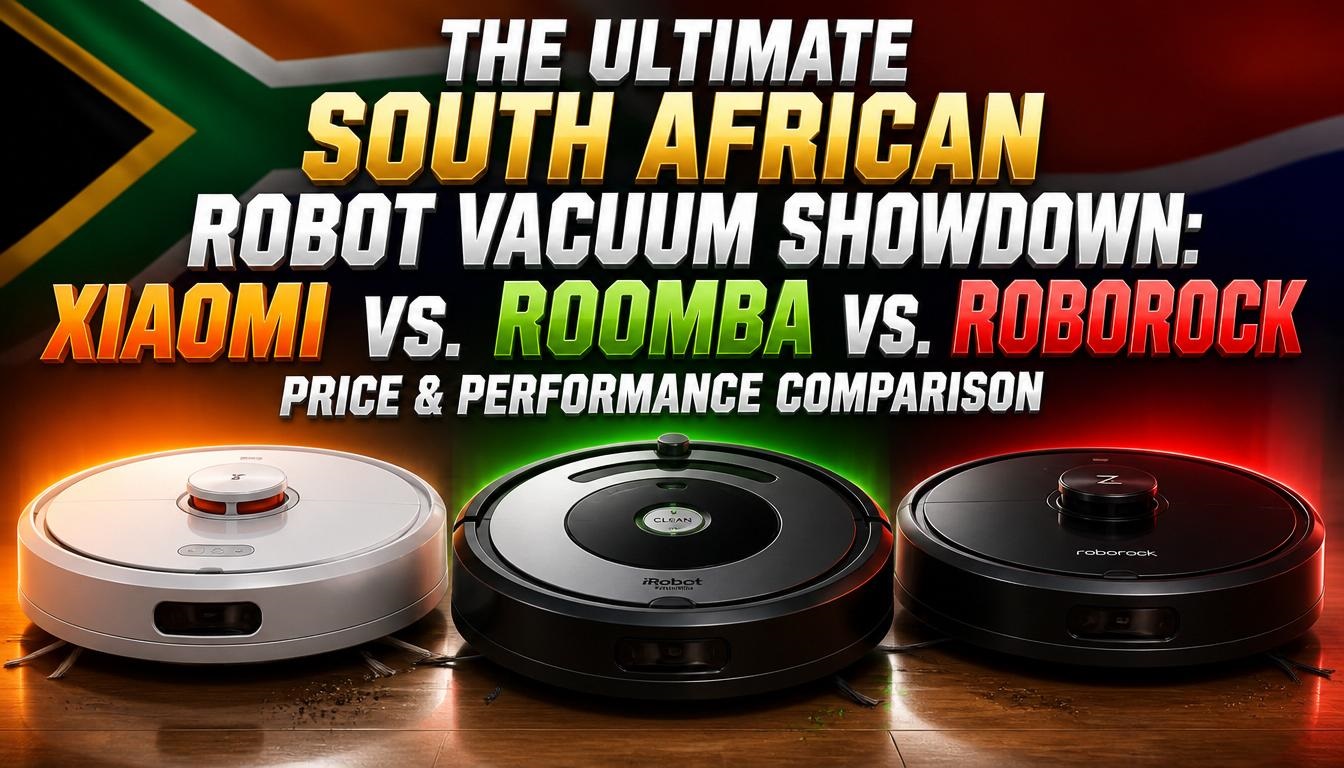
However, diving into the market today can feel overwhelming. With Google AdSense bots and generic review sites regurgitating endless spec sheets, finding honest, boots-on-the-ground advice tailored to the South African market is tough. You want to know which brand actually survives local power fluctuations, offers accessible replacement parts, and justifies every single Rand spent. Today, we are breaking down the three heavyweight contenders available on our shores: Xiaomi, iRobot Roomba, and Roborock.
Understanding the South African Robotic Vacuum Ecosystem
When investing anywhere from R2,500 to over R27,000 in a home appliance in South Africa, you are not just buying suction power; you are buying ecosystem reliability. Currency fluctuations, local warranty support through trusted retailers like Takealot, Makro, and Yuppiechef, and the availability of consumables (like mop pads, side brushes, and HEPA filters) matter immensely.
Let us look closely at how the market breaks down across price tiers, navigation capabilities, and real-world performance.
Comprehensive Price and Feature Comparison Table
| Brand & Series Model | Current Average SA Price Range | Navigation Technology | Maximum Suction Power | Best Suited For |
| Xiaomi Robot Vacuum E5 / S20 | R2,499 – R4,690 | Gyro / Basic LDS Laser | 2,500Pa – 4,000Pa | Apartments, budget-conscious buyers, simple hard floors |
| Xiaomi X20+ / S20+ | R11,599 – R20,999 | Advanced LDS Laser + Optical | 6,000Pa – 7,000Pa | Mid-to-large homes, multi-pet households wanting hands-off docking |
| iRobot Roomba (i7 / mid-tier series) | R8,499 – R11,779 | vSLAM Camera / Smart Mapping | Proprietary Multi-Surface | Carpets, long hair management, rugged reliability |
| Roborock Q Series / Qrevo | R8,999 – R14,999 | Reactive Tech / LiDAR | 10,000Pa | Tech enthusiasts, complex multi-room layouts, deep-pile carpets |
| Roborock Saros Flagship Series | R27,999 – R29,999 | AI-Powered 3D Vision | Ultra-High Tier | Luxury homes, ultimate autonomy, obstacle avoidance |
Brand-by-Brand Deep Dive: What Makes Them Tick in Local Homes?
1. Xiaomi: The Value King That Punch Above Its Weight
Xiaomi has completely disrupted the South African smart home scene. If you walk into a Makro or browse local tech stores, Xiaomi dominates the entry-to-mid tier brackets.
-
The Good: Models like the Xiaomi Robot Vacuum E5 and S20 series offer incredible entry points starting under R3,000. They integrate seamlessly with the Mi Home app, letting you schedule cleans while you are away at the office. High-end variants like the X20+ bring automated self-emptying docks into a more attainable price bracket compared elite competitors.
-
The Catch: Entry-level models rely on more basic navigation, meaning they might bump into furniture legs more frequently before mapping your layout correctly. Furthermore, customer support responses can vary depending on whether you bought through official distribution channels or grey importers.
2. iRobot Roomba: The Pushing Pioneer of Deep Cleaning
iRobot is the brand that started the robotic vacuum revolution. Known for their distinct dual rubber multi-surface brushes rather than traditional bristled rollers, Roombas are legendary for resisting hair tangles.
-
The Good: If your South African home features wall-to-wall carpeting, Roomba units excel at beating embedded dust and pet dander out of dense fibers. Their build quality feels industrial and robust, designed to last many years under heavy usage.
-
The Catch: Roomba models traditionally command a higher price tag relative to their feature set. While competitors have rushed to offer advanced dual-rotating mopping pads and self-washing hot-air drying docks, Roomba has historically focused heavily on superior vacuuming mechanics, making combination mop-and-vacuum setups feel slightly behind the curve at similar price points.
3. Roborock: The Cutting-Edge Technological Powerhouse
Manufactured with state-of-the-art navigation and mind-blowing suction ratings (reaching up to 10,000Pa on newer Q and Saros series), Roborock is the choice for gadget lovers who want absolute autonomy.
-
The Good: Their obstacle avoidance is second to none. If you accidentally leave phone charger cables, children’s toys, or socks lying on the bedroom floor, Roborock’s reactive AI tech navigates right around them. Units like the Roborock Saros and Qrevo lines feature intelligent extending arms for edges and automated docks that wash and hot-air dry mop pads.
-
The Catch: Premium pricing. Elite models scale past R27,000, placing them firmly in luxury appliance territory. Sourcing specialized replacement parts locally can also require ordering through select specialized stockists.
Practical Factors for South African Homeowners
When making your final choice, keep these three operational realities in mind:
-
Load-Shedding and Battery Management: Most modern docks consume minimal standby power, but sudden power cuts can interrupt scheduled cleaning cycles. Look for models with reliable resume-cleaning functions that pick up right where they left off once power returns.
-
Dust and Fine Soil Types: South African soils vary wildly from clay-heavy garden dirt to coastal sand. High suction power (above 5,000Pa found in modern Xiaomi and Roborock units) is mandatory if you have unpaved driveways or open-plan living areas facing dusty yards.
-
App Connectivity: Ensure your home Wi-Fi router maintains a stable connection, as setting up restricted zones (virtual walls) via smartphone apps prevents your expensive robot from getting stuck on thick Persian rugs or tumbling down double-story staircases.
Summary Verdict: Which One Should You Buy?
-
Choose Xiaomi if you want the best balance of smart features and affordability, ranging from budget student apartment helpers to capable mid-tier self-emptying systems.
-
Choose iRobot Roomba if your priority is rugged durability and deep-cleaning carpets that refuse to let go of stubborn pet hair.
-
Choose Roborock if you want cutting-edge AI navigation, elite mopping capabilities, and total hands-off floor maintenance, and budget is not your primary constraint.
Join the Discussion
Navigating the world of smart home tech in South Africa comes with plenty of trial and error. Which brand are you currently leaning toward for your home layout, or if you already own one of these models, how has it held up against local dust and power outages? Drop a comment below with your setup or any questions, and let’s chat about what works best!

Joseph Mathebula is a consumer analyst and market researcher at Prices in South Africa. He specializes in tracking local service costs, retail pricing, and travel budgets, helping everyday shoppers navigate the market to secure the best value.