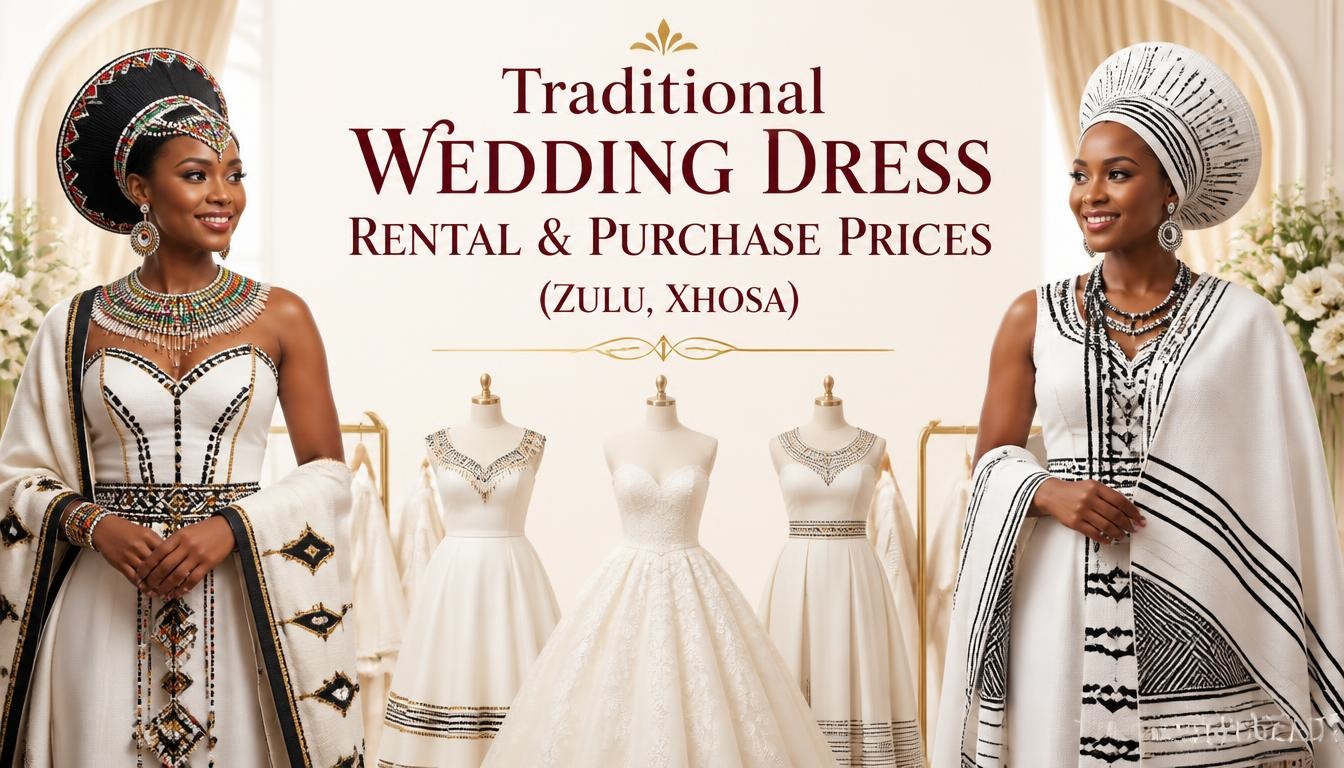
Planning a traditional wedding (such as Umcembo or Makoti celebrations) means navigating custom bridal wear costs that can easily spiral out of control. Beyond the main bridal dress, full traditional attire requires specialized accessories—including Isicholo (Zulu hats), Ibhayi (Xhosa shawls), beadwork, and custom tailored Umvunulo or Umvhindo ensembles.
Quick-Answer Pricing Summary
The True Cost of Traditional Bridal Wear in South Africa
Traditional wedding budgets are frequently undercut by unexpected expenses. While a modern white gown usually involves a single purchase or rental, Zulu and Xhosa traditional weddings often require multiple outfit changes across multi-day celebrations (Umakoti orientation, Umcembo, and Umshado).
Buying a complete off-the-rack outfit or commissioning a tailor introduces distinct costs. Fabric selection plays a major role: authentic Three Cats Shweshwe from Da Gama Textiles, high-grade Umbacho cotton canvas, or heavy-gauge Zulu beadwork quickly elevate the overall price tag.
Average Cost Breakdown: Buying vs. Renting
Buying (Bespoke / Retail)
-
Off-the-shelf Shweshwe Dress: R1,800 – R3,500
-
Custom Tailored Umbacho Set: R3,500 – R7,500
-
Full Designer Couture (Zulu/Xhosa): R6,500 – R15,000+
-
Authentic Accessories (Beads, Isicholo, Ibhayi): R800 – R2,500
Renting (Boutique / Specialist)
-
Basic 3-Piece Rental Set: R700 – R900 per event
-
Full 4/5-Piece Deluxe Ensemble: R1,000 – R2,200 per event
-
Rental Security Deposit (Refundable): R500 – R1,500
Zulu vs. Xhosa Bridal Attire Price Comparison
Pricing for traditional bridal attire varies based on cultural requirements, material usage, and handcrafted details.
| Attire Type | Key Components Included | Rental Cost (ZAR) | Purchase Cost (ZAR) | VAT Included? | Best Value Link / Retailer |
| Xhosa Umbacho 3-Piece Set | Umbhinqo (Skirt), Ibhayi (Shawl), Iqhiya (Headwrap) | R700 – R900 | R2,100 – R3,200 | Varies by boutique | View Options at Iyana Rentals |
| Xhosa Umbacho 5-Piece Deluxe | Skirt, Apron (Incebetha), Shawl, Headwrap, Bag (Inxili) | R950 – R1,500 | R3,500 – R5,500 | Yes | Check Styles at Africa Fashion House |
| Zulu Modern Shweshwe Bridal Gown | Mermaided/Flared Shweshwe Dress, Matching Doek | R900 – R1,800 | R1,950 – R5,800 | Yes | Explore Shweshwe on NN Vintage |
| Traditional Zulu Makoti Set | Isidwaba (Leather skirt), Isicholo, Beaded Top, Isicwayo | R1,200 – R2,500 | R4,500 – R12,000 | No (Craft tailors) | Shop Accessories on Takealot |
| Bespoke Designer Hybrid Gown | Custom Modern-Traditional Fusion Gown | R2,500 – R4,500 | R7,500 – R18,000+ | Yes | Direct Designer Studio |
Should You Rent or Buy Your Traditional Wedding Outfit?
Deciding whether to buy or rent depends on budget constraints, timing, and personal preference.
The Case for Renting
-
Upfront Savings: Renting a full Xhosa Umbacho set costs roughly R800 to R1,000, compared to purchasing the same outfit for R2,900 to R3,500.
-
No Long-Term Storage: Heavy beaded garments and structured headwear take up space and require specific storage conditions to prevent deterioration.
-
Flexibility for Multi-Day Events: Renting allows brides to afford multiple outfit changes across different days without incurring full retail costs.
The Case for Buying
-
Custom Fit and Alterations: Traditional attire relies on precise fitting around the waist and shoulders. Rental pieces cannot be altered permanently, which can lead to sizing compromises.
-
Cultural Significance: Many families prefer keeping the Makoti dress as a heirloom piece for future family events.
-
Zero Deposit Risk: Boutique rental agreements include strict damage clauses covering makeup stains, torn black braiding, or loose beadwork.
Essential Accessories That Impact the Total Price
Focusing only on the main dress price can cause buyers to overlook essential accessories. Accessories make up a significant portion of traditional Zulu and Xhosa bridal wear.
| Component | Est. Share of Total Outfit Budget |
| Main Dress / Skirt & Top | 55% |
| Beadwork (Necklaces, Cape, Wristbands) | 25% |
| Headwear (Isicholo / Structured Iqhiya) | 12% |
| Footwear & Ceremonial Accessories | 8% |
1. Zulu Beadwork & Isicholo
-
Isicholo (Zulu Married Woman’s Hat): Authentic handcrafted hats cost between R450 and R1,200, depending on size and detail.
-
Umvunulo Bead Sets: Full neck-to-shoulder beaded capes cost between R800 and R2,500. Machine-made alternatives found at retail stores like Takealot offer budget-friendly options starting around R250 to R500.
2. Xhosa Umbacho Trimmings & Iqhiya
-
Black Braiding (Ibhayi & Umbhinqo): Authentic Xhosa garments use thick cotton canvas trimmed with multiple rows of black wool braiding. The number of braid rows reflects craftsmanship; more rows increase the price tag.
-
Inxili (Traditional Beaded Bag): Matching beaded shoulder bags cost R250 to R600 when purchased separately.
Local Buying Guide: Lay-by, Payments, and Consumer Protection
Navigating South African retail options requires understanding payment structures and buyer protections.
Flexible Payment Terms (PayFlex, Lay-by, and eBucks)
Buying bespoke traditional wear upfront can impact cash flow. Major online traditional fashion platforms offer buy-now-pay-later (BNPL) options like PayFlex or PayJustNow, dividing payments into 4 interest-free installments over 6 weeks.
For boutique designers operating in physical stores, traditional Lay-by terms (usually over 3 to 6 months with a 10%–20% deposit) remain a popular option. If buying accessories via Takealot, shoppers can use eBucks or Discovery Miles to lower out-of-pocket costs.
Understanding Your Consumer Protection Act (CPA) Rights
-
Bespoke Tailoring Exemption: Under Section 20 of the South African Consumer Protection Act (CPA), custom-made goods designed to personal specifications are generally exempt from standard “change of mind” returns. Ensure measurement sheets are signed before tailoring begins.
-
Rental Deposits: Rental boutiques must provide clear written terms regarding security deposits. Normal wear and tear cannot be penalized, but uncleaned cosmetic stains or missing beadwork may result in partial deposit deductions.
Frequently Asked Questions
How far in advance should I order a custom Zulu or Xhosa bridal gown?
Custom tailored traditional gowns require 6 to 10 weeks lead time. Fabric sourcing, intricate hand-beading, and multiple fitting sessions take time. For rentals, book your fitting 3 to 4 weeks before the event to secure your size.
What happens if a rented traditional dress gets damaged during the event?
Boutiques inspect returned garments for tears, severe stains, or unraveled beadwork. Minor soil marks are usually covered by standard dry-cleaning fees, but structural damage or heavy staining can forfeit your security deposit (typically R500 – R1,500).
Can I supply my own Shweshwe or Umbacho fabric to a tailor to save costs?
Yes. Purchasing authentic Three Cats Shweshwe (roughly R90 to R140 per meter) or Umbacho cotton cloth directly from fabric merchants allows you to pay only for labor. This approach can cut total custom dress costs by 20% to 35%.
Planning a wedding or recently finalized your traditional attire? Help fellow South African brides by sharing your experience in the comments below:
-
Which tailor or rental boutique did you use, and what was the final ZAR quote?
-
Did you choose to rent or buy your Umbacho or Shweshwe ensemble?
-
Have you found any great local fabric deals or accessory suppliers recently?
Disclaimer: Prices fluctuate and reflect independent market research at the time of publication. We may earn a small affiliate commission through retailer links at no extra cost to you.

Joseph Mathebula is a consumer analyst and market researcher at Prices in South Africa. He specializes in tracking local service costs, retail pricing, and travel budgets, helping everyday shoppers navigate the market to secure the best value.