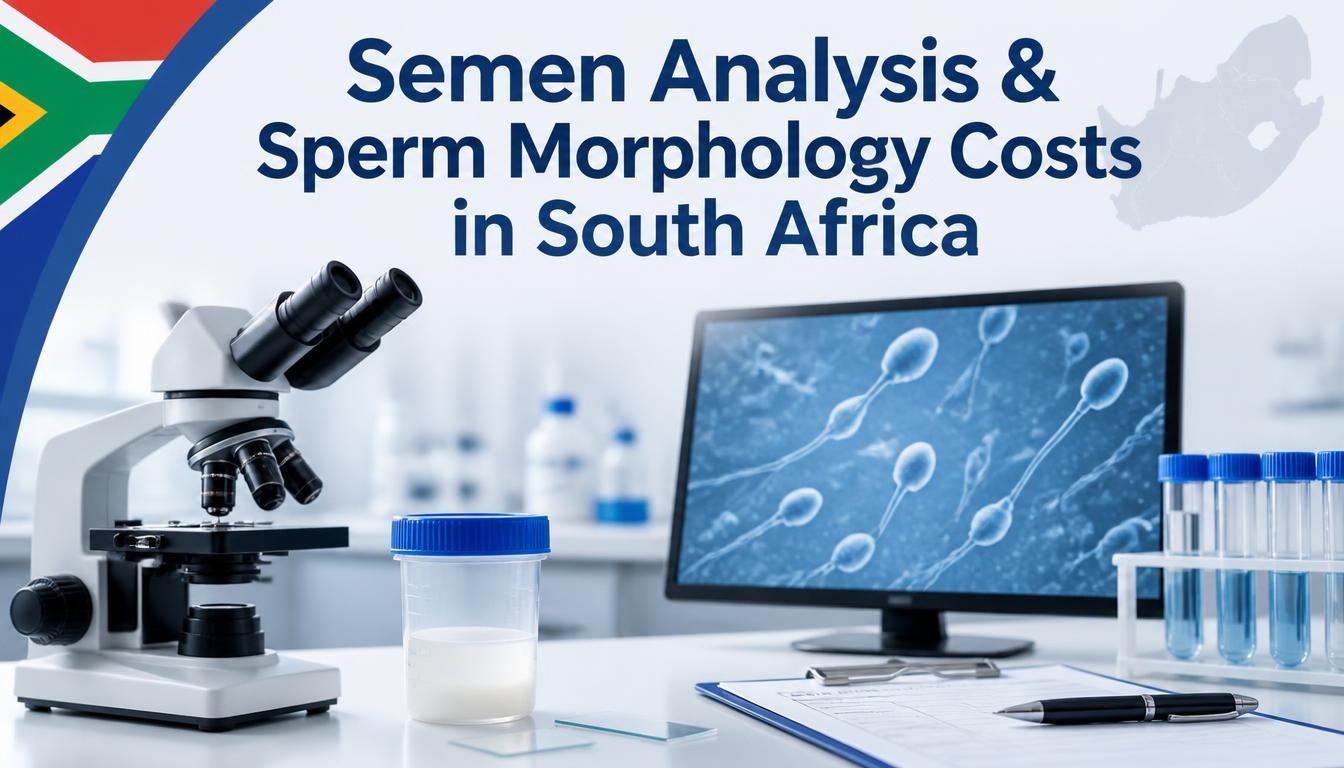
When my partner and I spent nearly fourteen months trying to conceive with no luck, I found myself sitting in a quiet, sterile waiting room at a private clinic in Sandton, Johannesburg. In my hand was a warm brown paper bag containing a plastic specimen container, and in my head was a cyclone of anxiety. How much was this awkward test going to cost us out-of-pocket? Would Discovery Health cover it under Prescribed Minimum Benefits (PMB)? And most importantly, what on earth did terms like Kruger Strict Criteria and Teratozoospermia mean for our future?
If you are a South African man or couple navigating the bewildering world of fertility testing, you are not alone. Male factor infertility contributes to roughly 40% to 50% of all conception difficulties, yet male reproductive health remains wrapped in silence, misinformation, and unpredictable healthcare billing.
Whether you are booking a basic lab test through Lancet Laboratories or Ampath, undergoing a detailed morphological study at Cape Fertility or Medfem, or seeking affordable options through public academic hospitals like Groote Schuur or Steve Biko, this comprehensive guide cuts through the medical jargon. Here is everything you need to know about current 2026 testing costs, medical aid cover, test preparation, and interpreting your results.
What Is a Semen Analysis and Sperm Morphology Test?
A Semen Analysis (often called a spermiogram) is the foundational diagnostic tool used to assess male fertility. It evaluates the fluid ejaculated during an orgasm, looking at both the seminal fluid matrix and the microscopic health of the sperm cells.
While a standard semen analysis looks at primary metrics such as liquid volume, sperm count (concentration), and motility (how well the sperm swim), a Sperm Morphology Test takes a deep, microscopic look at the actual shape, structure, and physical form of individual sperm cells.
Why Morphology Matters So Much
Sperm morphology is often the most misunderstood portion of the lab report. Under microscopic examination—frequently using specialized stains and high-magnification lenses—an andrologist evaluates:
-
Head Shape: Must feature a smooth, oval contour with a well-defined acrosome (the cap containing enzymes that penetrate the egg) covering 40% to 70% of the head area.
-
Midpiece: Must be slender, straight, and aligned with the long axis of the head, housing the mitochondria that power the sperm’s movement.
-
Tail (Flagellum): Must be a single, uniform, uncoiled structure that propels the cell forward.
In South Africa, most advanced fertility laboratories evaluate morphology using Kruger Strict Criteria. Under Kruger criteria, even if only 4% of your sperm cells have a perfectly normal shape, your morphology is considered normal. That means up to 96% of sperm in a completely fertile man’s sample can be structurally flawed!
2026 Semen Analysis & Sperm Morphology Costs in South Africa
The cost of a semen analysis in South Africa varies depending on whether you undergo testing at a general commercial pathology network (such as Ampath, Lancet, or PathCare) or at a specialized, accredited fertility clinic (such as Medfem, Vitalab, BioArt, or Cape Fertility).
General pathology labs typically perform automated or basic manual counts, whereas dedicated fertility clinics employ specialized embryologists and andrologists who perform manual Kruger Strict morphology scoring and functional binding assays.
Standard Cost Breakdown Across South African Providers
| Service Provider / Category | Testing Level Offered | Average Estimated Cost (ZAR / Rands) | Notes & Requirements |
| Lancet Laboratories | Standard Spermiogram & Basic Morphology | R850 – R1,400 | Doctor’s referral required; available at major regional branches. |
| Ampath Laboratories | Standard Spermiogram & Morphology | R900 – R1,450 | Specialized andrology labs in Centurion & Houghton (Androcryos). |
| PathCare / Path 24 | Basic Semen Evaluation | R800 – R1,350 | Sample must reach lab within 30–45 minutes of collection. |
| Medfem Fertility Clinic (Sandton) | Full Semen Analysis with Morphology & HBA | R1,700 – R3,031 | Lower tier without HBA (~R1,700); higher tier includes Hyaluronan Binding Assay (~R3,031). |
| BioArt Fertility Centre (JHB) | Comprehensive Andrology & Morphology | R800 – R1,500 | Part of initial fertility diagnostic packages. |
| Cape Fertility (Cape Town) | Comprehensive Semen & Morphology Profile | R1,200 – R1,800 | On-site private collection rooms available. |
| Vitalab (Kempton Park / Umhlanga) | Advanced Andrology & Morphology Panel | R1,600 – R2,500 | Includes strict Kruger criteria and longevity studies. |
| Public Academic Hospitals (Groote Schuur, Tygerberg, Steve Biko) | Basic to Advanced Semen Analysis | R150 – R450 (or Free under UPFS H0/H1) | Governed by Uniform Patient Fee Schedule; requires state clinic referral. |
Cost Tip: Always confirm whether the fee covers both the basic volume/count analysis and the microscopic Kruger Strict morphology stain. Some commercial labs charge morphology as a separate line item (tariff code extension).
Breakdown of Advanced Diagnostic Add-On Tests
If a basic semen analysis reveals abnormalities in count, motility, or morphology, your fertility specialist or urologist may order advanced functional tests. These carry additional costs in the South African private healthcare system.
Typical Male Fertility Pathology Tariff Costs (South Africa 2026)
-
Basic Semen Analysis (Volume, Count, Motility): R800 – R1,300
-
Kruger Strict Morphology Stain & Assessment: R450 – R850
-
Hyaluronan Binding Assay (HBA Test): R1,200 – R1,600
-
Sperm DNA Fragmentation Index (DFI / Halosperm): R1,800 – R3,500
-
Anti-Sperm Antibodies (ASA / MAR Test): R650 – R1,200
-
Semen Culture & Antimicrobial Sensitivity: R500 – R950
Detailed Overview of Specialized Tests
1. Hyaluronan Binding Assay (HBA)
-
Estimated Cost: R1,200 – R1,600
-
What It Measures: The HBA test determines the proportion of mature sperm in a sample that can bind to hyaluronan (a primary component of the cell complex surrounding the human egg). Sperm that bind successfully have completed essential maturation processes and exhibit lower rates of chromosomal abnormalities.
2. Sperm DNA Fragmentation Index (DFI)
-
Estimated Cost: R1,800 – R3,500
-
What It Measures: Standard semen analysis looks at the outside of the sperm, but DNA fragmentation testing checks the integrity of the genetic material inside the sperm head. High DNA fragmentation (>25-30%) can lead to recurrent pregnancy loss, failed IVF cycles, or unexplained infertility, even when sperm count and morphology appear completely normal on paper.
3. Anti-Sperm Antibody (ASA) Testing
-
Estimated Cost: R650 – R1,200
-
What It Measures: Checks whether the immune system is creating antibodies that attack and clump the man’s own sperm. This frequently occurs after testicular trauma, surgery, or vasectomy reversal.
Medical Aid Cover in South Africa: Will Discovery, Momentum, or Bonitas Pay?
One of the most frequent questions South African men ask is: “Can I claim my semen analysis from my medical scheme?”
The short answer is yes, but with important conditions.
The Prescribed Minimum Benefit (PMB) Mandate
In South Africa, the Medical Schemes Act classifies the diagnosis and medical management of infertility under Prescribed Minimum Benefits (PMB) regulations. This means registered medical schemes (including Discovery Health, Momentum Medical Scheme, Bonitas, Bestmed, and Medscheme-managed funds) are legally required to fund basic diagnostic tests used to establish the cause of infertility.
Key Coverage Rules to Keep in Mind:
-
Diagnostic vs. Treatment: Medical aids are legally obligated to cover diagnostic investigations (including initial blood tests, ultrasounds, and basic semen analysis) under PMB. However, they are not legally required to cover assisted reproductive treatments like IVF or ICSI, with limited exceptions (such as Discovery Health’s specialized Executive/Comprehensive Assisted Reproductive Therapy Benefit).
-
Correct ICD-10 Coding: Your referring doctor or clinic must use the correct diagnostic ICD-10 code on the pathology requisition form. The standard ICD-10 code for male factor infertility is N46.
-
Pathology Tariff Codes: Standard NHRPL tariff codes for semen analysis typically fall under codes
2121,2123, or2127. -
In-Network Laboratories: To avoid out-of-pocket co-payments, ensure the sample is submitted to a designated service provider (DSP) lab approved by your plan option.
| Scheme / Plan Tier | Diagnostic Semen Analysis Cover | Advanced Tests (DFI/HBA) Cover | Practical Advice |
| Discovery Health (KeyCare / Smart) | Covered via DSP network if authorized under PMB | Usually paid from Medical Savings Account (MSA) if funds exist | Must use a network GP or clinic to obtain the PMB authorization letter. |
| Discovery Health (Saver / Priority / Comprehensive) | Covered under PMB / Out-of-Hospital pathology benefit | Covered from MSA; PMB application required for chronic/specialist tier | Request a motivation letter from your doctor if auto-rejected. |
| Momentum / Bonitas / Bestmed | Covered under PMB diagnosis guidelines using ICD-10 code N46 | Subject to available savings or day-to-day benefits | Ensure the laboratory bills the scheme directly using correct tariff codes. |
Public Sector Options: State Hospitals in South Africa
If you do not have private medical aid, accessing a private fertility clinic or pathology lab out-of-pocket can stretch your finances. Fortunately, South Africa’s public tertiary academic institutions house world-class reproductive medicine units:
-
Groote Schuur Hospital / University of Cape Town (Cape Town)
-
Tygerberg Hospital / Stellenbosch University (Bellville, Western Cape)
-
Steve Biko Academic Hospital / University of Pretoria (Pretoria)
-
Charlotte Maxeke Johannesburg Academic Hospital (Johannesburg)
How the Public System Works & Pricing Structure
Public healthcare fees are determined by the Uniform Patient Fee Schedule (UPFS), which categorizes patients based on household income:
-
H0 & H1 Categories (Unemployed or Income < R70,000/year): Tests are either fully subsidized (free) or carry a nominal administrative fee ranging from R50 to R200.
-
H2 Category (Income R70,000 – R150,000/year): Semen analysis costs approximately R200 to R450.
-
H3 & Private Patients: Charged close to private sector rates.
The Catch: You cannot walk directly into a public academic hospital reproductive clinic for a semen test. You must first visit your local primary healthcare clinic or district hospital, get evaluated by a general practitioner, and secure a formal referral letter to the tertiary hospital’s andrology/fertility department. Waiting times for appointments can range from 3 weeks to 3 months.
Step-by-Step Preparation Guide: Avoiding Wasted Money & False Results
A semen analysis is a delicate biological snapshot. Sperm quality fluctuates significantly based on lifestyle, illness, heat exposure, and abstinence timing. A single bad sample does not mean you are infertile, but a improperly collected sample will waste your money and require an expensive re-test.
Here is how to prepare for your test to ensure accurate, reliable results:
1. The Critical Abstinence Window (2 to 7 Days)
-
Too Short (<48 Hours): Your sperm count and volume will be artificially low because your body hasn’t had enough time to replenish reserves.
-
Too Long (>7 Days): Sperm count might look high, but motility drops significantly, and dead or degraded sperm accumulate, artificially skewing your morphology scores downward.
-
The Sweet Spot: Abstain from all sexual intercourse and ejaculation for 3 to 4 days prior to sample collection.
2. Collection Protocol
-
Wash Your Hands & Genitals: Use plain water. Avoid scented soaps, which can transfer chemicals to the container and kill sperm cells.
-
Use ONLY the Sterile Container Provided: Never use household containers, condoms, or plastic bags. Standard commercial condoms contain spermicides and lubricants that render sperm non-viable within seconds.
-
No Lubricants: Avoid petroleum jelly, saliva, body lotions, or commercial lubricants during masturbation. If lubricant is absolutely necessary, ask the laboratory beforehand for a specialized non-spermicidal fertility lubricant (such as Pre-Seed).
-
Catch the ENTIRE Sample: The very first drops of the ejaculate contain the highest concentration of sperm (often over 60% of total sperm count). If you spill the initial portion, inform the laboratory staff immediately—the test will need to be rescheduled to avoid inaccurate diagnostic readings.
3. Temperature & Transport Limits
If you are collecting your sample at home rather than in a clinic’s designated private collection room:
-
Keep the sample at body temperature by placing the container in an inside jacket pocket or close to your torso during transport.
-
Protect the specimen from direct sunlight and extreme temperatures (do not leave it on a warm car dashboard or next to an air conditioner).
-
The 45-Minute Rule: Deliver the sample to the laboratory within 30 to 45 minutes of collection. Beyond 60 minutes, sperm motility drops drastically, invalidating the test results.
Understanding Your Results: What Do the Reference Numbers Mean?
When you receive your pathology report from Lancet, Ampath, or your fertility clinic, you will see a table listing your personal parameters alongside standard reference ranges.
South African laboratories align their reference values with the World Health Organization (WHO) Laboratory Manual for the Examination and Processing of Human Semen (6th Edition).
WHO 6th Edition Standard Reference Ranges
| Parameter | Normal Lower Reference Limit (5th Percentile) | Medical Term for Low Values |
| Semen Volume | 1.4 mL or greater | Aspermia / Hypospermia |
| Total Sperm Count | 39 million per ejaculate or greater | Oligozoospermia |
| Sperm Concentration | 16 million per mL or greater | Oligozoospermia |
| Total Motility (Progressive + Non-progressive) | 42% or greater | Asthenozoospermia |
| Progressive Motility (Swimming forward) | 30% or greater | Asthenozoospermia |
| Sperm Morphology (Kruger Strict Criteria) | 4% normal forms or greater | Teratozoospermia |
| Vitality (Live Sperm Percentage) | 54% live sperm or greater | Necrozoospermia |
| pH Level | 7.2 or greater | Indicates possible prostate/seminal vesicle dysfunction |
| White Blood Cells (Leukocytes) | Less than 1.0 million/mL | Leukocytospermia (indicates infection/inflammation) |
Deciphering the Common Diagnostic Terms
If your lab report comes back with medical terms highlighted in bold, here is what they mean in plain language:
-
Normozoospermia: All parameters (count, motility, morphology) fall within normal WHO ranges.
-
Oligozoospermia: Sperm concentration or total count is lower than the recommended threshold.
-
Asthenozoospermia: A lower percentage of sperm are swimming effectively.
-
Teratozoospermia: Fewer than 4% of sperm cells have normal head, midpiece, and tail structures.
-
Oligoasthenoteratozoospermia (OAT Syndrome): A combination where count, motility, and morphology are all below reference limits.
-
Azoospermia: Zero sperm cells detected in the ejaculated fluid. (This requires immediate follow-up with a urologist to determine whether the cause is obstructive or non-obstructive).
What to Do If Your Results Are Abnormal
Receiving a semen analysis result showing low count or poor morphology can feel overwhelming, but it is crucial to keep three facts in mind:
-
Sperm Takes 74 Days to Produce: Sperm development (spermatogenesis) is a continuous 2.5-month cycle. A result today reflects your health, stress levels, fever history, and alcohol intake from two to three months ago!
-
A Single Test Is Never Definitive: Clinical guidelines in South Africa dictate that a male fertility diagnosis should never be made on a single semen sample. Doctors typically recommend repeating the test 4 to 8 weeks later to establish a true baseline.
-
Morphology Is Not a Barrier to Fatherhood: A low morphology score (e.g., 1% or 2% normal forms) does not mean you cannot father a child naturally. Thousands of men with low strict morphology conceive naturally every year. Morphology is simply one piece of a complex puzzle.
Practical Lifestyle Interventions to Improve Sperm Quality
While waiting for your follow-up re-test, focus on evidence-based lifestyle adjustments that support spermatogenesis:
-
Cool Down the Testes: Avoid frequent hot baths, saunas, heated car seats, and holding laptops directly on your lap. Testicular temperature needs to remain roughly 2°C below core body temperature for optimal sperm production.
-
Quit Smoking & Reduce Alcohol: Nicotine and heavy alcohol intake directly cause oxidative stress, leading to sperm DNA fragmentation and poor head morphology.
-
Targeted Supplementation: Studies show that taking antioxidants for 90 days can improve motility and DNA integrity. Key nutrients include:
-
Coenzyme Q10 (200 mg daily)
-
Zinc (25–40 mg daily)
-
Vitamin C (1000 mg daily) & Vitamin E (400 IU daily)
-
L-Carnitine & Selenium
-
-
Review Prescription Medications: Certain anti-androgens, blood pressure medications, anabolic steroids, and hair-loss treatments (such as Finasteride) severely impair sperm production. Consult your doctor before stopping any chronic medication.
Frequently Asked Questions (FAQ)
Can I do a home sperm test in South Africa instead of going to a lab?
Home sperm test kits (available at major pharmacies like Clicks or Dis-Chem) can provide a basic “yes/no” indication of whether your sperm count is above or below 15 million/mL. However, they cannot measure sperm morphology, progressive motility, or DNA integrity. A home test cannot replace a formal laboratory semen analysis for fertility planning.
Why is Kruger Strict Criteria morphology so strict?
Kruger criteria were developed by Prof. Thinus Kruger at Tygerberg Hospital in the Western Cape. The system applies extremely rigid biological standards to identify sperm cells that have the highest probability of binding to and fertilizing an egg. By setting high standards, embryologists can better determine whether a couple needs standard IVF or Intracytoplasmic Sperm Injection (ICSI).
How long does it take to get semen analysis results back in South Africa?
Basic semen analysis results from Lancet, Ampath, or PathCare are usually released within 24 to 48 hours. Advanced morphology stains, HBA assays, or DNA fragmentation tests performed at specialized clinics typically take 3 to 7 business days due to manual scoring and specialized processing.
Join the Conversation: What Was Your Experience?
Navigating fertility testing costs and medical aid claims in South Africa can feel confusing. By sharing real experiences, we can help demystify the process for other couples facing these decisions.
-
Which laboratory or fertility clinic did you use, and what was your final out-of-pocket cost?
-
Did Discovery Health or your medical scheme cover your diagnostic semen test under PMB without hassle?
-
What questions do you still have about reading your morphology report?
Drop your thoughts, experiences, or questions in the comments section below!
Final Summary Checklist Before Booking Your Test
-
[ ] Obtain a referral letter from your GP, urologist, or gynaecologist with ICD-10 code N46.
-
[ ] Confirm whether your chosen lab requires an appointment (e.g., specialized Ampath or Medfem andrology labs require booking).
-
[ ] Calculate your abstinence window carefully (aim for exactly 3 to 4 days).
-
[ ] Verify whether your medical aid requires pre-authorization or designated service provider (DSP) laboratory routing.
-
[ ] Plan your transport route so that home-collected samples reach the lab within 35 to 45 minutes.

Joseph Mathebula is a consumer tech analyst and market researcher at Prices in South Africa. He specializes in tracking smartphone prices and consumer electronics, helping everyday shoppers navigate the market to secure the best value.
Post Disclaimer
Prices and availability are subject to change without notice and may vary by store or region. pricesinsouthafrica.co.za is an independent informational platform; we do not sell products directly, nor are we responsible for third-party pricing errors.