There is a distinct, heart-sinking moment that almost every South African pet parent experiences at some point. You sit on the cold floor of your local veterinary surgery—whether in Bryanston, Durban North, or Constantia—listening to your vet explain a complex diagnosis like chronic kidney disease (CKD), struvite bladder stones, severe acute pancreatitis, or recalcitrant food-protein allergies.
Then comes the inevitable recommendation: “We need to put your dog on a strict, lifelong therapeutic diet.”
You walk up to the clinic reception, ask for the smallest bag available just to see if your pet will accept it, and stare at the invoice in utter shock. A single 12 kg bag of specialized canine kibble costs upwards of R1,800 to R2,500, while a modest 2 kg bag of feline therapeutic food easily clears R500 to R800. In a country where household budgets are pinched by fuel price shifts, high living costs, and electricity tariffs, feeding a pet a specialized prescription diet can feel like adding a second monthly grocery bill.
When my 10-year-old domestic shorthair cat was diagnosed with early-stage renal failure, I experienced that exact anxiety firsthand. Balancing monthly mortgage payments with R800 tins and dry food bags felt overwhelming. But over time, I learned how to navigate this specialized market, dissecting the true differences between commercial pet food and prescription diets, mapping out exact South African retailer pricing, and employing practical strategies to make specialized care sustainable without jeopardizing pet health.
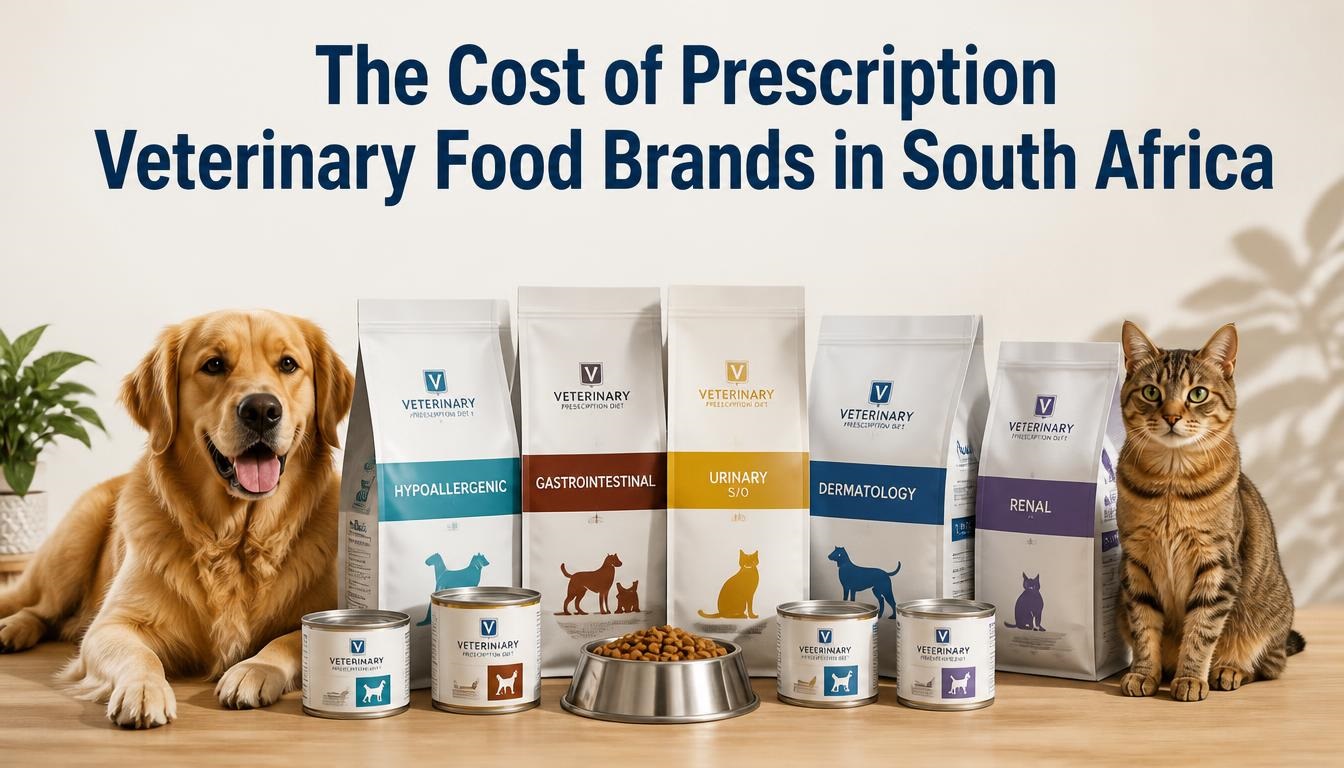
This comprehensive guide breaks down the true cost of prescription veterinary food brands across South Africa. It examines why these specialized diets are so expensive, provides real-world pricing data across major brands, and equips you with actionable methods to manage these recurring expenses.
Why Is Prescription Veterinary Food So Expensive in South Africa?
When pet owners see a price tag on a bag of specialized kibble that exceeds the cost of premium human-grade ribeye steak per kilogram, their immediate reaction is often skepticism. Is “veterinary prescription food” simply a clever marketing markup, or is there genuine pharmaceutical-level engineering inside those sealed bags?
To understand the price, we must examine the behind-the-scenes research, formulation, manufacturing strictness, and South Africa’s specific import economics.
1. Extensive Clinical Testing and Double-Blind Trials
Unlike standard over-the-counter maintenance pet foods—which simply need to meet basic Association of American Feed Control Officials (AAFCO) or European Pet Food Industry Federation (FEDIAF) nutritional minimums—therapeutic veterinary diets are formulated to actively alter biological and chemical processes.
Brands such as Hill’s Prescription Diet, Royal Canin Veterinary Health Nutrition, and Purina Pro Plan Veterinary Diets conduct multi-year, peer-reviewed clinical trials. For instance, a kidney diet (such as Hill’s k/d or Royal Canin Renal) isn’t just basic kibble with lower protein; it features precise phosphorus restriction, elevated omega-3 fatty acid ratios (EPA and DHA), carefully calibrated potassium levels, and fermentable fibers to help trap nitrogenous waste in the gut rather than overwhelming compromised kidneys. Developing and proving these clinical outcomes requires millions of Dollars and Euros in scientific investments long before a single bag reaches a veterinary shelf in South Africa.
2. Specialized Processing and Hydrolyzed Protein Technologies
Consider hydrolyzed protein diets used for pets suffering from severe inflammatory bowel disease (IBD) or food allergy dermatitis. In standard kibble, whole chicken or beef proteins are large enough to bind to immune system receptors, triggering intense scratching, hair loss, or chronic diarrhea.
In therapeutic hydrolyzed formulas (like Royal Canin Hypoallergenic or Hill’s z/d), intact animal proteins undergo an industrial enzymatic breakdown process. The proteins are broken down into small peptide chains (often under 10,000 Daltons) that pass under the immune system’s radar while maintaining full nutritional bioavailability. The specialized machinery required to execute and verify this process without cross-contamination costs millions to build and operate.
3. Zero-Cross-Contamination Production Lines
If a commercial pet food factory manufactures a salmon recipe on Monday and a chicken recipe on Tuesday, minor trace residues of chicken on the equipment line usually won’t harm a healthy pet. However, for a pet with severe dietary sensitivities, even a microgram of unlisted chicken protein can trigger a severe allergic flare-up or gastrointestinal crisis.
Prescription diet manufacturing plants enforce strict clean-down procedures, air-filtration protocols, and batch-testing regimes similar to human pharmaceutical manufacturing facilities. When a line must be fully dismantled, sanitized, and lab-tested between production runs, overall production yield drops, driving up unit costs.
4. Foreign Exchange Rates and Shipping Logistics
The majority of prescription veterinary diets sold in South Africa are manufactured in North America or Europe and imported via container shipping into coastal ports like Durban and Cape Town.
Because these products are priced globally in foreign currencies (US Dollars and Euros), local prices are heavily affected by fluctuations in the South African Rand (ZAR). Furthermore, international ocean freight rates, clearing costs, local fuel surcharges, and South African Department of Agriculture import compliance testing all add layers of expense before a bag reaches a veterinary depot.
Major Prescription Veterinary Food Brands in South Africa
If you step into a South African veterinary practice, you will notice that the prescription food section is dominated by a few established brands. Each brand approaches therapeutic nutrition with slightly different formulations, textures, and palatability strategies.
Hill’s Prescription Diet
Hill’s is the most recognized therapeutic pet food brand in South Africa. Developed in the 1930s by Dr. Mark Morris Sr. to treat a guide dog suffering from kidney failure, Hill’s builds its entire product strategy on clinical evidence and peer-reviewed research. Their naming convention uses simple letter combinations that correspond to specific medical indications:
-
Hill’s k/d (Kidney Care): Formulated with restricted phosphorus and controlled high-quality protein to support renal function.
-
Hill’s i/d (Digestive Care): Highly digestible formula with balanced fiber to settle acute pancreatitis, gastroenteritis, and post-surgical recovery.
-
Hill’s c/d Multicare (Urinary Care): Designed to dissolve struvite stones and reduce the recurrence of calcium oxalate crystals in cats and dogs.
-
Hill’s z/d & Derm Complete: Formulated for skin health and food sensitivities.
-
Hill’s Metabolic: Scientifically calibrated to alter a pet’s metabolism for weight loss without extreme caloric deprivation.
Royal Canin Veterinary Health Nutrition
Royal Canin, founded by a French veterinarian in 1968, takes a precise, nutrient-led approach to veterinary diets. Their therapeutic line is widely stocked across South African vet surgeries and specialized online retailers like ePETstore, Pet Heaven, and Absolute Pets. They focus heavily on kibble ergonomics—shaping kibble to match specific jaw mechanics and pet preferences:
-
Royal Canin Renal / Renal Select: Tailored aromatic profiles designed to stimulate appetite in cats and dogs suffering from renal uremia and nausea.
-
Royal Canin Urinary S/O: Formulated to dilute urine and create an unfavorable urinary environment for both struvite and calcium oxalate crystal formation.
-
Royal Canin Hypoallergenic / Anallergenic: Features hydrolyzed soy or feather protein isolates for diagnosing and managing severe cutaneous adverse food reactions.
-
Royal Canin Gastrointestinal / Low Fat: High-energy or low-fat digestive formulas catered to specific GI disorders like lymphangiectasia or hyperlipidemia.
Purina Pro Plan Veterinary Diets (PPVD)
While slightly less omnipresent on local veterinary shelves than Hill’s or Royal Canin, Purina Pro Plan’s clinical diets have gained a steady footing in South Africa. Formulated by veterinary nutritionists, immunologists, and microbiologists, their key ranges include:
-
Purina Pro Plan NC NeuroCare: Formulated with medium-chain triglyceride (MCT) oil to support brain function in aging dogs and dogs with idiopathic epilepsy.
-
Purina Pro Plan HA Hydrolyzed: A single-protein, single-carbohydrate hydrolyzed formula for severe food sensitivities.
-
Purina Pro Plan UR St/Ox (Urinary): Promotes a urinary environment that discourages stone development.
Real-World South African Pricing Breakdown (Current Retail Market)
Pricing for prescription diets in South Africa varies based on whether you buy directly from a local veterinary surgery or through specialized online platforms like ePETstore, Pet Heaven, or Canine & Co. Veterinary surgeries often add a modest markup to cover overhead and storage, whereas large online retailers can offer slight discounts or subscription deals.
Note: The prices below represent average local retail brackets across major South African retailers.
Therapeutic Canine (Dog) Food Price Guide
| Brand & Formula Name | Pack Size | Average Price Range (ZAR) | Primary Medical Indication |
| Hill’s Prescription Diet i/d Low Fat | 1.5 kg | R340 – R395 | Acute & Chronic Pancreatitis, Hyperlipidemia |
| Hill’s Prescription Diet i/d Low Fat | 12 kg | R1,850 – R2,150 | Digestive Care & Exocrine Pancreatic Insufficiency |
| Hill’s Prescription Diet k/d Kidney Care | 12 kg | R1,900 – R2,200 | Chronic Kidney Disease (CKD), Staging II–IV |
| Hill’s Prescription Diet Metabolic | 12 kg | R1,850 – R2,150 | Obesity Management & Metabolic Rate Reset |
| Hill’s Prescription Diet Derm Complete | 12 kg | R1,950 – R2,250 | Environmental & Food-Borne Allergies |
| Royal Canin Veterinary Hypoallergenic | 2 kg | R420 – R490 | Adverse Food Reactions, Elimination Diets |
| Royal Canin Veterinary Hypoallergenic | 14 kg | R2,050 – R2,450 | Long-Term Dermatological Allergy Management |
| Royal Canin Renal / Renal Select | 14 kg | R2,100 – R2,500 | Advanced Canine Kidney Failure |
| Royal Canin Gastrointestinal Low Fat | 12 kg | R1,800 – R2,100 | Low-Fat Digestive Support |
| Purina Pro Plan HA Hydrolyzed | 11 kg | R1,750 – R2,050 | Severe Food Allergies & Inflammatory Bowel Disease |
Therapeutic Feline (Cat) Food Price Guide
| Brand & Formula Name | Pack Size | Average Price Range (ZAR) | Primary Medical Indication |
| Hill’s Prescription Diet c/d Multicare | 1.5 kg | R350 – R410 | Feline Lower Urinary Tract Disease (FLUTD) |
| Hill’s Prescription Diet c/d Multicare | 3 kg | R650 – R780 | Long-Term Urinary Crystal & Stone Prevention |
| Hill’s Prescription Diet k/d Kidney Care | 3 kg | R680 – R820 | Feline Chronic Renal Insufficiency |
| Hill’s Prescription Diet z/d Ultra Allergy | 2 kg | R480 – R560 | Severe Cutaneous & GI Food Sensitivities |
| Royal Canin Veterinary Urinary S/O | 1.5 kg | R330 – R390 | Dissolution of Struvite Uroliths |
| Royal Canin Veterinary Urinary S/O | 3.5 kg | R720 – R860 | Recurrent FLUTD & Cystitis Prevention |
| Royal Canin Feline Renal / Renal Select | 2 kg | R450 – R520 | Feline Chronic Kidney Failure (Stages II–IV) |
| Royal Canin Feline Hypoallergenic | 2.5 kg | R580 – R680 | Elimination Diet & Chronic Allergic Dermatitis |
| Purina Pro Plan Veterinary Diets NF | 1.5 kg | R320 – R400 | Advanced Feline Renal Failure Support |
Canned & Wet Prescription Food Price Guide (Per Unit)
Wet food options are crucial for therapeutic plans—particularly for kidney disease (where hydration is paramount) and urinary disorders (to encourage fluid intake and decrease urine concentration).
| Brand & Product Format | Unit Size | Average Price (ZAR) | Medical Focus |
| Hill’s Prescription Diet k/d Canine Wet Tin | 370 g | R62 – R75 | Canine Renal Hydration Support |
| Hill’s Prescription Diet i/d Canine Stew Tin | 156 g / 354 g | R38 – R68 | Acute Gastrointestinal Recovery |
| Hill’s Prescription Diet c/d Feline Pouch/Tin | 85 g | R28 – R36 | Feline Urinary Hydration |
| Royal Canin Renal Feline Pouch | 85 g | R29 – R36 | Stimulating Anorexic Renal Cats |
| Royal Canin Gastrointestinal Feline Pouch | 85 g | R31 – R38 | High-Digestibility Wet Food |
How to Get a Prescription Food Order Approved in South Africa
A common source of confusion for South African pet parents is the purchasing process. Unlike standard retail kibble that you can grab off any shelf, therapeutic diets are medically controlled.
Feeding a healthy pet a therapeutic kidney diet long-term can actually cause harm due to its intentionally low protein levels. Similarly, feeding a urinary acidifying diet to an animal without specific urinary stones can trigger systemic metabolic imbalances.
Step-by-Step Buying Process
-
Clinical Diagnosis and Script: Your veterinarian examines your pet, performs diagnostic tests (blood panels, urinalysis, abdominal ultrasounds, or elimination trials), and provides a formal diagnosis along with a written prescription diet recommendation.
-
Buying at the Vet Clinic: The simplest route is purchasing directly from your veterinary clinic’s front desk. The reception team cross-checks your pet’s patient file before dispensing the food.
-
Buying from Approved Online Retailers: In South Africa, online platforms like ePETstore are authorized to sell prescription diets directly to consumers. However, you must upload or email a valid, signed script from your registered South African veterinary council (SAVC) professional during checkout before the order can be processed and shipped.
Practical Budgeting Strategies for South African Pet Owners
When your pet’s life and comfort depend on a therapeutic diet, switching to cheap, over-the-counter supermarket kibble isn’t a safe option. However, there are practical ways to reduce your monthly expenses without sacrificing your pet’s health.
1. Leverage “Schedule & Save” Subscription Discounts
Major South African online pet supply platforms (such as Pet Heaven and ePETstore) offer automated subscription models. By setting up a recurring monthly delivery order (“Schedule & Save”), you typically receive an automatic 5% to 10% discount off the regular retail price. Over the course of a year, saving 10% on a monthly R2,000 food order puts R2,400 back in your pocket—effectively covering the cost of more than a full bag of food.
2. Shift to Bulk Sizing (With Correct Storage Practices)
Buying small 1.5 kg or 2 kg bags of dog food is far more expensive per kilogram than purchasing 12 kg or 14 kg bags.
For example, buying seven 2 kg bags of specialized dog kibble at R450 each totals R3,150 for 14 kg of food. Purchasing a single 14 kg bulk bag of the same formula costs around R2,200, saving you nearly R1,000 per cycle.
-
Storage Tip: Once opened, kibble fats oxidation and lose palatability if exposed to heat and air. Invest in an airtight container. Keep the kibble inside its original bag, roll the top down tightly, and place the bag inside the container. This double-barrier method preserves freshness, vitamins, and taste for months.
3. Calculate “Cost Per Day” Rather Than “Cost Per Bag”
Therapeutic foods are formulated to be highly nutrient-dense and digestible. Because the metabolic efficiency and caloric density are high, the daily feeding volume (in grams) required for a prescription diet is often lower than that of commercial kibble filled with bulk grains.
Before panicking over a R2,000 bag of food, check the feeding guide on the back. A 12 kg bag fed to a 15 kg dog at 180 grams per day will last approximately 66 days. That breaks down to about R30 per day. Framing the expense as a daily cost often makes it far easier to manage within a household budget.
4. Optimize the Wet-to-Dry Ratio
While wet canned food offers excellent hydration benefits (especially for kidney and urinary patients), feeding an animal exclusively on prescription cans is expensive. A large dog might require three to four 370 g cans per day, costing R200+ daily.
Work with your vet to calculate a precise mixed-feeding ratio. Using high-quality prescription dry kibble as the primary caloric base and adding a measured spoon of prescription wet food (mixed with warm water to create a rich gravy) delivers the hydration and palatability benefits at a fraction of the cost.
5. Inquire About Veterinary Loyalty Programs and Medical Aid Claims
-
Manufacturer Loyalty Cards: Some veterinary clinics participate in manufacturer reward programs (such as Hill’s loyalty cards), offering discounts like a free bag after purchasing a certain number of units.
-
Pet Medical Insurance: If you have comprehensive pet insurance in South Africa (e.g., Dotsure, Oneplan, MediPet, or OUTsurance Pet), review your policy terms carefully. While basic plans exclude food, certain high-tier or chronic care add-ons cover partial costs of therapeutic diets prescribed by a veterinarian for acute or chronic medical conditions.
When Can You Safely Transition Off Prescription Diets?
A common question pet owners ask is whether prescription diets are meant to be fed indefinitely. The answer depends entirely on the underlying medical condition:
Temporary vs. Lifelong Prescription Diets
-
Temporary Diets (Short-Term Intervention):
-
Hill’s i/d or Royal Canin Gastrointestinal: Often prescribed for 14 to 30 days to resolve acute gut inflammation, bacterial overgrowth, or recovery from surgery. Once gut motility and stool quality stabilize, pets can usually be transitioned back to a high-quality maintenance diet under veterinary guidance.
-
Royal Canin Urinary S/O or Hill’s s/d: Used short-term to actively dissolve existing struvite uroliths. Once follow-up X-rays or ultrasounds confirm the stones are fully dissolved, your vet may move your pet to a preventative maintenance diet.
-
-
Lifelong Diets (Non-Negotiable Chronic Management):
-
Renal Diets (k/d, Royal Canin Renal): Chronic Kidney Disease (CKD) involves irreversible loss of functional nephrons. Keeping your pet on a dedicated renal diet permanently is critical to slowing disease progression and preventing uremic crises.
-
Hydrolyzed Allergy Diets (z/d, Hypoallergenic): If your pet has a confirmed severe allergy to common animal proteins, returning to standard commercial food will trigger allergic reactions.
-
Warning: Never stop or alter a prescribed therapeutic diet without consulting your veterinarian first. Abruptly stopping a urinary or renal diet can result in life-threatening urinary blockages or acute renal decompensation within days.
Frequently Asked Questions (FAQ)
Can I buy prescription food at regular supermarket chains like Checkers or Pick n Pay?
No. Standard South African retail supermarkets do not stock therapeutic veterinary diets. You can only purchase them through registered veterinary practices or specialized online pet platforms that verify valid prescriptions.
What happens if my pet refuses to eat their prescription food?
Prescription foods, particularly low-protein renal diets, can sometimes be less appealing to sick pets suffering from nausea. To encourage eating, try warming wet food slightly in the microwave to enhance its aroma, or ask your vet about switching between different textures (e.g., stews, loaves, or different kibble shapes) within the same therapeutic category. Never force a nauseous cat to fast, as this can trigger a dangerous liver condition known as hepatic lipidosis.
Is there a generic or house-brand alternative to prescription pet food in South Africa?
Unlike human pharmaceuticals, there are no generic versions of veterinary prescription diets. While some commercial brands offer “sensitive stomach” or “skin care” maintenance formulas, these lack the targeted clinical nutrient levels and strict cross-contamination controls required to manage diagnosed medical conditions.
Navigating specialized care for a pet with chronic medical needs is a journey best shared with others who understand the challenge.
Has your pet been prescribed a specialized veterinary diet by your South African vet? Which brand and formula are you currently using, and what practical budgeting tricks or feeding strategies have worked best for your household? Drop your questions and real-world experiences in the comments below!

Joseph Mathebula is a consumer analyst and market researcher at Prices in South Africa. He specializes in tracking local service costs, retail pricing, and travel budgets, helping everyday shoppers navigate the market to secure the best value.