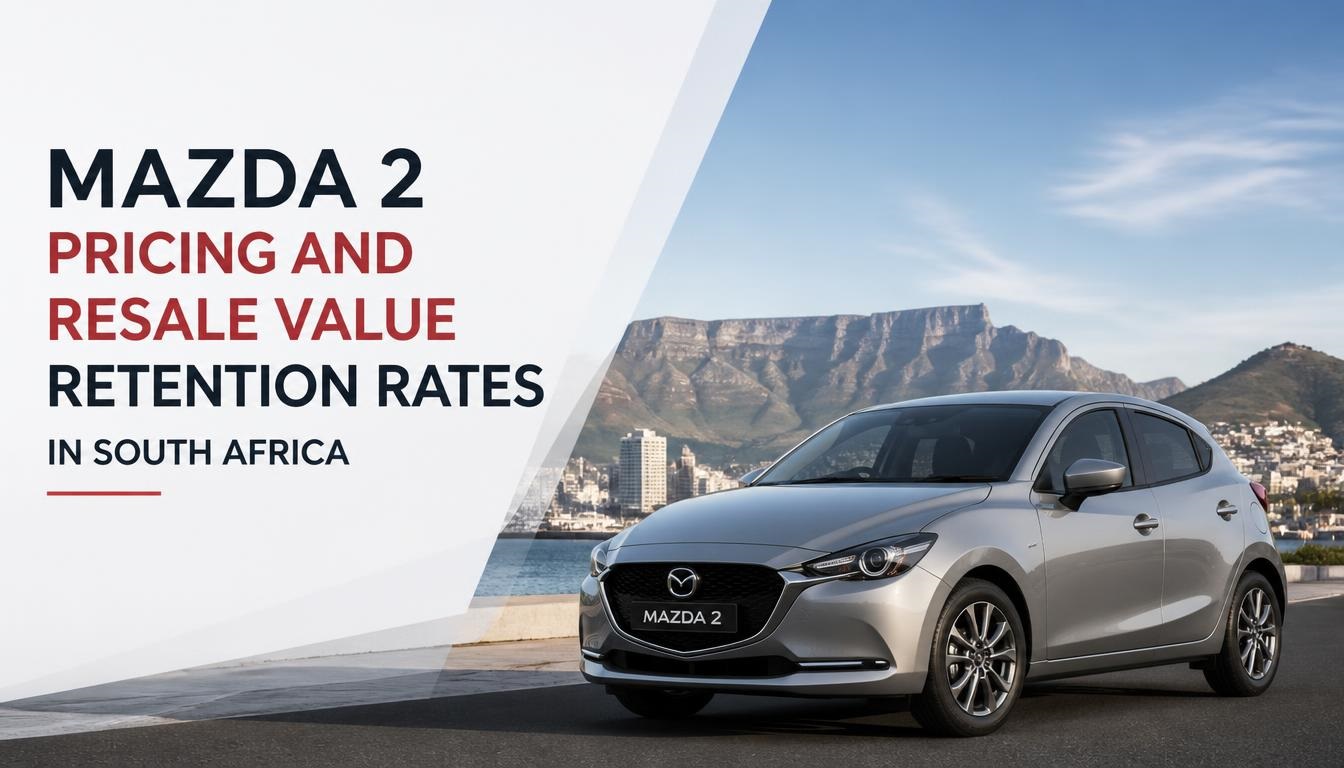
Executive Vehicle Valuation Notice
Verified Retail Price Band: R336,000 – R417,300 (New Dealership List Pricing)
Primary Ownership Requirement: Valid Code B (Code 08) Driver’s License & Proof of Earnings for Asset Finance
Top Market Sector in SA: Urban Commuter, Young Professional & Fleet Mobility Segment
Final Career Advisory Recommendation: Purchase pre-owned 2 to 3-year-old models to bypass early steep retail equity drops, or leverage the 3-Year/Unlimited KM Service Plan & Warranty for low-cost operational maintenance.
Vehicle Ownership & Market Position Overview
The Mazda 2 continues to serve as an attractive choice for mid-level professionals, sales representatives, and corporate commuters in South Africa who require dependable transport without the soaring ownership costs of compact crossovers. Positioned in the B-segment hatchback market, the vehicle competes directly against the Volkswagen Polo, Hyundai i20, Suzuki Baleno, and Toyota Starlet.
From an employment and asset-ownership standpoint, holding a reliable passenger vehicle impacts career mobility, client-facing roles, and sales representative field allowances. Many South African employers offer structured travel allowances under SARS code 3701 or company vehicle schemes. Vehicle valuation, total cost of ownership (TCO), and long-term depreciation metrics are critical considerations for working professionals managing personal balance sheets.
The South African automotive landscape relies on TransUnion Auto values (formerly Mead & McGrouther) and dealer trade-in books to determine trade, retail, and market values. The Mazda 2 holds a steady position due to its naturally aspirated 1.5-litre SkyActiv-G petrol engine, avoiding complex turbocharger maintenance costs after the manufacturer warranty period expires.
| Feature / Metric | Specification & Market Standard |
| Engine Architecture | 1.5L 4-Cylinder SkyActiv-G Petrol (85 kW / 148 Nm) |
| Transmission Options | 6-Speed Manual / 6-Speed Automatic |
| Service Plan Coverage | 3-Year / Unlimited Kilometres |
| Warranty Coverage | 3-Year / Unlimited Kilometres |
| Target Demographic | Corporate Sales, Junior Management, City Commute |
2026 Salary Breakdown & Vehicle Finance Affordability Index
Purchasing a Mazda 2 on credit requires understanding the National Credit Act (NCA) affordability criteria enforced by South African banking institutions like WesBank, ABSA Vehicle Finance, Standard Bank VAF, and Nedbank MFC. Financial providers require that your total monthly vehicle installment does not exceed 30% of your gross monthly remuneration, while total debt obligations must leave sufficient net disposable income.
To buy a new Mazda 2 priced between R336,000 and R417,300 on a standard 72-month finance agreement without a balloon payment at a prime lending rate (11.75%), a car buyer needs a minimum gross monthly salary ranging from R24,500 to R32,000.
| Mazda 2 Variant Level | Retail Price (ZAR) | Estimated Monthly Installment | Required Gross Salary (Min) | Estimated Comprehensive Insurance |
| 1.5 Active Manual | R336,000 | R6,450 / pm | R24,500 / pm | R1,150 – R1,450 / pm |
| 1.5 Dynamic Automatic | R371,300 | R7,120 / pm | R27,000 / pm | R1,300 – R1,600 / pm |
| 1.5 Individual Automatic | R417,300 | R8,000 / pm | R31,500 / pm | R1,450 – R1,850 / pm |
Note: Calculations assume a 72-month term, 0% deposit, 0% residual/balloon payment, and an interest rate of 11.75%. Excludes bank initiation fees (approx. R1,207) and monthly admin fees (R69/pm).
Additional Maintenance & Operational Running Costs
Beyond monthly debt repayments, running a Mazda 2 requires budgeting for consumable items, annual licensing, and insurance premiums:
-
Fuel Consumption Realities: The naturally aspirated 1.5L SkyActiv engine achieves a realistic combined cycle consumption of 6.0L to 6.8L per 100 km in mixed South African urban traffic conditions. At R22.50 per litre of 95 Unlead Petrol, an average monthly commute of 1,500 km incurs approximately R2,025 to R2,295 in fuel expenses.
-
Tyre Replacement Costs: Standard 15-inch tyres (Active/Dynamic) cost approximately R1,200 to R1,600 per tyre, whereas 16-inch alloy fitments (Individual trim) range between R1,700 and R2,300 per tyre for premium brands like Dunlop or Continental.
-
Routine Out-of-Service Maintenance: Minor services (oil, filters, spark plugs) outside the manufacturer service plan average R2,200 to R3,100 at accredited MIWA (Motor Industry Workshop Association) workshops. Major services involving brake pad replacements and belt checks range from R4,500 to R6,800.
2026 Resale Value & Depreciation Rate Analysis
Depreciation is the largest hidden cost of vehicle ownership in South Africa. The vehicle market experiences its sharpest valuation drops within the first 12 to 36 months following registration.
The Mazda 2 exhibits solid resale retention metrics compared to luxury European hatchbacks, driven by high demand in the secondary pre-owned market for fuel-efficient, reliable commuter vehicles.
| Ownership Period | Estimated Value Retention (%) | Estimated Trade-In Valuation (ZAR) |
| Year 0 (New Retail) | 100% | R336,000 |
| Year 1 (Trade Value) | 80% | R268,800 |
| Year 2 (Trade Value) | 72% | R241,920 |
| Year 3 (Trade Value) | 66% | R221,760 |
| Year 4 (Trade Value) | 60% | R201,600 |
| Year 5 (Trade Value) | 54% | R181,440 |
Factors Driving Mazda 2 Depreciation Rates
-
Mechanical Simplicity: Unlike small-displacement turbocharged engines that can face expensive turbocharger or high-pressure fuel pump failures past 120,000 km, Mazda’s naturally aspirated SkyActiv engine carries fewer mechanical failure points. This supports strong trade-in valuations on 4 to 6-year-old units.
-
Unlimited Kilometres Warranty: Mazda South Africa offers a 3-Year/Unlimited Kilometre warranty and service plan. Field sales professionals who drive higher annual mileage benefit from complete servicing coverage without running out of distance-based caps before the 3-year term ends.
-
Pre-Owned Market Demand: Second-hand vehicles priced between R150,000 and R230,000 represent a sweet spot for South African buyers seeking entry-level mobility, keeping resale prices stable on dealership floors.
Practical Workplace Observations & Field Insights
From a career and recruitment standpoint, vehicle ownership directly affects employment prospects, corporate mobility, and daily work performance across various South African sectors.
Fleet & Corporate Travel Management Insights
-
Sales Representatives & Field Technicians: Employers providing vehicle allowances prefer vehicles with simple maintenance profiles and predictable total cost of ownership. The Mazda 2’s reliability reduces unexpected mechanical downtime, ensuring reps hit their monthly site visit targets.
-
Company Policy Compliance: Many corporate fleet policies mandate that vehicles used for work business hold a 5-star ANCAP/Euro NCAP safety rating and include basic driver-assist safety features (ABS, EBD, Dynamic Stability Control, and multiple airbags). The Mazda 2 meets these structural corporate criteria across its range.
-
Probation & Credit Clearances: For junior professionals entering corporate roles, passing the initial 3-to-6-month employment probation period is essential before applying for asset finance. Lenders inspect employment contracts to confirm permanent placement before approving vehicle financing.
HR Screening & Employee Mobility Realities
-
“Own Reliable Transport” Requirements: In South African metro hubs—Gauteng (JHB/PTA), eThekwini (Durban), and Cape Town—job specifications for client-facing, regional management, and consulting roles often list “Own Reliable Transport” as a mandatory screening filter. Lacking a personal vehicle can limit access to these positions.
-
Shift Work & Safety: For employees in logistics, healthcare, hospitality, and IT support who work non-standard shifts, public transport options like Metrorail or minibus taxis can be limited late at night. Personal vehicle ownership provides safe, predictable transit, reducing unscheduled absenteeism.
Major SA Employers & Hiring Sectors for Commuter Drivers
Commercial sales teams, medical detailers, and field servicing departments maintain dedicated vehicle fleets or offer travel allowance packages to their workforce:
-
Pharmaceutical & Medical Sales: Companies like Aspen Pharmacare, Adcock Ingram, and Discovery Health employ large teams of field consultants who spend hours daily travelling between clinics and hospitals.
-
FMCG & Retail Distribution: Fast-Moving Consumer Goods giants (e.g., Tiger Brands, Pioneer Foods, Unilever SA) utilize field agents to manage retail shelf merchandising and regional store compliance across provinces.
-
Short-Term Insurance & Financial Services: Field assessors and financial advisors working for OUTsurance, Sanlam, Old Mutual, and Momentum travel regularly to evaluate claims and conduct client consultations.
-
Telecommunications & IT Support: Field engineers working for Vodacom, MTN, and Telkom require reliable commuter transport to navigate urban service points and regional data hubs.
Career Advancement Strategies for Asset Ownership
Managing car finance effectively ensures vehicle ownership supports long-term career growth rather than creating financial strain.
-
Structure Travel Allowances Efficiently: If your employer offers a structured travel allowance under SARS regulations, maintain an accurate, detailed logbook (noting business kilometers, destinations, and client visit reasons). This allows you to claim tax deductions against your allowance during annual SARS income tax submissions.
-
Avoid Balloon Payments (Residual Values): While a 30% to 40% balloon payment reduces monthly finance installments, it leaves you owing a lump sum at the end of the finance term. If you trade in the vehicle early, you risk being “underwater”—owing more on the bank loan than the car’s trade-in value.
-
Preserve Service History: Always service your vehicle at franchised Mazda dealerships or RMI/MIWA-approved service centres. A fully stamped service book can increase trade-in offers by R15,000 to R25,000 compared to vehicles with missing service records.
-
Time Your Trade-In Window: The optimal trade-in window for maximum financial returns is usually between months 42 and 48 of a finance agreement. At this point, your monthly repayments have cleared a significant portion of the principal debt, putting you in a positive equity position for your next trade-in.
Frequently Asked Questions
What is the starting retail price of a new Mazda 2 in South Africa?
The Mazda 2 range starts at R336,000 for the 1.5 Active manual model, with the mid-tier 1.5 Dynamic automatic priced at R371,300, and the range-topping 1.5 Individual automatic listed at R417,300.
How much salary do I need to earn to finance a Mazda 2?
To qualify for bank financing on an entry-level Mazda 2 without a deposit, you generally need a gross monthly salary of at least R24,500. This ensures your monthly installment remains within the recommended 30% limit of your gross earnings.
How well does the Mazda 2 retain its resale value over 3 years?
The Mazda 2 retains approximately 66% of its original retail value after 3 years (assuming average mileage of 15,000 to 20,000 km per year and a clean vehicle condition). This places its depreciation performance above many budget hatchbacks in its class.
Does the Mazda 2 come with a standard service plan in South Africa?
Yes, all new Mazda 2 models sold through authorized South African dealerships include a standard 3-Year / Unlimited Kilometre Service Plan and a matching 3-Year / Unlimited Kilometre Factory Warranty.
What is the realistic fuel consumption of the 1.5L Mazda 2?
While official factory figures claim lower figures, real-world South African driving conditions yield an average combined fuel consumption of 6.0L to 6.8L per 100 km, making it an efficient choice for daily commuting.
Disclaimer: Salary figures, vehicle retail prices, financial estimates, and trade-in retention indicators listed in this guide reflect real-world market averages and verified South African automotive data at the time of publication. Actual financing terms, insurance quotes, and trade-in valuations may vary based on individual credit ratings, geographic location, vehicle mileage, and condition. Always confirm official pricing directly with authorized Mazda dealerships or accredited financial services providers.
Navigating vehicle financing options while balancing long-term career goals requires careful financial planning. Whether you are budgeting for a personal commuter car or structuring a travel allowance for a field sales role, choosing a reliable model helps protect your monthly disposable income.
Have questions about calculating vehicle affordability against your current salary package, or looking for advice on navigating corporate car allowances? Share your thoughts or questions in the comments section below to join the discussion!

Joseph Mathebula is a consumer analyst and market researcher at Prices in South Africa. He specializes in tracking local service costs, retail pricing, and travel budgets, helping everyday shoppers navigate the market to secure the best value.