Role & Executive Brief:
Verified Salary / Investment Band: R14,500 – R38,000 total installed cost (Hardware: R11,000 – R22,000 | Certified Installation: R3,500 – R16,000+)
Primary Entry Qualification/Requirement: Single-phase (7.4kW) or Three-phase (22kW) residential supply with a Department of Employment and Labour registered Wireman’s License (Certificate of Compliance)
Top Hiring Industry/Sector in SA: Residential Property, Corporate Fleet Management, Renewable Energy & Commercial Real Estate
Final Career Advisory Recommendation: Always insist on a separate Sub-DB installation with dedicated Surge Protection Devices (SPD) and an independent Certificate of Compliance (CoC) to protect vehicle warranties and satisfy home insurance requirements.
Home EV Charger Installation Mechanics
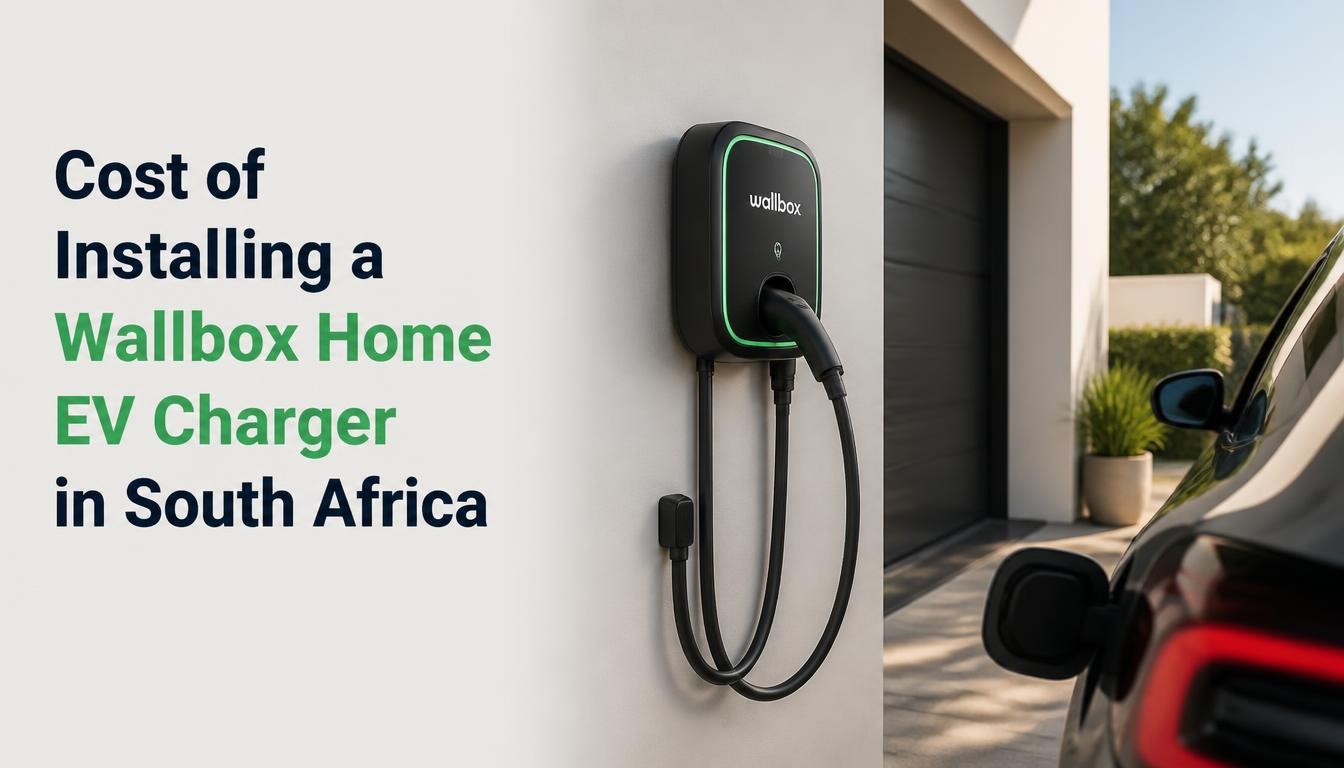
The transition toward electric mobility in South Africa requires precise technical planning and certified electrical engineering. Installing a Wallbox home EV charger—specifically models like the popular Wallbox Pulsar Plus or Wallbox Pulsar Max—moves a residential property from standard AC domestic trickle charging (2.3kW via a 3-pin plug) to high-speed, dedicated Level 2 AC charging (7.4kW to 22kW).
Unlike traditional household appliances, a high-power EV charger draws a continuous electrical load over extended durations. In the South African context, this integration must account for municipal electrical bylaws, SANS 10142-1 wiring standards, Eskom or municipal supply limits, and the presence of backup power systems such as residential solar inverters and lithium batteries.
The electrical infrastructure connects directly from the main municipal or Eskom power grid to a dedicated Sub-DB equipped with protective breakers (Type A RCD/GFCI and 32A/40A units). From this isolated protection point, power is routed directly to the Wallbox EV charger, while optionally synchronizing with solar inverter systems for dynamic load balancing.
When procuring and installing a Wallbox unit, buyers choose between two primary operational tiers:
-
Single-Phase Setup (7.4kW): Operates on standard 230V residential supplies, requiring a dedicated 32A to 40A circuit breaker. Adds roughly 35km to 45km of driving range per hour of charge.
-
Three-Phase Setup (11kW to 22kW): Operates on a 400V supply, requiring a 32A three-phase breaker. Adds up to 120km of range per hour, depending on the vehicle’s onboard AC converter capacity.
Qualified electrical contractors specializing in EV infrastructure must execute a preliminary load analysis of the home. This step ensures the charger does not trip the main municipal supply breaker when running concurrently with high-draw household appliances like geysers, air conditioners, and induction stoves.
2026 Home EV Charger Cost & Installation Breakdown
The full cost of deploying a Wallbox unit includes the base hardware purchase price, core installation labor and materials, necessary main DB upgrades, and mandatory compliance certification.
The total financial outlay in 2026 spans various tiers depending on home infrastructure complexity, cable run lengths, and panel capacity:
| Cost Element / Service Tier | Basic Installation (Standard Run < 5m) | Medium Complexity (10m–20m Cable Run) | High Complexity (Sub-DB Upgrade + Solar Sync) |
| Wallbox Pulsar Plus / Max Hardware | R11,000 – R14,500 | R11,000 – R14,500 | R14,500 – R22,000 |
| Electrical Cabling & Conduit (UV/Heavy Duty) | R1,200 – R2,500 | R3,500 – R6,000 | R7,000 – R12,000 |
| Protection Devices (Type A RCD & SPD) | R1,500 – R2,500 | R2,500 – R4,000 | R4,000 – R6,500 |
| Certified Electrician Labor (Wireman Licensed) | R2,500 – R4,500 | R4,500 – R8,000 | R8,000 – R15,000 |
| Certificate of Compliance (CoC) | R1,200 – R1,800 | R1,500 – R2,200 | R2,000 – R3,500 |
| Dynamic Load Metering (Power Boost) | Optional (R2,500) | Optional (R2,500) | Included / Required (R3,500) |
| Estimated Total Investment (ZAR) | R17,400 – R25,800 | R24,000 – R37,200 | R38,500 – R62,500+ |
Note: Prices above reflect standard retail market rates for independent supply and installation across South African metropolitan areas including Johannesburg, Cape Town, and Durban.
Technical Installation Vetting & Compliance Insights
Installing a Wallbox home charger requires strict adherence to South African electrical regulations. EV owners should navigate the process through a structured step-by-step technical compliance workflow:
Step 1: Pre-Purchase Site Assessment
A registered Installation Electrician (Wireman’s License holder) must inspect the existing main Distribution Board (DB). They evaluate:
-
Total main breaker capacity (typically 60A or 80A single-phase in SA residential homes).
-
Physical space inside the DB board for a dedicated double-pole or four-pole breaker.
-
Distance from the DB board to the desired mounting location in the garage or carport.
Step 2: Cable Selection & Route Management
High-current continuous loads demand heavy-duty low-voltage copper cabling:
-
7.4kW Single-Phase: Requires minimum 6mm² 3-core surface-routed or conduit-enclosed cable for runs under 15 meters. Longer runs require 10mm² cabling to limit voltage drop below 3%.
-
11kW/22kW Three-Phase: Requires minimum 5-core 4mm² or 6mm² armoured cable (S33 or SANS approved PVC/SWA/PVC).
Step 3: Distribution Board Isolation & Protection
Under SANS 10142-1 standards, an EV charger cannot simply tap into an existing wall socket or lighting circuit. It requires:
-
A dedicated miniature circuit breaker (MCB) rated for the specific unit output (e.g., 40A MCB for a 32A continuous draw).
-
A Type A Residual Current Device (RCD) with DC leakage protection (or an integrated Type B RCD) to guard against high-voltage electrical faults and earth leakage.
-
Dedicated Surge Protection Devices (SPD) to protect the sensitive onboard electronics of both the Wallbox charger and the electric vehicle against grid spikes, load shedding recovery surges, or lightning.
Step 4: Physical Mounting & Smart Network Sync
The Wallbox unit is mounted to a structural brick, concrete, or reinforced wall at a comfortable operating height (1.2 to 1.5 meters from floor level). The unit is then provisioned via the myWallbox mobile app over Bluetooth or Wi-Fi to establish current limiting, scheduling, and power management features.
Step 5: Testing & Mandatory CoC Issuance
Upon finishing hardware connection and testing (including earth loop impedance testing and RCD trip checks), the electrician must issue a supplemental or standalone Certificate of Compliance (CoC). Without an updated CoC:
-
Home insurance policies may reject claims related to electrical fires.
-
Vehicle manufacturer warranties on the EV battery pack may be compromised.
Leading Wallbox Hardware Models Compared
Selecting the appropriate Wallbox charging unit depends on charger placement (indoor vs. outdoor), grid type, and smart integration requirements.
| Feature / Metric | Wallbox Pulsar Plus | Wallbox Pulsar Max | Wallbox Commander 2 |
| Max Power Output | 7.4kW (1-Phase) / 22kW (3-Phase) | 7.4kW (1-Phase) / 22kW (3-Phase) | 7.4kW (1-Phase) / 22kW (3-Phase) |
| Ingress Protection Rating | IP54 / IK08 | IP55 / IK10 (Ultra-Durable) | IP54 / IK10 |
| Tethered Cable Length | 5m or 7m Option | 5m or 7m Option | 5m Tethered Cable |
| Display / Interface | Halo LED Ring + App | Halo LED Ring + App | 7-Inch Touchscreen + App |
| Solar / Power Boost Sync | Yes (via Power Meter) | Yes (via Power Meter) | Yes (via Power Meter) |
| Connectivity | Wi-Fi & Bluetooth | Wi-Fi & Bluetooth | Wi-Fi, Bluetooth, Ethernet, 4G |
| Average Hardware Price (ZAR) | R11,000 – R14,500 | R13,500 – R17,000 | R22,000 – R28,000 |
Strategic Career & Skills Pathways for Local Technicians
The rapid rise of electric vehicles across South Africa is creating strong demand for specialized electrical skills. Conventional electrical contractors, auto technicians, and solar installation specialists can expand their market reach by upskilling in high-voltage AC/DC charging infrastructure.
Career growth moves sequentially from a standard Electrician or Wireman Designation (holding a Qualified Red Seal and Department of Employment and Labour registration) through specialized EVSE upskilling (including SANS 10142-1 Annexure compliance and OEM certifications). This leads directly into advanced career roles such as EV Infrastructure Project Managers, Commercial Fleet Electrification Consultants, and Smart Microgrid & EV Storage Integration Specialists.
Key growth pathways and competency requirements for South African technical professionals include:
1. OEM Certification & Credentialing
Manufacturers such as Wallbox, along with regional charging network operators, host accredited training programs. Technicians who complete these courses earn certified installer status, enabling them to handle official warranty work and join preferred installer referral networks.
2. Microgrid & Solar Integration Proficiency
With widespread residential solar adoption across South Africa, installers who understand dynamic load management (such as configuring Wallbox Power Boost meters) and solar zero-export systems command higher service fees. They can configure charging stations to consume surplus solar generation during off-peak daytime hours.
3. Commercial Fleet & Public Charging Engineering
Beyond single-home setups, experienced installers can scale up to handle multi-charger installations, OCPP (Open Charge Point Protocol) integration, and commercial billing platforms for retail centres, office parks, and corporate transport fleets.
Frequently Asked Questions
Can I install a Wallbox EV charger myself to save on labor costs?
No. In South Africa, high-voltage installations must be performed by a registered Installation Electrician registered with the Department of Employment and Labour. DIY installations violate SANS 10142-1 regulations, void your Wallbox product warranty, invalidation home insurance cover, and prevent the issuance of a required Certificate of Compliance (CoC).
Does load shedding affect my home EV charger?
Yes, a Wallbox charger relies on municipal or Eskom grid power unless it is connected to a residential solar and energy storage system. If integrated with a hybrid solar inverter, you can program the charger via the myWallbox app to charge only when solar generation is available or when battery reserves are above safety thresholds.
What is the difference between single-phase and three-phase Wallbox installations?
A single-phase installation uses a standard 230V residential supply, delivering up to 7.4kW (roughly 35–45km of range added per hour). A three-phase installation operates at 400V, delivering up to 22kW (up to 120km of range added per hour), provided both your home electricity connection and your vehicle’s onboard AC charger support three-phase power.
How much does it cost to fully charge an EV at home using a Wallbox charger?
Charging costs depend on your local municipal or Eskom electricity tariff tier. At an average residential rate of R3.00 to R4.00 per kWh, fully replenishing a typical 60kWh EV battery pack from 0% to 100% costs roughly R180 to R240. This is substantially cheaper per kilometer than internal combustion engine fuel.
Will installing a 7.4kW or 22kW Wallbox trip my home’s main electricity breaker?
It can if your home’s total power consumption exceeds your municipal supply limit (e.g., running a geyser, stove, and EV charger simultaneously on a 60A main breaker). To prevent this, installers can add a Wallbox Power Boost dynamic load management meter, which automatically throttles charger output when household energy demand peaks.
Disclaimer: Salary figures, job requirements, installation estimates, hardware pricing, and hiring indicators listed in this guide reflect real-world market averages and verified industry data at the time of publication. Actual hardware and installation compensation or costs may vary based on geographic location, candidate experience, company size, electrical complexity, and individual contractor negotiations. Always verify specific installation terms and pricing directly with accredited service providers or official distributors.
Investing in a home EV charger is one of the most effective ways to maximize the convenience and financial savings of driving an electric vehicle in South Africa. By selecting the right Wallbox hardware, hiring a licensed installation electrician, and securing an updated Certificate of Compliance, homeowners can establish a safe, reliable, and future-proof home charging system.
If you have completed an EV charger installation or are evaluating quotes for your home, share your experiences or questions in the comments below to help build a stronger community resource for local EV drivers.

Joseph Mathebula is a consumer analyst and market researcher at Prices in South Africa. He specializes in tracking local service costs, retail pricing, and travel budgets, helping everyday shoppers navigate the market to secure the best value.