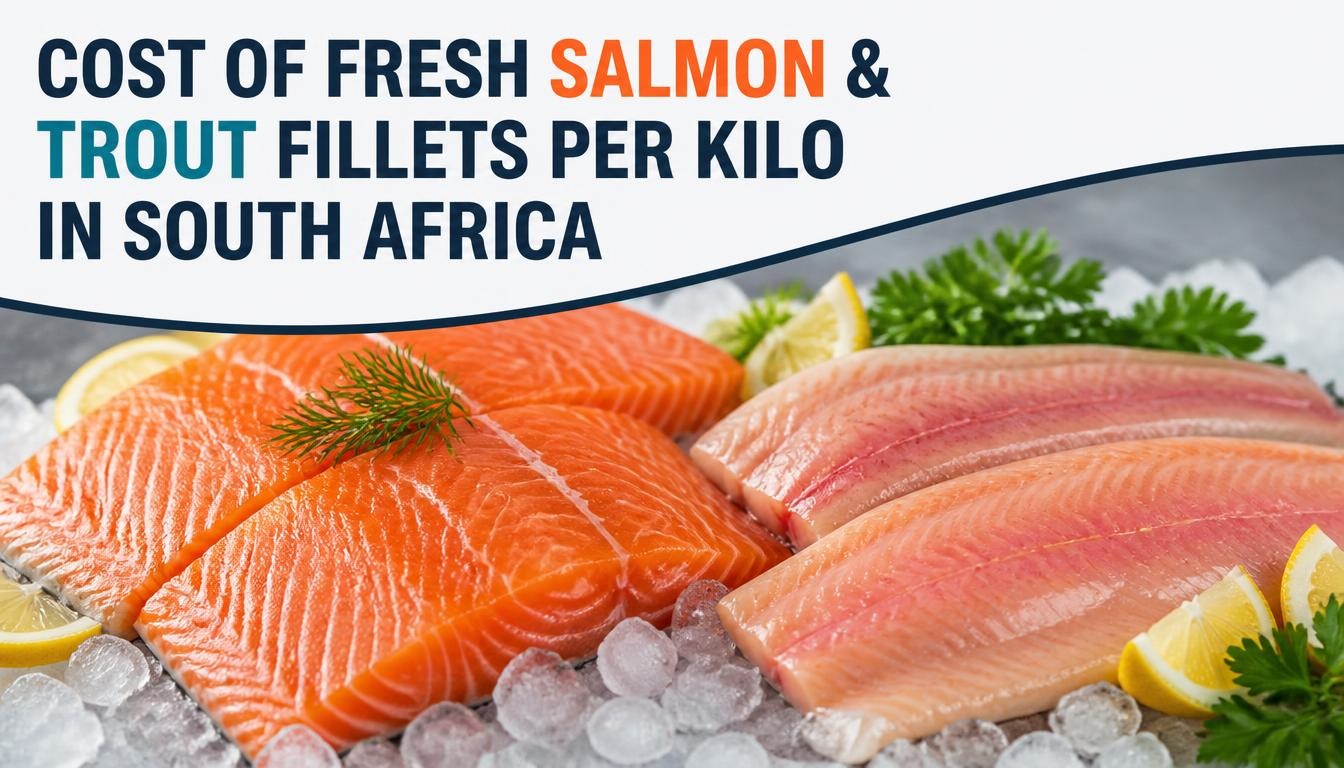
Buying fresh pink fish in South Africa feels like navigating a financial minefield. Between air-freight tariffs, retail markups, and clever labelling that tricks you into paying premium prices for thawed import stock, the cost of fresh salmon and trout fillets per kilo varies wildly across local supermarket chains and coastal fishmongers.
Quick-Answer Pricing Summary (Per Kilo ZAR)
The SA Pink Fish markup: Why prices fluctuate so violently
If you have walked past the seafood counter at your local supermarket recently, you have likely suffered severe sticker shock. Importing Atlantic salmon (Salmo salar) into South Africa involves high air-freight logistics directly from Norwegian fjords or Chilean sea cages.
Because the fish flies in packed on ice, local prices are immediately tied to the Rand-Dollar exchange rate, aviation jet fuel surcharges, and a 15% VAT tax added at checkout. When the Rand slips, your weekend salmon dinner instantly gets hit with a 10% to 15% price spike.
Trout (Oncorhynchus mykiss), on the other hand, is farmed locally in cold-water inland dams across Mpumalanga, the Drakensberg, and parts of the Western Cape. While trout avoids heavy international freight tariffs, local fish farmers face rising feed costs and high electricity charges for aeration systems during grid disruptions.
Understanding the per-kilo price difference between these two species is the fastest way to protect your grocery budget without sacrificing quality or nutrition.
Supermarket vs Fishmonger Price Breakdown (Per Kg Rates)
Prices fluctuate weekly based on port arrivals and store specials. Below is a realistic snapshot of what you can expect to pay per kilogram across South Africa’s primary retail outlets.
| Retailer / Outlet | Species & Prep Type | Average ZAR Price / Kg | In-Stock / Delivery | Includes 15% VAT? | Overall Value Rating | Direct Shopping Link |
| Makro | Fresh Norwegian Salmon (Bulk Slab) | R480 – R530 /kg | In-Store / Delivery | Yes | 4.8 / 5 | Check Price at Makro |
| Food Lover’s Market | Fresh SA Rainbow Trout Fillets | R340 – R390 /kg | In-Store Only | Yes | 4.7 / 5 | View Price at Food Lover’s Market |
| Pick n Pay Hyper | Fresh Salmon Fillet Portions | R520 – R580 /kg | In-Store / ASAP! | Yes | 4.2 / 5 | Shop Salmon on Pick n Pay |
| Woolworths | Fresh Never-Frozen Salmon Portions | R590 – R660 /kg | In-Store / Dash | Yes | 3.9 / 5 | Order Fresh Fish at Woolworths |
| Checkers Hyper | Fresh Atlantic Salmon Fillets | R499 – R550 /kg | In-Store / Sixty60 | Yes | 4.5 / 5 | View Deals on Checkers Sixty60 |
| Local Fishmongers | Fresh Local Trout Fillets | R360 – R420 /kg | In-Store Pick-up | Yes | 4.6 / 5 | Varies by region |
Salmon vs. Trout: The local taste, texture, and nutrition reality
Many consumers cannot visually distinguish between a clean slab of salmon fillet and a side of freshwater rainbow trout. Retailers know this, and some capitalize on the confusion by pricing trout dangerously close to imported salmon.
-
Atlantic Salmon: Imported from Norway or Chile. Priced between R480 – R660 /kg. Features a rich, buttery, high-fat flavor profile with deep orange to pale pink color.
-
Rainbow Trout: Farmed locally in South African inland dams. Priced between R340 – R470 /kg. Features a clean, mild, firm flavor profile with vibrant reddish-pink color.
1. Flavor Profile and Cooking Utility
Salmon has a higher overall intramuscular fat percentage. This gives it that melt-in-your-mouth, buttery texture prized for pan-searing, sushi, or braaiing over open coals in a double grid.
Trout is slightly leaner with a firmer flake. If cooked correctly (medium to medium-rare), it matches salmon in moisture and flavor while taking on marinades, lemon, and dill much more efficiently.
2. Nutritional Value and Omega-3 Content
Both species are nutritional powerhouses loaded with protein and healthy fats:
-
Fresh Norwegian Salmon: Contains roughly 2.3g of Omega-3 fatty acids per 100g portion.
-
Fresh SA Rainbow Trout: Delivers approximately 1.8g of Omega-3 fatty acids per 100g portion.
Unless you are adhering to a strict clinical diet requiring maximum fat concentration, local rainbow trout easily satisfies daily nutritional needs for a fraction of the cost.
How to outsmart high retail markups in South Africa
If you want to serve fresh pink fish without blowing your monthly food budget, standard shopping habits will not cut it. Use these proven tactics to lower your effective per-kilo costs.
Buy Whole Sides or Slabs, Not Pre-Cut Portions
Pre-packaged 150g fillet portions at premium grocers can carry an effective rate of up to R680 per kilo. The retailer charges you extra for the plastic tray, skin trimming, and individual portioning.
Instead, ask the counter staff at Checkers Hyper – View Deal or Makro – View Deal for a whole skin-on fillet side (usually weighing 1.1kg to 1.5kg). The unit price often drops by R80 to R120 per kilo. You can pin-bone and cut the slab into custom portions at home in under five minutes.
Leverage Store Loyalty Points and Cash Back
Smart South African shoppers rarely pay full sticker price for high-ticket proteins.
-
eBucks (FNB): Use your eBucks at Checkers – View Deal to pay for fresh seafood or earn up to 15% back on your total basket depending on your reward level.
-
Discovery Miles: Redeem miles on partner platforms or spend them on healthy food items at Pick n Pay – View Deal and Woolworths – View Deal to stretch your buying power.
-
Smart Shopper & Xtra Savings: Watch out for “Personalised Discounts” in mobile apps. Retailers frequently target high-value meat and seafood buyers with 10% off single-item vouchers.
Time Your Store Visits for Clearance Markdowns
Fresh, unfrozen seafood has a strict shelf life. Large supermarket chains slice prices on fresh fillets by 20% to 50% when products reach 24 to 48 hours before their sell-by date.
Visit store fish counters early in the morning (between 08:00 and 09:30) or during late afternoon stock sweeps to snap up premium fish meant for immediate cooking or home freezing.
Load-Shedding & Storage: Protecting your expensive investment
Given South Africa’s ongoing infrastructure challenges and warm climate, buying high-priced fresh fish comes with real storage risks.
-
Short-Term Storage (Main Fridge at 1°C – 3°C): Use within 48 hours of purchase. Keep fish in a cooler box with ice packs during active load-shedding schedules.
-
Long-Term Storage (Deep Freeze at -18°C or lower): Vacuum-seal fillets before freezing. Always defrost slowly in the refrigerator; never use warm water or microwaves.
-
Maintain the Cold Chain: Transporting fresh fish from the store to your kitchen in a hot car can ruin delicate fats in under 30 minutes. Keep an insulated cooler bag with ice bricks in your boot when shopping at Food Lover’s Market – View Deal.
-
Fridge Placement: Standard home fridges sit between 4°C and 6°C, which is too warm for fresh raw fish. Place fresh fillets in the coldest section (usually the bottom back shelf right above the crisping drawer) surrounded by crushed ice in a sealed container.
-
Handling Power Outages: Extended power cuts can rapidly warm your fridge interior. If your area experiences load-shedding slots longer than 4 hours, cook your fresh salmon/trout on the braai or pan on day one, or vacuum-seal and freeze it in a dedicated chest freezer immediately after purchase.
South African Consumer Rights & Freshness Checks
Under the South African Consumer Protection Act (CPA) No. 68 of 2008, consumers are legally entitled to safe, high-quality goods. If you purchase fresh fish that displays signs of spoilage before its listed expiration date, you have the right to a full refund or replacement from the retailer.
The 4-Step Freshness Inspection at the Counter
Do not allow counter staff to wrap fish without letting you inspect it first:
-
The Scent Test: Fresh salmon or trout should smell cleanly of the ocean or fresh water—never sharp, sour, or heavily “fishy.”
-
Flesh Elasticity: Gently ask the fishmonger to press the fillet (or test it through the packaging). The flesh must spring back immediately. If the indentation remains, the fish is aging.
-
Moisture & Glisten: Look for a moist, glossy surface. Steer clear of fillets showing dry edges, brown discoloration, or white milky liquid pooling in the plastic tray.
-
Skin Integrity: The skin should be shiny and intact with tightly adhered scales, free from slimy gray residue.
Local Buying Questions (FAQs)
Is farmed trout safer to eat raw as sushi than imported salmon?
Neither should be eaten raw straight from a standard supermarket display counter unless labeled “Sushi-Grade” or “Blast Frozen.” Blast freezing at -20°C for at least 7 days (or -35°C for 15 hours) is necessary to eliminate potential parasites. Local farmed trout is exceptionally clean, but unless processed under certified sushi-grade protocols, cook it thoroughly.
Can I return fresh salmon if it smells off when I open it at home?
Yes. Under the Consumer Protection Act, if you return the spoiled product to stores like Woolworths – View Deal or Checkers – View Deal along with your till slip within a reasonable timeframe (usually 24–48 hours), the retailer must provide a full refund or exchange.
Why is frozen salmon sometimes more expensive than fresh salmon per kilo?
Some frozen options consist of wild-caught Pacific species (like King or Sockeye salmon) rather than farmed Atlantic salmon. Wild-caught fish incurs higher harvesting costs and strict seasonal catch quotas, driving up the global per-kilo price. Always check the exact species name on the back label.
Have you spotted fresh salmon or trout on special in your area this week? Found a great local fishmonger in Cape Town, Durban, or Johannesburg offering killer per-kilo pricing?
Leave a comment below with the store location, price per kilo, and date of purchase to help fellow South African shoppers beat the retail price trap!
Disclaimer: Prices fluctuate constantly based on exchange rates, seasonal supply, and store promotions, reflecting independent market research at the time of publication. We may earn a small affiliate commission through retailer links at no extra cost to you.

Joseph Mathebula is a consumer analyst and market researcher at Prices in South Africa. He specializes in tracking local service costs, retail pricing, and travel budgets, helping everyday shoppers navigate the market to secure the best value.