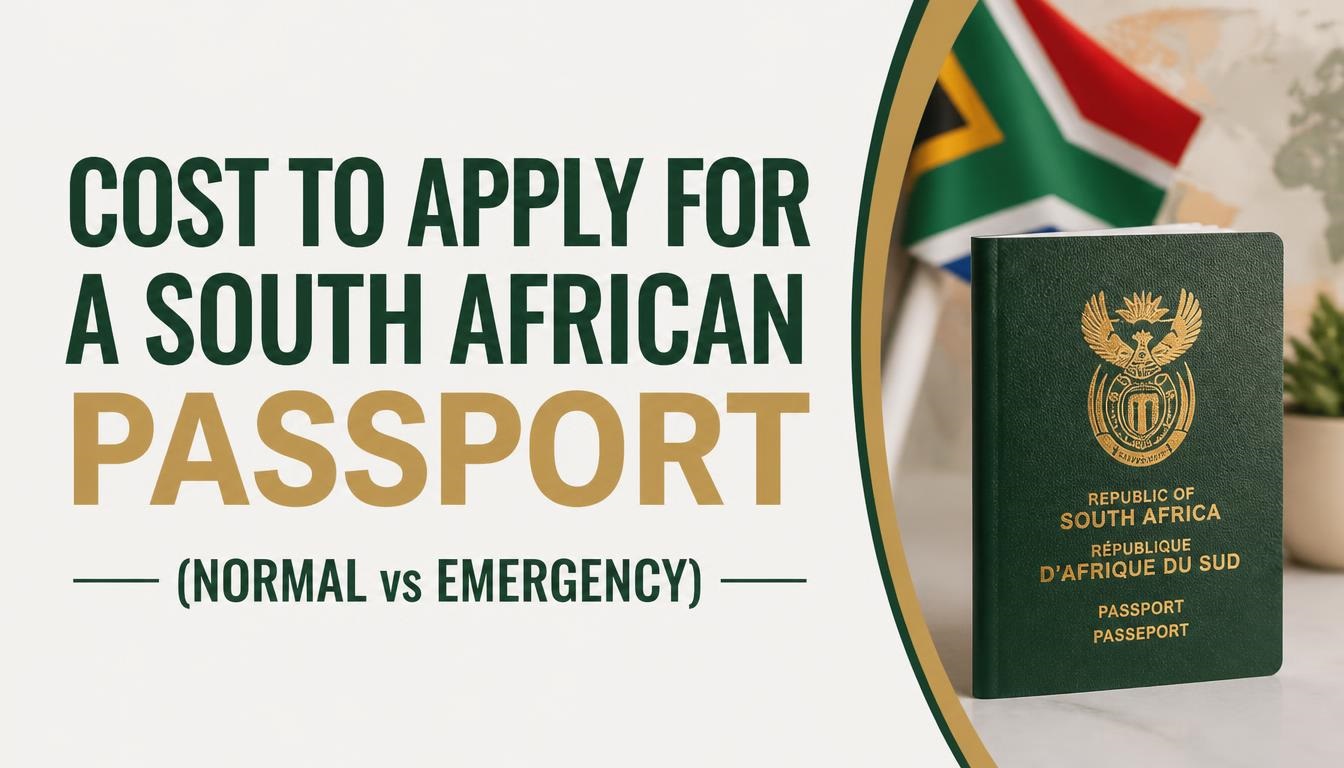
Facing an upcoming overseas trip, a work contract abroad, or a sudden family emergency can make dealing with Home Affairs fee structures and application queues feel overwhelming. Between system downtime, long branch lines, and confusion around whether emergency passports still exist in South Africa, knowing exactly what you will pay before heading to the Department of Home Affairs (DHA) or logging onto eHomeAffairs is critical to avoiding costly mistakes.
Having analyzed South African civic documentation tariffs, retail banking integration rollouts, and processing workflows over several fiscal cycles, our team has built this independent, definitive pricing guide. Below is a complete breakdown of current official Department of Home Affairs passport fees in South African Rand (ZAR), distinguishing standard adult booklets, child applications, maxi passports, emergency documentation, lost document penalties, and bank branch submission channels.
At a Glance: ZAR Passport Fee Summary
-
Standard Adult Tourist Passport (32 Pages): R600 (Valid for 10 years for citizens aged 16 and older).
-
Maxi Adult Tourist Passport (48 Pages): R1,200 (Valid for 10 years, designed for frequent international travellers).
-
Child Passport (Under 16 Years): R600 (Valid for 5 years; requires full parental consent).
-
Emergency Travel Certificate (ETC): R140 (Single-use document issued abroad to stranded South Africans returning home).
-
Lost / Damaged Passport Replacement Penalty: R1,200 for standard 32-page or child booklets; R2,400 for 48-page maxi booklets (Home Affairs charges double the standard fee for negligent loss or damage).
Official Department of Home Affairs Passport Pricing Matrix
Understanding the total cost of acquiring a travel document in South Africa requires looking at document types, page counts, validity periods, and penalty multipliers. Home Affairs revised its tariff structure under Government Gazette gazetted regulations, bringing South African passport fees closer to international production costs while removing historical subsidies for outbound travel.
The table below outlines the official tariff schedule across all standard and specialized passport categories currently issued by the Department of Home Affairs:
| Passport / Document Type | Target Applicant Group | Validity Period | Blank Page Count | Official ZAR Fee |
| Standard Tourist Passport | Adults (Ages 16 and older) | 10 Years | 32 Pages | R600 |
| Maxi Tourist Passport | Frequent Adult Travellers | 10 Years | 48 Pages | R1,200 |
| Minor / Child Passport | Minors (Under 16 years) | 5 Years | 32 Pages | R600 |
| Replacement (Lost/Damaged 32-Page) | Citizens replacing lost/damaged standard booklet | Remaining original term / 10 Years | 32 Pages | R1,200 |
| Replacement (Lost/Damaged 48-Page) | Citizens replacing lost/damaged maxi booklet | Remaining original term / 10 Years | 48 Pages | R2,400 |
| Emergency Travel Certificate (ETC) | Stranded SA citizens abroad returning to RSA | Single Journey (Max 30 Days) | 1 Page | R140 |
| Official / Diplomatic Passport | Government Officials on State Duty | Term of Assignment | 32 Pages | R600 |
Cost vs Convenience: Choosing the Right Submission Channel
South African citizens can process their passport applications through two primary channels: traditional Department of Home Affairs brick-and-mortar offices or participating retail banking branches via the eHomeAffairs portal. While the official government fee payable to Home Affairs remains identical regardless of the venue, the actual cost in time, fuel, and convenience varies drastically.
Standard DHA Local Office Route
Applying directly at a local Home Affairs footprint office costs R600 for a standard adult booklet. However, this channel often carries significant indirect operational costs. Applicants must budget for early morning queueing, potential branch system downtime, load-shedding disruptions, and potential loss of working hours. While live-capture systems are deployed at most main DHA branches (meaning biometrics and photos are taken on-site at no additional cost), smaller regional offices may still require applicants to bring printed physical passport photos, adding R80 to R150 in local pharmacy or studio photography costs.
eHomeAffairs Partner Bank Branch Route
Major commercial banks in South Africa—including First National Bank (FNB), Standard Bank, Nedbank, Absa, Discovery Bank, and Investec—partner with Home Affairs to host live-capture biometric centres inside select branches.
-
Application Fee: Exactly R600 (or R1,200 for maxi), paid directly via EFT through your online banking profile during the eHomeAffairs registration process.
-
Service Surcharge: Home Affairs and partner banks charge R0 in additional convenience fees for booking at a bank branch.
-
Access Requirements: You must hold an active account with the participating bank to book an appointment slot at their designated branch.
-
Value Assessment: For working professionals and families, saving 3 to 6 hours of queueing time at a regular DHA office makes the bank branch route the most cost-effective option when evaluating opportunity cost and time value.
Step-by-Step Guide: How to Apply for Your Passport Without Overpaying
Navigating the application procedure efficiently ensures you avoid double-payments, rejected documentation, or unnecessary travel to Home Affairs offices. Follow this procedural framework to complete your application smoothly.
Step 1: Determine Your Booklet Needs Realistically
Before logging onto the system, decide whether you genuinely require the standard 32-page tourist passport (R600) or the 48-page maxi tourist passport (R1,200). Both carry a 10-year validity period for adults. Unless you travel internationally multiple times per year for business or hold visas that consume full pages (such as Schengen or US multi-entry visas), the standard 32-page booklet provides more than enough space. Choosing the standard option saves you R600 upfront.
Step 2: Register on the eHomeAffairs Portal
Visit the official eHomeAffairs web portal and create an account using your South African ID number, personal details, and a verified cell phone number. Fill out the online BI-73 application form digitally. Ensure every field matches your green barcoded ID book or Smart ID card exactly to prevent system verification errors.
Step 3: Complete Online Payment via Your Bank Profile
Once the online form is submitted, select your payment method. If you choose to capture biometrics at a partner bank branch, you must initiate an electronic payment directly through your bank’s online platform or mobile app under the “eHomeAffairs” or “Bills/Payments” tab. The system locks in your R600 (or R1,200) fee and generates a payment confirmation.
Step 4: Book an Appointment Slot
After payment authorization clears, return to the eHomeAffairs portal to select an available time slot at a participating bank branch or live-capture DHA office. Booking an appointment eliminates line-waiting and guarantees that biometrics (digital photo, fingerprints, and electronic signature) will be captured efficiently.
Step 5: Attend Your Biometric Capture Session
Bring your original South African Smart ID Card or Green Barcoded ID Book, along with your booking confirmation printout. If you are renewing an existing passport, bring your current booklet so Home Affairs officials can inspect and cancel it on-site. If applying at a live-capture branch, you do not need to bring physical photographs.
Step 6: Passport Collection
Passport processing typically takes between 7 to 21 working days. You will receive an automated SMS notification once your passport booklet has been printed and delivered to the exact branch where your biometrics were captured. You must collect the passport in person to perform a final fingerprint verification before the document is released.
Emergency Passports vs Emergency Travel Certificates: The Truth About Rush Applications
A widespread misconception among South African travellers is that Home Affairs offers an “Emergency Passport” for citizens who forget to renew their travel documents before an urgent holiday or business trip.
Expert Travel Advisory: The Department of Home Affairs officially discontinued temporary and emergency passport booklets within South Africa to combat international fraud, security breaches, and border control vulnerabilities. You cannot pay a premium fee to receive a full passport in 24 hours.
If you face an urgent situation, it is vital to understand the strict boundary between standard processing and emergency travel documentation:
1. In-Country Emergency Requests (Fast-Tracking Standard Passports)
If you need a standard passport urgently due to critical reasons—such as medical emergency treatment abroad, death of a family member overseas, or mandatory corporate deployment—Home Affairs does not issue a special “emergency booklet.” Instead, you must apply for a standard 32-page passport (R600) or 48-page maxi passport (R1,200) and submit an official request for expedite handling. You must supply supporting evidence, such as a doctor’s letter, employer affidavit, or confirmed flight itineraries, directly to the branch manager. Approval is discretionary, and no extra “rush fee” is charged by the government.
2. Emergency Travel Certificates (ETC) for Citizens Abroad
If you are a South African citizen currently stranded outside the Republic due to a lost, stolen, or expired passport and need to return home immediately, you can apply for an Emergency Travel Certificate (ETC) at the nearest South African High Commission, Embassy, or Consulate. The fee is R140 (or local currency equivalent). The ETC is an emergency single-page travel document valid for one direct journey back to South Africa within 30 days. Upon arrival back in South Africa, the ETC is surrendered, and you must apply for a regular passport at the standard R600 fee.
While the baseline cost of a South African passport is clearly defined by Home Affairs, unexpected ancillary expenses can quickly drive up the total cost of getting travel-ready.
-
The Lost Passport Negligence Penalty: If your current valid passport was lost, stolen, or damaged due to personal negligence, Home Affairs levies a 100% penalty fee. A replacement standard adult passport jumps from R600 to R1,200, while a replacement maxi passport jumps from R1,200 to R2,400. To avoid paying double, keep your passport stored securely in a fireproof safe when not travelling.
-
Police Clearance Affidavit Requirements: If your passport was stolen, you must report the incident to the South African Police Service (SAPS) and obtain a valid SAPS Case Number and sworn affidavit confirming the theft. Presenting an official SAPS police report with your replacement application is required to verify the circumstances surrounding the lost document.
-
First-Time Adult Applicants without Smart IDs: If you are 16 or older applying for your first passport and do not yet hold a Smart ID card or ID book, you must apply for your ID concurrently. While your first Smart ID card is free of charge, processing both documents together requires additional verification steps that can delay passport production.
-
Child Consent & Unabridged Birth Certificates: Applying for a minor child’s passport (R600) requires the physical presence or certified written consent of both parents, alongside the child’s unabridged birth certificate showing both parents’ details. If one parent is unavailable and documentation is missing, additional notary fees or legal affidavit costs may be incurred.
-
Travel to Metro Bank Branches: Participating bank branches offering eHomeAffairs are predominantly located in major metros (Gauteng, Cape Town, eThekwini, Gqeberha, Bloemfontein). Applicants residing in rural areas or smaller towns should budget for transport or fuel costs to the nearest live-capture banking hub.
Frequently Asked Questions
Can I pay for my South African passport application using cash at Home Affairs?
Most modernized Home Affairs live-capture offices and all partner bank branches operate on cashless systems. Payments at DHA offices are typically made via debit or credit card, while eHomeAffairs applications are paid online via direct EFT through integrated banking platforms. It is recommended to carry a debit or credit card rather than cash when visiting a branch.
How long is a South African adult passport valid for, and when should I renew it?
Standard adult (32-page) and maxi (48-page) passports are valid for 10 years from the date of issue. Minor passports for children under 16 years are valid for 5 years. Many international destinations (including Schengen Area countries, the UK, and the US) require your passport to have at least 3 to 6 months of validity remaining beyond your intended departure date. You should initiate your renewal application at least 6 to 8 months before expiration.
Can I pay extra to get my passport processed in 24 to 48 hours?
No. Home Affairs does not operate an official “fast-track” fee tier or express payment service. Be wary of third-party fixers or online scams claiming they can expedite passport printing for a cash fee. All applications follow standard biometric verification and centralized printing at the Government Printing Works facility in Pretoria.
What happens if I make a mistake on my eHomeAffairs payment or application form?
If an error is made prior to biometric capture, you can correct details on the eHomeAffairs portal. If a payment is allocated incorrectly or an application is cancelled before biometrics are taken, refund requests must be submitted through Home Affairs financial administration channels, which can take several weeks to process. Double-check all personal details against your official ID document before confirming payment.
Navigating civic documentation processes in South Africa is always easier when consumers share real-time feedback. Have you recently renewed your passport through eHomeAffairs, a local DHA office, or a partner bank branch like FNB, Standard Bank, Nedbank, or Absa?
How long did your application take from biometric capture to SMS collection notice? Did you encounter any unexpected fees or system delays? Drop your thoughts, pricing experiences, and branch feedback in the comment section below to help fellow South African travellers plan their applications effectively!
Important Pricing & Official Information Disclaimer
This guide is published independently for informational and consumer evaluation purposes for readers on pricesinsouthafrica.co.za. Passport tariffs, service availability, bank branch locations, and Department of Home Affairs regulations are subject to change by official government gazette without prior notice. While every effort is made to maintain accurate, up-to-date ZAR pricing and procedural data, readers are advised to verify current fees and requirements directly on the official Department of Home Affairs web portal (dha.gov.za) or through their respective retail banking institution before initiating payments or travel bookings.

Joseph Mathebula is a consumer tech analyst and market researcher at Prices in South Africa. He specializes in tracking smartphone prices and consumer electronics, helping everyday shoppers navigate the market to secure the best value.
Post Disclaimer
Prices and availability are subject to change without notice and may vary by store or region. pricesinsouthafrica.co.za is an independent informational platform; we do not sell products directly, nor are we responsible for third-party pricing errors.