If your iPhone dies before lunchtime while you are out navigating load-shedding traffic in Johannesburg, or drops from 40% to zero during a cool evening in Cape Town, you are not alone. South Africa’s extreme climate swings, constant power cuts driving higher charge-cycle frequencies, and daily reliance on power banks accelerate lithium-ion chemical degradation faster than typical global averages. When your battery health dips below 80%, Apple’s iOS automatically throttles processor speed to prevent unexpected shutdowns, leaving you with a sluggish phone and a frustrating daily search for a wall socket.
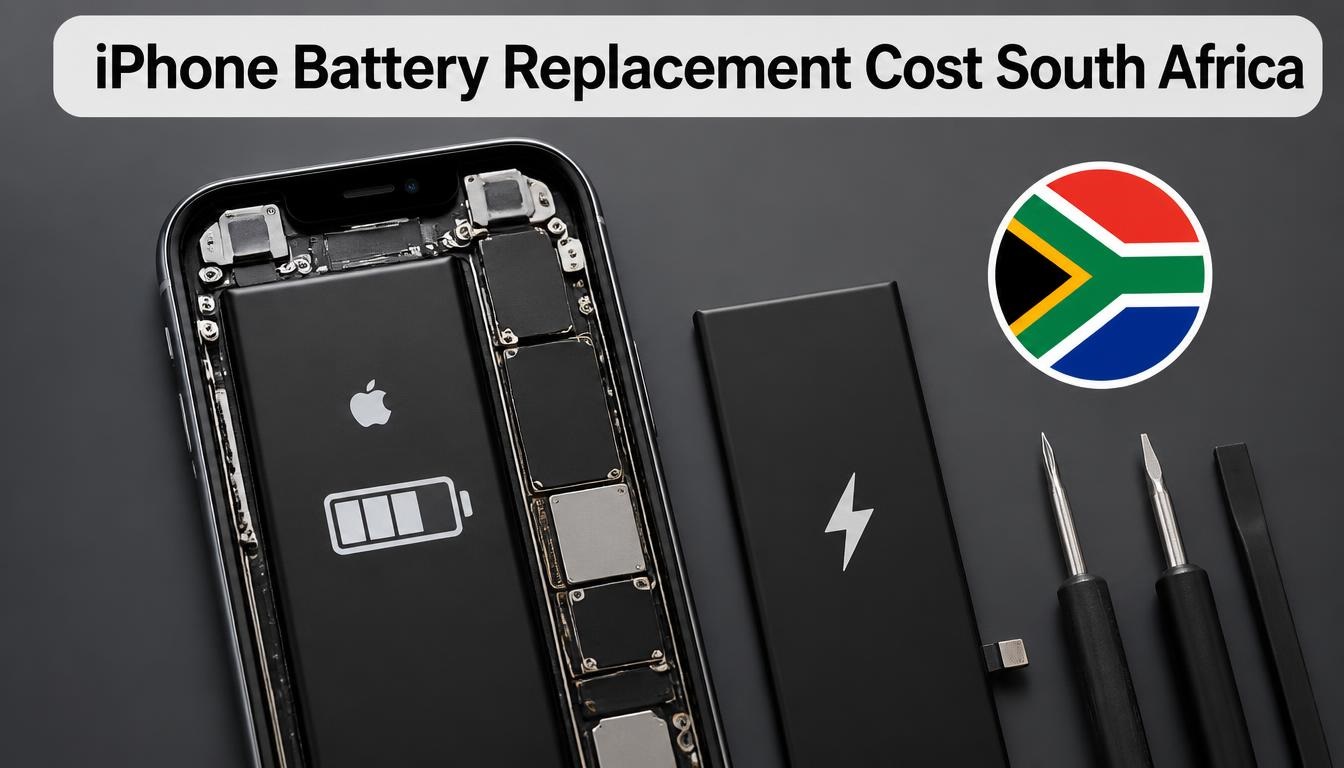
Replacing your iPhone battery is the single most cost-effective performance upgrade available in the South African consumer electronics market. However, navigating the local repair landscape requires balancing official Apple Authorised Service Provider (AASP) guarantees against competitive third-party repair options. Prices in South Africa range dramatically from R399 for older models at independent repair outlets to R2,200+ for the latest flagship devices at official iStores. This comprehensive pricing guide and retail analysis provides verified South African Rand (ZAR) market data, hidden fee warnings, and strategic decision frameworks to ensure you get maximum value for your money without compromising phone safety or data integrity.
At a Glance: ZAR Price Breakdown
-
Legacy iPhones (iPhone 6s, 7, 8, SE 2nd Gen): Expect to pay between R399 and R750 at third-party repairers like weFix or local specialists, while official AASPs charge approximately R999 to R1,199.
-
Mid-Tier Flagships (iPhone X, XR, XS, 11, 12, 13 Series): Third-party replacement costs range from R750 to R1,100, whereas official iStore battery replacements cost between R1,199 and R1,699.
-
Modern High-End Flagships (iPhone 14, 15, 16 Series): Third-party certified repairs cost between R1,100 and R1,500, while official Apple repair quotes range from R1,349 to R2,299 depending on whether additional back glass seals or diagnostic recalibrations are required.
-
DIY Battery Replacement Kits (Takealot / Online Retailers): Self-repair kits containing aftermarket batteries and toolsets cost between R250 and R550, but carry severe risks of damaging delicate internal ribbon cables or voiding water-resistance seals.
Detailed Price & Retailer Comparison Matrix
Selecting where to replace your battery depends on device age, budget constraints, warranty status, and your tolerance for non-genuine part warning messages in iOS. The matrix below contrasts current South African repair providers across pricing, part provenance, turn-around time, and warranty terms.
| Retailer / Repair Channel |
Coverage & Service Type |
Average ZAR Price Range |
Battery Quality & Sourcing |
Turnaround Time |
Warranty Included |
| iStore / Digicape (Official AASP) |
Nationwide official Apple Authorised Outlets |
R1,199 – R2,299 |
Original OEM Genuine Apple Parts |
1 to 3 Business Days (Same-day in selected hubs) |
90-Day Apple Guarantee (Preserves IP68 Seal) |
| Vodacom / MTN Repair Centres |
Cellular Network Service Depots |
R1,299 – R2,199 |
Official Apple Certified / Approved OEM |
3 to 7 Business Days |
90-Day Repair Warranty |
| weFix (National Franchise) |
Major Malls Nationwide (JHB, CPT, DBN) |
R399 – R1,199 |
Premium Aftermarket / High-Capacity OEM Equivalent |
45 to 90 Minutes |
3 to 6 Month Limited Warranty |
| Independent Specialists (e.g., Fix My Gadget, CellTech) |
Dedicated Repair Workshops in Metro Areas |
R550 – R1,200 |
Grade-A OEM Cells / Original Pulls |
30 to 60 Minutes |
90-Day In-House Warranty |
| Takealot DIY Kits |
Self-Service E-Commerce Delivery |
R250 – R550 |
Variable Aftermarket (Uncertified Third-Party) |
Self-Installation Time |
30-Day Retail Return (Part Only) |
Key Takeaway on Part Provenance
Official Apple Authorised Service Providers (iStore, Digicape, and authorised cellular depots) are the only outlets in South Africa equipped with System Configuration software. This propriety software pairs the new battery’s microchip with your iPhone’s logic board, maintaining full transparency in your Settings > Battery > Battery Health menu. Third-party repairers fit high-grade cells that perform identically in raw capacity, but on iPhone XS and newer models, iOS will display an “Important Battery Message” stating that the battery genuine status cannot be verified. This message does not impair battery life or device performance, but it is an aesthetic quirk to keep in mind.
iPhone Model Tiering: Cost vs. Longevity Index
Before investing in a replacement, it is crucial to evaluate whether swapping the battery yields a strong return on investment (ROI) relative to your phone’s current market resale value in South Africa.
| iPhone Generation / Tier |
Typical Battery Health Symptoms |
Average Replacement Cost (ZAR) |
Expected Post-Repair Lifespan |
Worth-It Index (Value Rating) |
| iPhone 7 / 8 / SE (2020) |
Sudden shutdowns at 30%, extreme throttling, rapid drop in cold weather |
R399 – R750 |
12 to 18 Months |
Moderate (6/10): Great for secondary work phones or kids’ devices, but software support is tapering off. |
| iPhone X / XR / XS / 11 |
Screen lag, phone runs warm during basic browsing, health below 75% |
R750 – R1,199 |
24 Months |
High (9/10): Excellent ROI. These processors remain fast on iOS, making a battery swap feel like a new device. |
| iPhone 12 / 12 Pro / 13 Series |
Drains rapidly on 5G networks, requires midday charging, health 78–82% |
R800 – R1,349 |
24 to 36 Months |
Exceptional (10/10): Highly recommended. Preserves flagships with years of remaining Apple software updates. |
| iPhone 14 / 15 Series |
Heavy daily usage drain, power bank dependence during load-shedding |
R1,100 – R1,899 |
36 Months |
Essential (9.5/10): Vital for keeping high-resale-value phones in peak condition without upgrading. |
| iPhone 16 Series |
Battery health drops prematurely due to heavy gaming or thermal stress |
R1,350 – R2,299 |
36+ Months |
Essential (9/10): Protect your massive capital outlay; stick strictly to AASPs if under initial warranty. |
Common Consumer Pitfalls & Hidden Costs in South Africa
When reviewing battery repair quotes from local workshops, the advertised price on a banner or website rarely reflects the final amount on your invoice. South African consumers routinely face unexpected secondary charges or technical oversights that compromise their device.
1. Mandatory Diagnostic Fees
Many independent repair shops in Johannesburg and Cape Town charge an upfront diagnostic fee of R250 to R350. While reputable stores waive this fee if you proceed with the battery replacement on-site, others bill it separately if you decide not to proceed after technical assessment. Always clarify whether your quote includes mandatory initial testing before leaving your device.
2. Loss of IP68 Water and Dust Resistance
Every water-resistant iPhone relies on a factory-applied, die-cut adhesive seal running along the inner rim of the display. Opening the phone breaks this bond permanently. Official Apple AASPs and top-tier franchises replace this specialized adhesive ring during the repair process. Budget repair shops frequently skip this step or use cheap liquid glue, leaving your phone highly vulnerable to liquid ingress from rain, spilled drinks, or condensation.
3. Charging Port Misdiagnosis
Before paying for a new battery, inspect your charging port. South African repair technicians frequently see clients booking battery replacements when the real culprit is compressed pocket lint, dust, or oxidized lightning/USB-C pins preventing a full charge. A gentle cleaning with a wooden tooth-pick or compressed air can often fix charging issues for zero cost, eliminating the need for a battery swap.
4. Courier and Logistics Surcharges
If you live outside main metropolitan hubs like Sandton, Pretoria, Umhlanga, or Century City, sending your phone to an authorized hub incurs round-trip courier fees ranging from R150 to R250 (via services like RAM, Courier Guy, or FedEx). Factor logistics expenses into your overall repair budget when comparing local corner-store options against centralized certified centers.
5. Board-Level Power IC Failures
If your iPhone drains rapidly even after a new battery is installed, the issue may not be the chemical cell itself. Faulty car chargers, unbranded loadshedding surge protectors, or cheap lightning cables can damage the power management integrated circuit (PMIC / Tristar chip) on the logic board. Replacing the battery will not solve a board-level short, which requires specialized micro-soldering repairs typically costing R1,200 to R2,500.
Strategic Buyer’s Decision Framework
Follow this step-by-step evaluation procedure before booking your iPhone in for a battery service to ensure maximum safety, price transparency, and data preservation.
Step 1: Verify True Chemical Degradation
Do not rely on feeling alone. Navigate to Settings > Battery > Battery Health & Charging on your iPhone. Check two vital metrics:
-
Maximum Capacity Percentage: If this figure reads 79% or lower, Apple officially recommends replacement.
-
Peak Performance Capability: If the text states that “Performance management has been applied” or that “Battery health is significantly degraded,” your phone’s processor is actively being throttled to manage power delivery.
Step 2: Backup Your iPhone via iCloud or Mac/PC
Although a battery replacement is a straightforward hardware repair, power interruptions or accidental motherboard contact during servicing can trigger boot loops. Perform a full encrypted local backup or iCloud backup prior to handing over your device. Disable Find My iPhone in your Apple ID settings, as official service providers like iStore will reject service requests if activation locks remain active.
Step 3: Match Your Device Age to the Right Repair Channel
-
Under Warranty or Covered by AppleCare+: Go exclusively to an Apple Authorised Service Provider (iStore or Digicape). Unauthorized opening instantly voids your remaining factory coverage.
-
Devices 1 to 3 Years Old (iPhone 13, 14, 15 Series): Choose an AASP or a premium independent specialist that offers high-tier OEM-grade cells with explicit warranties.
-
Older Secondary Devices (iPhone 8, X, XR, 11): High-grade third-party repair centers (such as weFix or vetted local repair centers) offer the most economical balance of price and speed.
Step 4: Demand a Post-Repair Charge-Cycle & Thermal Test
When collecting your phone, verify that it charges smoothly beyond 80%, does not generate excessive heat on the rear casing, and that the display touch response remains completely uniform across all edges. Ensure you receive an itemized receipt specifying the warranty duration on both parts and labour.
Retail Analyst Insight: “Many South African consumers wait until their iPhone battery expands or completely dies before taking action. However, timing your battery replacement around major shopping periods can save you up to 30%. Independent repair franchises and major accessories retailers routinely launch spring-cleaning specials, Black Friday tech deals, and mid-year refurb promos where battery fitment fees are slashed. Furthermore, if you plan to trade in your phone at iStore or Takealot, replacing a severely degraded battery beforehand significantly boosts your trade-in evaluation tier, earning you far more back on your trade-in voucher than the cost of the battery swap itself.”
Technical Workshop Note: “The surge in load-shedding over recent years radically shifted battery failure patterns across South Africa. Fast-charging your iPhone off high-wattage power banks or inverter setups while continuing to stream video or run navigation apps pushes internal cell temperatures past safe operational limits. Heat is the ultimate killer of lithium-ion chemistry. If you want your new battery to last three years instead of one, avoid intense phone use while plugged into fast-chargers, especially in hot South African summer months.”
Frequently Asked Questions
How long does an iPhone battery replacement take in South Africa?
At third-party franchises and local repair shops like weFix or independent specialists, an iPhone battery swap takes between 30 and 90 minutes. Official Apple Authorised Service Providers (iStore and Digicape) typically quote 1 to 3 business days, as devices undergo comprehensive hardware diagnostics, water-seal reapplication, and system software re-calibration. However, selected flagship iStore locations in Johannesburg and Cape Town offer same-day express service if booked in advance.
Will I lose my data during a battery replacement?
Under normal conditions, a hardware battery replacement does not erase your internal storage. However, technician safety protocols require opening the device chassis and disconnecting the logic board power rail. Unexpected shorts or firmware updates triggered during post-repair diagnostics can occasionally require a device restore. Always perform a complete iCloud or PC/Mac backup before handing your phone in for service.
Can I finance my repair using Mobicred, PayFlex, or PayJustNow?
Yes, many leading South African repair outlets now support buy-now-pay-later (BNPL) payment gateways. Franchises like weFix, as well as e-commerce platforms selling replacement kits like Takealot, accept PayFlex, PayJustNow, and Mobicred. This allows you to split your battery repair invoice into 3 or 4 interest-free installments over several pay cycles, easing immediate cash-flow pressure.
What is the “Important Battery Message” warning on iPhones?
When an iPhone XS, XR, 11, or newer model has its battery replaced outside of an Apple Authorised Service Provider, iOS displays a persistent notification reading “Important Battery Message: Unable to verify this iPhone has a genuine Apple part.” This occurs because Apple pairs the battery serial code to the logic board at the factory. Third-party cells—even high-quality OEM equivalents—cannot perform this software handshake without micro-soldering the original flex cable over to the new cell. The pop-up warning stays on your lock screen for 4 days and in Settings for 15 days, but it does not diminish battery safety or performance.
What Price Did You Pay for Your iPhone Battery?
Navigating tech repair costs across South Africa requires community transparency. Have you recently replaced your iPhone battery at an iStore, weFix, or a local repair shop in your town?
Drop your experience in the comments below! Share your iPhone model, the retailer or shop name, the final ZAR price paid, and whether you received a full battery health readout afterwards. Your real-world feedback helps fellow South African shoppers avoid overpriced quotes and find reliable technicians in their local area.
Important Price & Independent Review Disclaimer
Disclaimer: Pricing data published in this guide is independently researched and updated using verified South African retail catalogues, repair provider price sheets, and market surveys. Prices are subject to change due to Rand (ZAR) exchange rate fluctuations, shipping tariffs, and localized promotional offers. pricesinsouthafrica.co.za is an independent consumer resource and is not affiliated with, endorsed by, or sponsored by Apple Inc., iStore, weFix, or any cellular network provider. Always request an itemized written quote before handing your device over for servicing.