Retail Outlay Snapshot: R3,499 – R27,999 across portable inverter categories
Core Technical Variable: Battery Chemistry (LiFePO4 vs. NMC) & Continuous Output Wattage
Lowest-Cost Verified Stockist: Takealot & Makro (Entry-level units start at R3,499)
Consumer Takeaway: For apartment dwellers, quiet LiFePO4 units with fast AC charging (like the EcoFlow River 2 series or Bluetti EB3A) offer optimal rental-friendly backup power without exhaust fumes or body corporate hassle.
Apartment living during rotational load shedding presents a distinct set of operational rules. While suburban homeowners can easily mount wall-hung lithium batteries, drill external conduit, and bolt high-capacity monocrystalline solar arrays onto tiled roofs, apartment tenants and body corporate residents face tight architectural and legal constraints. Noise regulations outright ban petrol or diesel generators on balconies, lease agreements restrict permanent electrical modifications, and limited floor space makes bulky inverter trollies impractical.
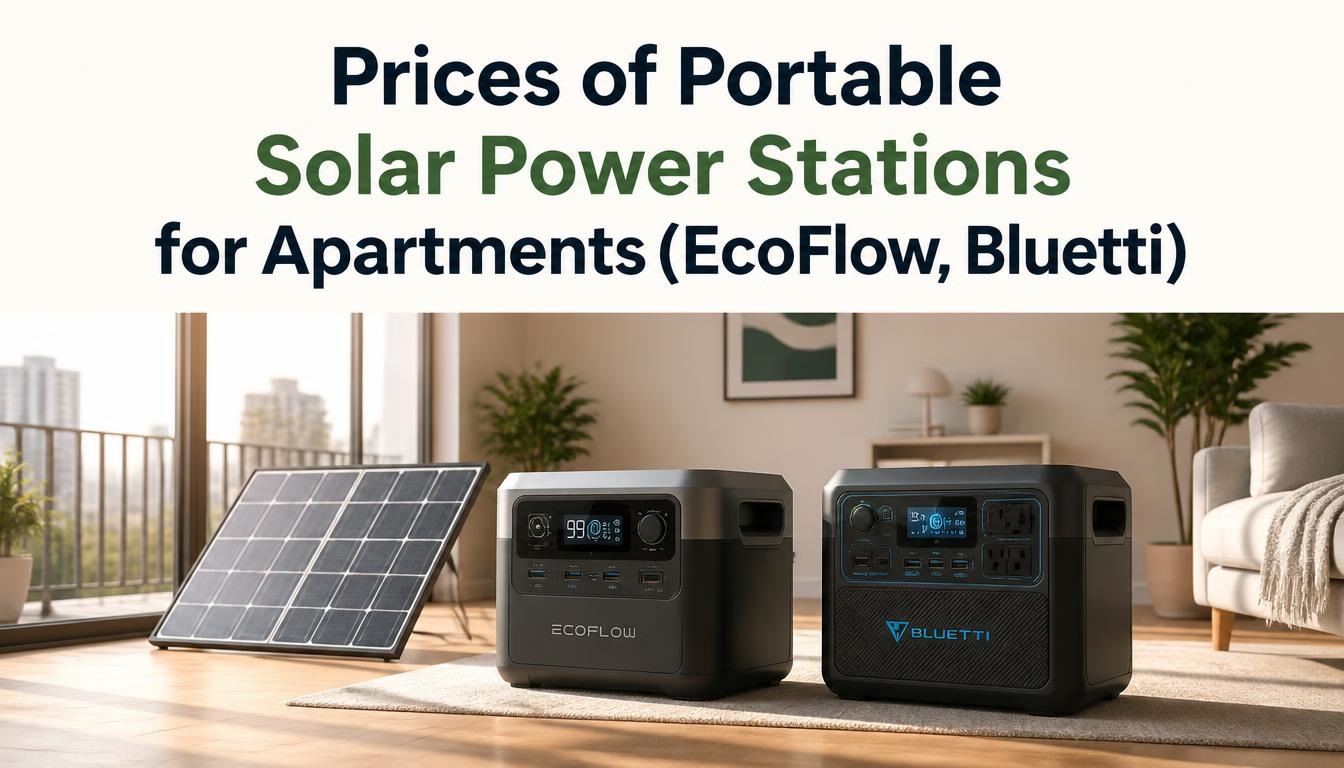
Portable solar power stations—compact, all-in-one generator alternatives combining a lithium battery, pure sine wave inverter, and solar charge controller—have become the go-to solution for South African sectional title residents. Market leaders EcoFlow and Bluetti dominate local retail shelves. However, navigating capacity ratings (Wh), surge thresholds (W), battery lifespan chemistry, and local retail pricing across stockists like Takealot, Makro, Builders Warehouse, and Leroy Merlin requires a clear breakdown of actual outlays.
2026 ZAR Outlay: Portable Power Station Price Matrix
The following index reflects verified, real-world shelf pricing across major South African retailers including Takealot, Makro, Builders Warehouse, and official brand outlets. All amounts include 15% South African Value-Added Tax (VAT).
| Brand & Model | Battery Capacity (Wh) | Inverter Output (Continuous / Surge) | Battery Chemistry | Standard Retail Price (ZAR) | Primary Apartment Use Case |
| Bluetti EB3A | 268 Wh | 600W / 1,200W | LiFePO4 (3,000+ cycles) | R3,499 – R3,999 | Wi-Fi router, TV, laptop, phone charging |
| EcoFlow River 2 | 256 Wh | 300W / 600W | LiFePO4 (3,000+ cycles) | R4,249 – R4,499 | Fibre ONT, workstation, LED desk lighting |
| EcoFlow River 2 Max | 512 Wh | 500W / 1,000W | LiFePO4 (3,000+ cycles) | R4,999 – R5,348 | Entertainment setup, 55″ TV, decoders, Wi-Fi |
| Bluetti EB70 | 716 Wh | 1,000W / 1,400W | LiFePO4 (2,500+ cycles) | R4,999 – R6,299 | Work-from-home desktop, small fridge running |
| EcoFlow River 2 Pro | 768 Wh | 800W / 1,600W | LiFePO4 (3,000+ cycles) | R9,999 – R10,999 | Full living room setup, extended Stage 6 outages |
| EcoFlow Delta 2 | 1,024 Wh | 1,800W / 2,700W | LiFePO4 (3,000+ cycles) | R13,399 – R14,999 | Full kitchen appliances, fridge, microwave, Wi-Fi |
| Bluetti AC180 | 1,152 Wh | 1,800W / 2,700W | LiFePO4 (3,500+ cycles) | R14,999 – R16,999 | High-draw loads, coffee machines, full apartment fridge |
| EcoFlow Delta 2 Max | 2,048 Wh | 2,400W / 4,800W | LiFePO4 (3,000+ cycles) | R24,699 – R26,999 | Full multi-room backup, heavy load shedding stages |
| Bluetti AC200MAX / B230 | 2,048 Wh | 2,200W / 4,800W | LiFePO4 (3,500+ cycles) | R27,999 – R32,999 | Premium apartment emergency hub |
Market Dynamics & Apartment Suitability Factor
The South African portable power landscape underwent a technological shift when manufacturers transitioned from older Nickel Manganese Cobalt (NMC) cells to Lithium Iron Phosphate (LiFePO4) chemistry. For apartment owners and tenants, this transition directly impacts both long-term financial value and day-to-day safety.
Apartment Power Tier Breakdown:
-
Entry Level (200Wh – 500Wh | R3,499 – R5,500): Designed for Wi-Fi routers, smartphones, laptops, Fibre ONT units, and desk lighting. Typically provides 2 to 4 hours of continuous runtime.
-
Mid-Tier (500Wh – 1,000Wh | R5,000 – R11,000): Suitable for powering a 55″ Smart TV, soundbar, bar fridge or mini cooler, and workstation. Offers 4 to 8 hours of backup during medium load shedding stages.
-
High-Capacity / Full Apartment Hub (1,000Wh – 2,000Wh+ | R13,399 – R27,999): Engineered for full-size double-door inverter fridges, brief microwave or espresso machine use, and extended Stage 6 outage protection (8+ hours).
LiFePO4 batteries offer upwards of 3,000 to 3,500 charge cycles before dropping to 80% original capacity. If an apartment dweller discharges and recharges the unit once daily during active Eskom rotational schedules, a LiFePO4 station lasts roughly 8 to 10 years. Older NMC units degrade after 500 to 800 cycles (roughly 1.5 to 2 years of heavy load shedding).
Furthermore, apartment safety is paramount. LiFePO4 chemistry boasts significantly higher thermal and chemical stability compared to NMC, eliminating thermal runaway risks in confined living quarters.
Another crucial factor for apartment residents is AC recharge velocity. Units equipped with fast-charging technology (such as EcoFlow’s X-Stream charging or Bluetti’s Turbo Charging) can recharge from 0% to 80% in 45 to 60 minutes off a standard 230V wall socket. During Stage 4 or Stage 6 load shedding, where the grid restoration window between slots may only last 2 hours, ultra-fast recharge capability is the difference between staying powered or sitting in the dark.
Real-World Practical Observations & Field Testing Notes
Testing portable power units within multi-story apartment blocks in Johannesburg and Cape Town highlights specific operational realities that spec sheets rarely reveal:
-
Compressor Inrush Current: A standard 300L full-size domestic refrigerator draws approximately 100W to 150W while running. However, when the compressor kicks on, it triggers an instantaneous surge (inrush current) of up to 1,200W to 1,500W for a fraction of a second. Smaller power stations like the Bluetti EB3A (600W continuous) or EcoFlow River 2 (300W continuous) will immediately trip their internal overload protection when connected to a standard fridge. To safely power a full-sized refrigerator, an apartment dweller needs a unit rated for at least 1,000W continuous output, such as the EcoFlow Delta 2 or Bluetti AC180.
-
Balcony Solar Charging Limits: While portable solar panels (100W to 400W) are advertised as quick-charging add-ons, apartment balconies present spatial obstacles. A 220W folding panel requires nearly 1.5 meters of unshaded length. Tinted double-glazed balcony glass reduces solar irradiance by 40% to 60%. Apartment dwellers relying on solar must angle panels outside windows on unshaded balconies or rely heavily on grid recharge between load shedding slots.
-
Fan Noise Levels: In small studio apartments, cooling fan noise becomes noticeable. Under heavy load or fast AC charging, power station internal fans run between 45 dB and 58 dB. Units with “Silent Charging Modes” in their companion smartphone apps (such as the Bluetti app or EcoFlow app) allow users to cap fan noise at around 30 dB during nighttime operation by slowing down the charging wattage.
-
Pass-Through Charging & UPS Functionality: Running an entry-level power station as an Uninterruptible Power Supply (UPS) for remote work requires checking switchover times. The EcoFlow River 2 and Bluetti AC180 feature EPS/UPS switchover speeds under 20 milliseconds. While fast enough to keep Wi-Fi routers, fibre ONTs, and standard desktop PCs from rebooting, high-end gaming rigs with sensitive power supplies may require dedicated online UPS systems.
Retailer Price Breakdown & Stockist Comparison
Purchasing portable solar power stations in South Africa involves comparing pricing, warranty handling, and delivery options across major platforms.
-
Takealot: High availability, frequent daily deals, fast urban door-to-door delivery across major metropolitan areas.
-
Makro / Game: Excellent physical store returns policy, bulk promotional bundles combining power stations with solar panels.
-
Builders Warehouse: Direct stock of heavy-duty units, local trade counter support, and instant in-store pickup options.
-
Official Brand Stores (EcoFlow / Bluetti SA): Direct manufacturer warranty support, access to full accessory lines, and specialized expansion cables.
EcoFlow Pricing & Availability
-
EcoFlow River 2 (256Wh): Retails at R4,249 at Makro and Takealot. Frequently discounted during promotional events to R3,899.
-
EcoFlow River 2 Max (512Wh): Listed at R4,999 at Builders Warehouse and FirstShop. Excellent balance of weight (6kg) and output for small apartments.
-
EcoFlow Delta 2 (1,024Wh): Sells for R13,399 on FirstShop and Takealot. Represents the most popular unit for full-apartment backup.
Bluetti Pricing & Availability
-
Bluetti EB3A (268Wh): Priced competitively at R3,499 via specialized tech stockists and Takealot. One of the most affordable LiFePO4 entry points in SA.
-
Bluetti EB70 (716Wh): Retails at R4,999 – R5,599 at Makro and Takealot. Provides 1,000W continuous output, making it capable of running power tools and small kitchen appliances.
-
Bluetti AC180 (1,152Wh): Retails between R14,999 and R16,999. Competes directly with the EcoFlow Delta 2, offering slightly higher native battery capacity (1,152Wh vs 1,024Wh).
Budget Optimization & Cost-Saving Strategies for Apartment Renters
Maximizing battery ROI in a rental unit involves smart buying strategies to avoid overspending:
-
Calculate True Watt-Hour Requirements First: Avoid over-specifying. Multiply total device wattage by your required runtime hours, then divide by 0.85 (accounting for roughly 15% internal inverter conversion loss). For example, running a 15W router and 60W laptop for 4 hours requires 300 watt-hours of effective power, making a 500Wh unit more than sufficient.
-
Buy During Promotional Sales Cycles: Both EcoFlow and Bluetti run major discount campaigns on Takealot and Makro during Mid-Year sales, Black Friday (November), and seasonal load shedding promotions. Discounts typically range from 15% to 30% off standard retail pricing.
-
Opt for Rigged Balcony Panels Over Branded Folding Solar: Branded folding solar panels from EcoFlow or Bluetti carry premium price tags (e.g., an EcoFlow 160W portable panel costs ~R3,899 – R5,299). If your body corporate allows hanging items inside a balcony railing, purchasing a standard rigid monocrystalline panel (e.g., 200W panel for ~R1,500 – R2,200) plus an MC4-to-XT60 or MC4-to-DC7909 adapter cable saves over 50% on solar input costs.
-
Isolate Lighting Loads: Instead of using the power station to run floor lamps or overhead lights via extension cords, pair your unit with rechargeable magnetic LED strip lights. Reserve the power station’s inverter exclusively for active electronics, televisions, and refrigeration.
Frequently Asked Questions
Can I legally connect a portable power station directly to my apartment DB board?
No. Connecting a portable power station to an apartment distribution board via a male-to-male cable (backfeeding) is dangerous and illegal under South African SANS 10142-1 regulations. Doing so risks electrocuting municipal line workers and invalidates your home insurance. Portable power stations must be used via direct extension cords connected to individual appliances.
Will a 500W power station run a kettle or microwave in my apartment?
No. Standard kitchen kettles draw 1,800W to 2,200W, and microwaves draw 1,200W to 1,500W. Attempting to run them on a 500W station (like the EcoFlow River 2 Max or Bluetti EB70) will trip the inverter’s overload protection. You need a power station rated for at least 1,800W continuous output (such as the EcoFlow Delta 2 or Bluetti AC180) to operate heating appliances.
How long will a 1,000Wh power station run a 55-inch TV and Wi-Fi router?
A modern 55-inch LED Smart TV draws roughly 80W to 110W, while a Fibre ONT and Wi-Fi router draw around 15W combined (total load ~110W). A 1,024Wh unit like the EcoFlow Delta 2, operating at 85% inverter efficiency, will power this setup for approximately 7.5 to 8.5 hours continuously.
Do body corporates permit portable solar panels on apartment balconies?
Most body corporate conduct rules prohibit fixing permanent structures to exterior walls or hanging items over balcony railings. Portable, foldable solar panels placed flat inside the balcony footprint during daylight hours generally do not violate sectional title rules, as they require no permanent mounting and are stowed away after charging.
What is the difference between LiFePO4 and Lithium-ion batteries?
LiFePO4 (Lithium Iron Phosphate) is a safer, longer-lasting battery chemistry. It provides over 3,000 full charge cycles before degrading to 80% capacity, compared to standard Lithium-ion (NMC) which offers around 500 to 800 cycles. LiFePO4 is also less prone to overheating, making it safer for enclosed apartment use.
Disclaimer: Prices listed in this guide reflect real-world retail rates and verified shelf prices at the time of publication. Actual store rates may fluctuate due to regional store promotions, stock availability, or installer call-out charges. Always confirm final figures directly with your preferred retailer or service provider before purchasing.
Choosing the right portable solar power station comes down to balancing your apartment’s space constraints, daily power needs, and target budget. For simple work-from-home setups, entry-level 250Wh to 500Wh units keep routers and laptops running without breaking the bank. For multi-room lighting, entertainment systems, and full-sized refrigeration during extended load shedding stages, investing in a 1,000Wh+ LiFePO4 station ensures peace of mind for years to come.
We would love to hear about your load shedding setup. What power station are you currently running in your apartment, and what retail deals have you found in your area? Drop your questions, real-world runtime experiences, or store price spot-checks in the comments below to help fellow South African renters make informed buying decisions.

Joseph Mathebula is a consumer analyst and market researcher at Prices in South Africa. He specializes in tracking local service costs, retail pricing, and travel budgets, helping everyday shoppers navigate the market to secure the best value.