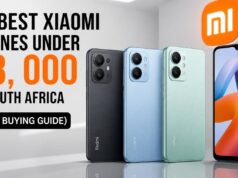
Buying a midrange phone in Mzansi has become a high-stakes balancing act between exchange rate volatility, carrier markups, and actual daily utility. The Redmi Note Series has long held the crown for budget efficiency, but local pricing across retailers like Takealot, Vodacom, and independent gray-market importers varies wildly.
Quick-Answer Pricing Summary:
Mzansi Street Price Matrix: Redmi Note Series Breakdown
Navigating exact ZAR values requires separating official ICASA-approved stock from gray imports. The table below breaks down current street pricing across major local channels, including 15% VAT and expected lead times.
| Model Variant | Base Specs | Realistic ZAR Price (Incl. VAT) | Lead Time & Stock Availability | Value Rating | Local Procurement Link |
| Redmi Note 13 4G | 6GB RAM / 128GB, 108MP, 33W | R3,499 – R3,999 | Immediate (In Stock) | 9.2/10 | Check Retail Availability – View Details |
| Redmi Note 13 Pro 5G | 8GB RAM / 256GB, 200MP OIS, 67W | R6,650 – R7,499 | 1 to 3 Business Days | 9.5/10 | Compare Contract Deals – View Details |
| Redmi Note 13 Pro+ 5G | 12GB RAM / 512GB, IP68, 120W | R9,999 – R11,999 | Regional Distribution | 8.4/10 | Check Official Stock – View Details |
| Redmi Note 12 4G (Legacy) | 4GB RAM / 128GB, 50MP, 33W | R2,999 – R3,499 | Clearance / Limited Stock | 7.8/10 | View Clearance Price – View Details |
Note: Cash prices fluctuate depending on ZAR/USD exchange swings and seasonal retail promos.
Load-Shedding & Real-World Mzansi Stress Test
A smartphone specification sheet looks great in a climate-controlled test lab, but South Africa’s daily operational environment demands raw durability and power management.
Power Resilience: Off-Grid Fast-Charging
When Eskom hits you with Stage 4 loadshedding, two-hour power slots leave little time to top up.
-
The 33W Base Tier: Takes approximately 70 minutes for a full 0–100% charge. You need at least 25 minutes during a power slot to get a 50% safety buffer.
-
The 67W Pro Tier: Recharges to 50% in roughly 15 minutes. Perfect for quick plug-ins at a local coffee shop or off a small load-shedding inverter.
-
The 120W HyperCharge Tier: Fully tops up the 5,000mAh battery in under 20 minutes. It allows you to charge fully during short municipal power windows or directly off a low-wattage solar setup without draining your backup battery storage.
Sunlight Legibility & Outdoor Build Quality
From direct Karoo ambient sunlight to high-humidity coastal spray, physical hardware matters:
-
Display Brightness: The Note 13 series pushes peak outdoor brightness up to 1,800 nits on AMOLED models. This eliminates screen glare while driving with GPS mounted on your dashboard under harsh midday sun.
-
Corrosion & Dust Protection: The base models carry IP53 splash resistance (good for unexpected Gauteng Highveld rain squalls), while the flagship Pro+ variant features full IP68 water/dust sealing—a essential safeguard against coastal salt-air atmospheric corrosion along Cape Town or Durban routes.
Evaluating the true cost of ownership goes far beyond the initial swipe of your credit card or 36-month contract sign-off.
Component Longevity & Microprocessor Choices
-
Snapdragon vs. MediaTek: Base 4G variants rely on Snapdragon 685 processors. They are fuel-efficient for daily WhatsApping, banking, and Uber driving, but lag under heavy multitasking or gaming. Pro models run MediaTek Dimensity or Snapdragon 7-series chips, ensuring smoother app rendering over a 3-to-4-year lifecycle.
-
Storage Speed Standard: Avoid 64GB options entirely. MIUI/HyperOS takes up over 20GB out of the box. Opt for a minimum of 128GB or 256GB models utilizing UFS 2.2 or higher read/write speeds to prevent app sluggishness after 12 months.
Out-of-Warranty Maintenance & Screen Replacements
Replacing a curved AMOLED display locally can cost anywhere from R1,800 to R3,200 for original service packs through authorized centers. Standard flat displays on the base Note 13 are significantly cheaper to fix, costing roughly R950 to R1,400. Always demand a Gorilla Glass 5 or Gorilla Glass Victus protective layer if you operate in rugged environments.
South African Regulatory, Licensing & Warranty Safeguards
Buying off-brand or unverified imports off social media marketplaces often leads to registration nightmares and zero consumer recourse.
Official Local Import Pathway:
Factory ➔ ICASA Type Approval ➔ MIA Group SA Warranty ➔ Licensed SA Retailer ➔ CPA Protected Purchase
Gray Market Import Pathway:
Foreign Stock ➔ Bypasses Official Compliance ➔ No ICASA Seal ➔ Dealer 3-Month Warranty ➔ Risk of Band Locking
-
ICASA Type Approval: Ensure the device packaging displays a valid ICASA sticker. Without official approval, local network providers like Vodacom, MTN, Telkom, and Cell C may throttle or restrict advanced LTE/5G carrier aggregation.
-
Consumer Protection Act (CPA) Rights: Purchasing through accredited local vendors guarantees your rights under the SA Consumer Protection Act. If a hardware manufacturing defect appears within six months, you are legally entitled to a repair, replacement, or full refund. Gray imports often attempt to dodge this by offering limited “Dealer 3-Month Warranties”.
-
eNaTIS & Device Blacklisting: Ensure you receive an official VAT invoice specifying the unique IMEI number. Unscrupulous parallel importers often sell devices linked to unpaid foreign logistics accounts, risking network blacklisting on South African towers later on.
Frequently Asked Questions
Does the local Xiaomi/Redmi box include a charger in South Africa?
Yes, official South African distribution stock for the Redmi Note series includes the original high-wattage power adapter (33W, 67W, or 120W) alongside a USB-C cable and protective TPU cover in the box.
How do I know if my Redmi Note is an official SA stock unit?
Look for the official MIA Group importer sticker on the box or inspect the included charger pin layout. Official units ship with standard South African 2-pin or 3-pin plugs rather than foreign prongs paired with cheap travel adapters.
Will 5G Redmi models work on all South African networks?
Yes, ICASA-approved Redmi Note 5G models support the n1, n3, n28, and n78 5G bands used by MTN, Vodacom, Rain, and Telkom across major metro centers.
Community Discussion
Have you recently picked up a Redmi Note series device on contract or cash in South Africa? Share your recent quotes, retailer experiences, or battery performance feedback during load-shedding below!
Disclaimer: Prices fluctuate and reflect independent market research at the time of publication. We may earn a small affiliate commission through qualified links at no extra cost to you.

Joseph Mathebula is a consumer analyst and market researcher at Prices in South Africa. He specializes in tracking local service costs, retail pricing, and travel budgets, helping everyday shoppers navigate the market to secure the best value.