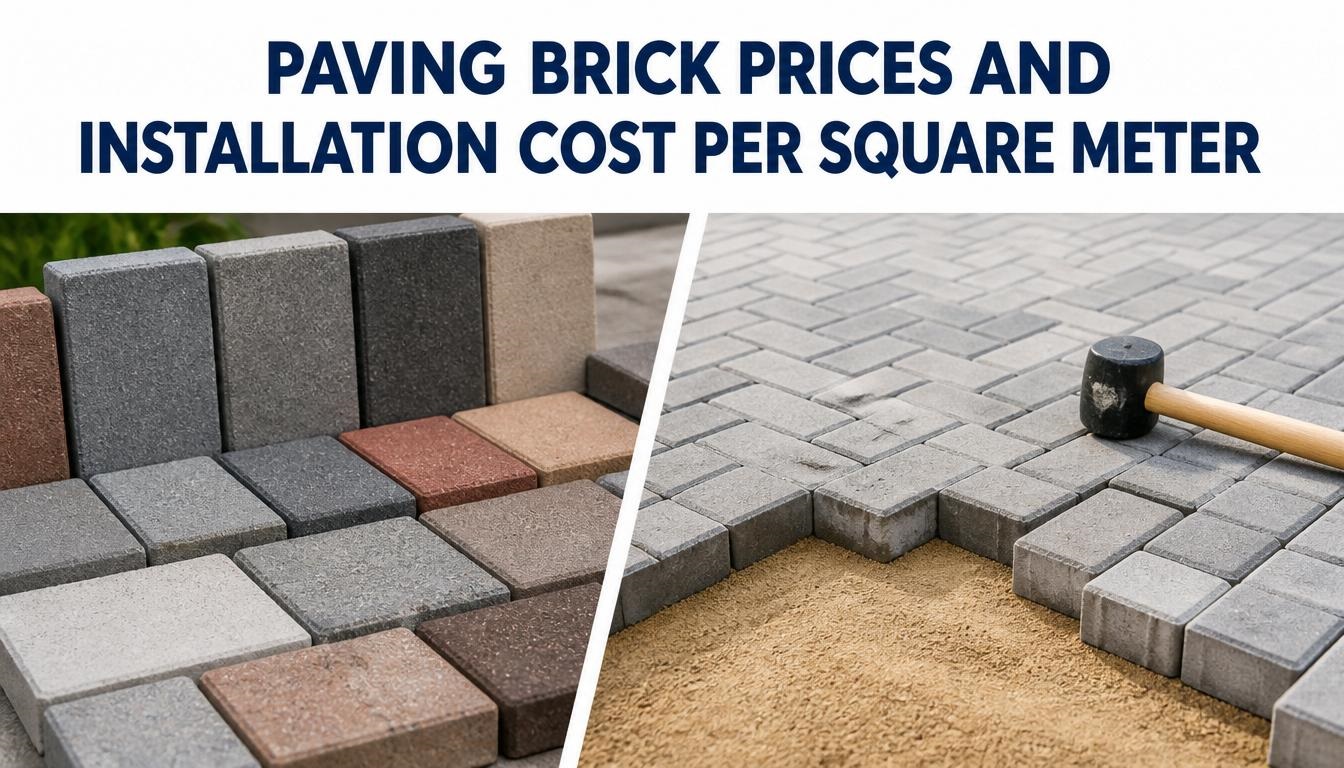
There is nothing quite like the raw, honest sound of a bakkie rolling up to a dusty driveway in Johannesburg, loaded to the brim with heavy grey cement pavers, or the rich scent of freshly baked clay bricks stacked high on wooden pallets in a Cape Town yard. If you are standing outside right now, staring miserably at a patch of muddy lawn, a cracked concrete slab, or a weed-infested parking area that desperately needs a facelift, I completely understand the overwhelm.
As someone who has spent years walking construction sites, arguing with stubborn sub-contractors, and personally relaying sunken driveways across Gauteng and KwaZulu-Natal, I can tell you one absolute truth: paving is not just about throwing stones on dirt. It is an art form rooted entirely in geotechnics, sweat, and geometry.
When you look online, most cost guides give you lazy, copy-pasted figures that mean nothing in the real world. They tell you paving is “cheap” until you realize your base preparation is washing away down your street after a massive Highveld summer thunderstorm. This comprehensive, boots-on-the-ground guide cuts through the corporate fluff. We are breaking down the exact, up-to-date 2026 market prices for paving bricks and installation costs per square meter across South Africa, packed with real human experience to ensure your hard-earned rands are well spent.
Understanding the Real Cost Breakdown: Materials vs. Installation
When budgeting for a paving project, homeowners often make the fatal mistake of looking only at the price of an individual brick at Builders Warehouse or Cashbuild. They see a standard grey bevelled paver costing around R3.00 to R3.65 and think they can pave a 50-square-meter driveway for a few hundred bucks.
Wake up call: the brick is only forty percent of the battle. The real cost lives beneath the surface—in the G5 sub-base, the dump truck delivery fees, the sharp river sand for bedding, and the aching back of the labourer compacting every square meter.
Current South African Paving Material Prices (Per Unit & Per Square Meter)
To help you calculate your material requirements accurately (remembering the golden rule to always add a 5% to 10% cutting waste margin), use the following market reference table for standard brick and paver types.
| Paving Material Type | Average Unit Price (Rands) | Material Cost per m² (Rands) | Best Suited For |
| Concrete Bevelled / Plain Pavers (50mm) | R3.00 – R3.70 | R150 – R250 | Walkways, light pedestrian paths, patios |
| Interlocking Concrete Pavers (60mm) | R3.50 – R4.20 | R180 – R300 | Residential driveways, parking bays |
| Heavy-Duty Interlocking Pavers (80mm) | R4.00 – R5.50 | R250 – R380 | Commercial driveways, heavy vehicle zones |
| Clay Paving Bricks (Standard / Tuscan) | R3.50 – R6.00 | R250 – R450 | High-end driveways, aesthetic courtyards |
| Cobblestones (Natural Stone / Concrete) | R6.00 – R12.00+ | R450 – R900+ | Premium accents, rustic borders, aprons |
Total Installation Costs Per Square Meter (Turnkey Rates)
If you are hiring a professional team to handle everything—from excavation and soil stabilization to laying and compacting—you need to know what the current 2026 rates look like. Regional variations apply, with metropolitan areas like Johannesburg, Pretoria, and Cape Town leaning toward the higher end of these spectrums due to transport and labour overheads.
Regional Paving Installation Cost Matrix
| Region / City | Concrete Paver Total Cost (Material + Labour per m²) | Clay Paver Total Cost (Material + Labour per m²) | Natural Stone Total Cost (Material + Labour per m²) |
| Johannesburg / Pretoria (Gauteng) | R300 – R550 | R400 – R700 | R600 – R1,200 |
| Cape Town (Western Cape) | R320 – R580 | R420 – R750 | R650 – R1,300 |
| Durban (KwaZulu-Natal) | R280 – R520 | R380 – R680 | R550 – R1,150 |
| Port Elizabeth / Regional Towns | R250 – R480 | R350 – R600 | R500 – R1,000 |
Anatomy of a Paving Quote: What Contractors Hide From You
I once hired a crew that quoted me a shockingly low rate of R80 per square meter for labour only. I thought I had struck gold. Three months later, after the first heavy autumn rains, my pristine herringbone driveway looked like a rolling ocean wave. Why? Because they skipped proper excavation, dumped the pavers straight onto uncompacted clay soil, and used building sand instead of crusher dust.
When evaluating a contractor’s quote, ensure it explicitly details these four operational layers:
1. Excavation and Earthworks (R50 – R100 per m²)
For pedestrian walkways, you need to dig down roughly 150mm. For vehicle driveways, you must excavate at least 250mm to 300mm. If your contractor is laying pavers directly onto existing hard ground without digging, run away.
2. Sub-Base Layer and Compuration (R60 – R120 per m²)
This is the structural spine of your pavement. Contractors must dump G5 or G6 crushed stone aggregate, wet it, and mechanically compact it using a heavy plate compactor (Bomag machine). This prevents future settling and vehicle rutting.
3. Bedding Sand Layer (R30 – R50 per m²)
A 20mm to 30mm layer of clean, coarse pit sand or crusher dust is screeded flat. Never let them use fine beach sand; it washes away easily when water seeps through the joints.
4. Laying, Jointing, and Compaction (R100 – R200+ per m²)
The bricks are laid in patterns (Herringbone is structurally the strongest for driveways; stretcher bond is weaker and prone to shearing). Once laid, dry silica sand or jointing sand is swept across the surface and vibrated into the joints to lock the bricks together.
Concrete vs. Clay Bricks: A Field Expert’s Honest Verdict
Homeowners always ask me: “Should I buy cheap concrete cement pavers or invest in expensive clay face bricks?”
Here is my blunt, real-world breakdown based on decades of maintenance history:
-
Concrete Pavers: They are uniform, budget-friendly, and easy to source in vibrant colours (charcoal, grey, terracotta, tan). However, cheaper concrete pavers can fade under the harsh South African UV rays over 5 to 8 years, and they are porous, meaning stubborn oil leaks from your car will leave permanent dark patches unless sealed.
-
Clay Pavers: They are fired in kilns, meaning their rich, earthy colors (derived from natural shale and clay) never fade—ever. A clay brick looking gorgeous today will look identical in colour thirty years from now. They handle chemical spills better and offer superior slip resistance when wet. They cost more upfront, but they are a lifetime investment.
Pro-Tips to Save Money Without Compromising Structural Integrity
-
Buy Direct from the Quarry or Manufacturer: Avoid middleman hardware markups by purchasing your stock straight from major regional manufacturers like Corobrik, Bosun, or local independent brick yards if buying in bulk.
-
Do the Demo Work Yourself: Renting a jackhammer or spending a weekend breaking up old concrete and clearing rubble can save you thousands of rands in labor dumping fees.
-
Choose Herringbone for Vehicles: If you are paving a driveway, reject any contractor trying to convince you to use a stretcher bond or basketweave pattern just because it’s faster. Herringbone interlocks forces laterally, preventing bricks from shifting under the turning torque of car tyres.
Join the Conversation: Let’s Talk About Your Project
Navigating quotes, picking brick thicknesses (50mm for feet, 60mm to 80mm for wheels), and managing contractors can feel like a high-stakes puzzle.
Now that you have the true baseline figures for 2026, I want to hear from you. Are you planning a DIY weekend project or hiring a contractor, and what is the biggest headache you are facing with your current site soil conditions? Drop a comment below with your city or project size, and let’s troubleshoot your paving layout together!

Joseph Mathebula is a consumer analyst and market researcher at Prices in South Africa. He specializes in tracking local service costs, retail pricing, and travel budgets, helping everyday shoppers navigate the market to secure the best value.