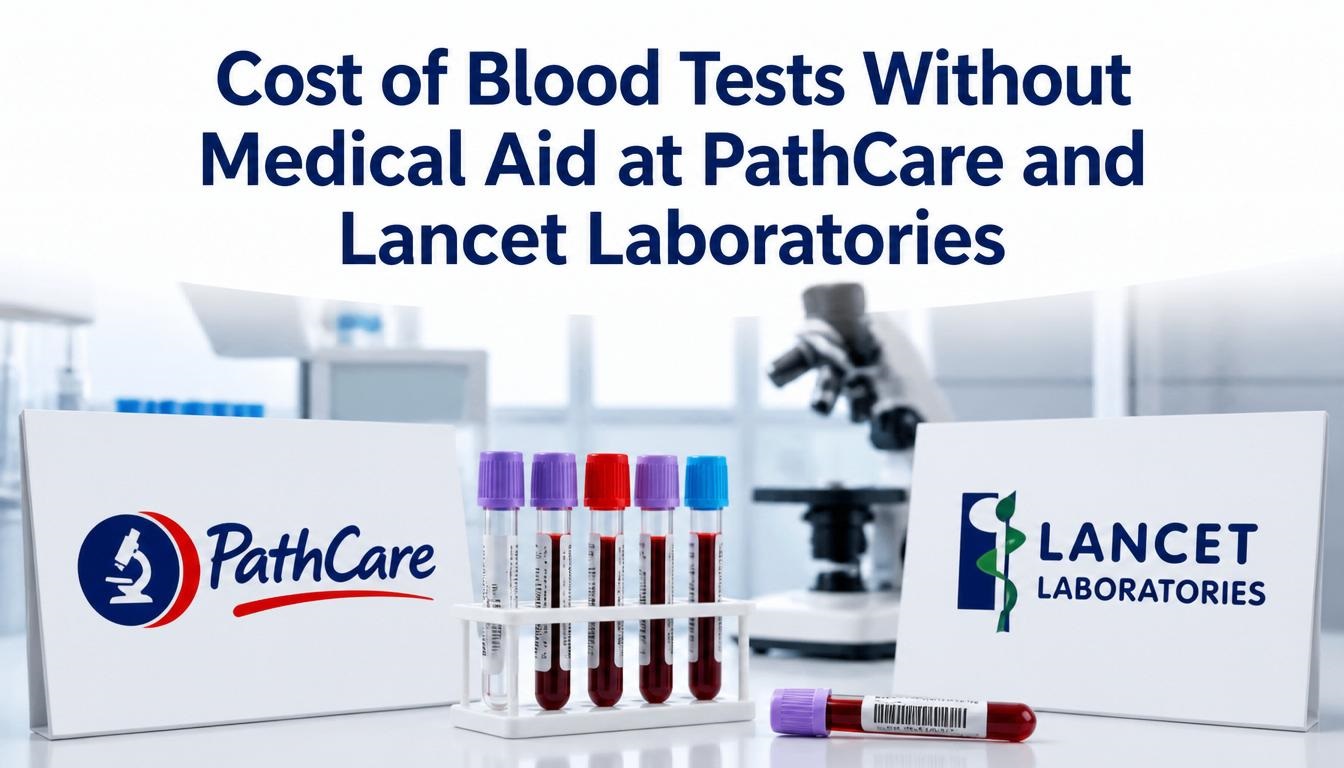
Navigating South Africa’s private healthcare sector without medical aid coverage is daunting. If you have ever stood at the reception counter of a PathCare or Lancet Laboratories depot with a paper requisition form in hand, you know the sudden knot of anxiety that forms in your stomach. Will this simple blood draw cost R300, or will you walk out R3,000 lighter?
As someone who spent years navigating self-funded private healthcare in South Africa—balancing out-of-pocket expenses for routine health checkups, chronic monitoring, and unexpected illness—I have felt that exact financial dread. The private pathology ecosystem in South Africa operates on complex billing codes, variable cash tariffs, and unbundled fees that laboratories rarely publish openly in a single, accessible price sheet.
If you are paying out-of-pocket, cash upfront, or managing a health condition while on a hospital-only medical scheme plan, this master guide provides transparent, accurate, and practical information regarding private pathology costs at PathCare, Lancet Laboratories, and alternative facilities in South Africa.
1. How Private Pathology Billing Works in South Africa
Before examining specific prices, it is vital to understand why blood tests cost what they do and why two people receiving the exact same test can end up paying completely different amounts.
In South Africa, medical schemes and private laboratories historically used tariffs aligned with the National Health Reference Price List (NHRPL) or standard BHF (Board of Healthcare Funders) tariff codes. Each specific blood test carries an official 4-digit procedure code (for example, Code 3755 for a Full Blood Count).
Key Factors Influencing Your Final Invoice:
-
Doctor’s Requisition Form: Pathology laboratories in South Africa generally require a request form signed by a registered healthcare practitioner (GP, specialist, or nurse practitioner). While a few basic wellness panels are accessible via direct partner platforms, diagnostic blood draws require a practitioner’s referral.
-
Phlebotomy & Consumables Fee: The laboratory does not just charge for processing the blood sample through an analyzer. They charge an additional fee for the phlebotomist’s time, sterile needles, collection tubes, and biohazard waste disposal. This fee ranges between R50 and R140 per visit.
-
Private Cash Rates vs. Medical Aid Tariffs: Private laboratories offer a “cash upfront” rate for self-paying patients. In many instances, if you pay via credit card, debit card, or cash at the depot counter before the test is analyzed, PathCare and Lancet apply a cash settlement discount that brings the price down compared to the rate billed directly to a medical scheme.
-
Specialist Panel Bundling: If your GP requests individual components (e.g., individual liver enzymes: ALT, AST, GGT) rather than a bundled “Liver Function Panel” (LFT), the cost can escalate rapidly due to individual test tariffs.
2. Estimated Cash Price List: PathCare vs. Lancet Laboratories
The following table provides current estimated cash rates across major blood test categories in South Africa. These figures represent average out-of-pocket costs at major private pathology groups (PathCare, Lancet Laboratories, and Ampath) when paying cash upfront at a depot.
| Test / Panel Name | Typical Included Biomarkers | Estimated Cash Price (PathCare) | Estimated Cash Price (Lancet) |
| Full Blood Count (FBC) | Red cells, white cells, hemoglobin, platelets | R120 – R220 | R110 – R210 |
| Fasting Blood Glucose | Single-point blood sugar monitoring | R70 – R120 | R65 – R110 |
| HbA1c (Glycated Hemoglobin) | 3-month average blood glucose level | R280 – R380 | R260 – R360 |
| Lipogram / Cholesterol Panel | Total cholesterol, HDL, LDL, Triglycerides | R380 – R480 | R350 – R450 |
| Urea, Electrolytes & Creatinine (U&E) | Kidney function, sodium, potassium, fluid balance | R380 – R520 | R360 – R490 |
| Liver Function Tests (LFT) | ALT, AST, GGT, Bilirubin, Albumin, ALP | R450 – R650 | R420 – R600 |
| Thyroid Primary Screen (TSH) | Thyroid Stimulating Hormone | R250 – R350 | R240 – R330 |
| Full Thyroid Panel | TSH, Free T3, Free T4 | R650 – R850 | R600 – R800 |
| Iron Studies / Profile | Serum Iron, Ferritin, Transferrin, TIBC | R550 – R750 | R520 – R720 |
| Vitamin B12 | Serum B12 concentration | R280 – R380 | R260 – R350 |
| Vitamin D (25-OH) | Total 25-hydroxyvitamin D | R450 – R650 | R420 – R600 |
| C-Reactive Protein (CRP) | Acute systemic inflammation marker | R180 – R280 | R170 – R260 |
| Prostate Specific Antigen (PSA) | Total PSA screening for men | R320 – R450 | R300 – R420 |
| HIV 1/2 ELISA Screening | Combined antibody/antigen screen | R220 – R320 | R200 – R300 |
| Hormone Panel (Female) | FSH, LH, Oestradiol, Progesterone | R800 – R1,200 | R750 – R1,150 |
| Total Testosterone | Male/female androgen status | R280 – R400 | R260 – R380 |
Note: Prices vary depending on location (e.g., hospital-attached 24-hour depots vs. suburban satellite depots), administrative billing updates, and whether your doctor requested specific sub-tests. Standard phlebotomy/draw fees are usually added to the final total.
When budgeting for private blood tests in South Africa without medical aid, the raw cost of the blood test itself is often only part of the final bill. Unexpected surcharges can quickly turn an affordable visit into an expensive experience.
1. Phlebotomy & Depot Fees
Every time a needle enters your vein at a Lancet or PathCare branch, a phlebotomy fee is added to the account. If you visit a depot on Monday for an initial test and have to return on Thursday for a follow-up draw, you will pay this fee twice.
2. The Doctor’s Consultation Surcharge
To get a pathology request form from a private GP, you must pay for the consultation fee first. In South Africa, a standard private GP consultation ranges between R450 and R850 (excluding medication or in-room procedures). If your GP requires a follow-up visit to interpret your blood results, that may incur a second consultation fee.
3. Reflex Testing Surcharges
This is one of the most surprising line items for cash-paying patients. Reflex testing occurs when a laboratory automatically runs an additional, secondary test based on an abnormal result from the primary test.
-
Example: Your doctor orders a basic TSH (Thyroid) screen. If your TSH comes back significantly out of range, the laboratory’s automated protocol may automatically run Free T4 and Free T3 tests on the saved blood sample to provide your GP with a diagnostic picture. While clinically helpful, this reflex action can add R400 to R600 to your invoice without prior warning.
Pro Tip: When handing your request form to the PathCare or Lancet receptionist, explicitly state: “I am paying cash today. Please notify me or check with me before authorizing any automated reflex testing that exceeds my upfront quotation.”
4. Emergency, After-Hours, and Hospital Depot Surcharges
Pathology depots located inside private hospitals (such as Netcare, Life Healthcare, or Mediclinic) operate 24/7. If you walk into a hospital-based depot after hours (usually after 17:00 on weekdays, after 13:00 on Saturdays, or anytime on Sundays), an emergency or call-out surcharge may be attached to the billing code.
4. PathCare vs. Lancet Laboratories: Which One Should You Choose?
Both PathCare and Lancet Laboratories are top-tier, ISO-accredited diagnostic pathology groups operating across Southern Africa. They utilize state-of-the-art diagnostic analyzers and maintain stringent quality controls. However, subtle differences impact the out-of-pocket patient experience:
PathCare
-
Geographic Footprint: Dominant in the Western Cape, Eastern Cape, Northern Cape, and regional hubs, with widespread coverage across South Africa.
-
Digital Patient Portal: PathCare offers an online portal and direct patient SMS service for checking results, provided your referring doctor has authorized direct release to the patient.
-
Cash Settlement: Offers upfront cash discount structures at most satellite depots when settled before sample processing.
Lancet Laboratories
-
Geographic Footprint: Extensive presence in Gauteng, KwaZulu-Natal, Mpumalanga, Free State, Limpopo, and across Southern Africa.
-
Pricing Consistency: Highly standardized cash pricing structure across metropolitan branches.
-
Direct Access & Wellness Panels: Frequently collaborates with corporate wellness networks, executive health providers, and direct-request platforms.
Verdict: In terms of core laboratory pricing for standard diagnostic tests (such as Full Blood Count, Lipogram, or HbA1c), the price difference between PathCare and Lancet is usually minimal—often within R10 to R40 of each other. Your choice should depend on branch convenience, depot operating hours, and which laboratory your local GP works with.
5. Smart Ways to Reduce Blood Test Costs Without Medical Aid
If you are paying cash, you do not have to pay top-tier rates for routine health monitoring. Here are proven strategies to lower your pathology expenses in South Africa.
The Pathology Cost Hierarchy
Understanding where to seek testing based on your specific health goals can save you thousands of Rands each year:
-
Lowest Cost Tier — Public Healthcare Clinics (NHLS): Free at the point of care for unemployed individuals and low-income earners under UPFS guidelines. Ideal if you have strict budget constraints and flexible timing.
-
Mid-Range Tier — Retail Pharmacy Clinics (Dis-Chem / Clicks): Best for quick point-of-care finger-prick tests (glucose, cholesterol, pressure) costing between R35 and R220.
-
Comprehensive Tier — Private Pathology Depots (PathCare / Lancet): Essential for diagnostic blood panels, specialist monitoring, and complex disease management, ranging from R120 to R1,200+.
1. Leverage Retail Pharmacy Clinics for Routine Finger-Prick Screens
For general wellness checks, you do not always need a full venous blood draw at a formal pathology depot. Retail pharmacy clinics such as Dis-Chem Clinic, Clicks Clinic, and Pick n Pay Pharmacy offer point-of-care screening tests at a fraction of private laboratory prices.
-
Fasting Blood Sugar (Finger Prick): R35 – R60
-
Total Cholesterol (Finger Prick): R50 – R90
-
HbA1c (Point-of-Care Analyzer): R150 – R220
-
Blood Pressure & BMI Screening: Free to R40
While a finger-prick total cholesterol test does not break down HDL, LDL, and Triglycerides like a laboratory Lipogram, it serves as an affordable primary screening tool to determine whether expensive pathology testing is necessary.
2. Request Bundled “Panels” Rather Than Individual Tests
When discussing blood tests with your GP, ask them to write the requisition using recognized panel codes rather than ticking individual markers.
-
Example: Ordering an Iron, Ferritin, and Transferrin test individually can cost upwards of R800. Ordering a bundled Iron Studies Panel usually costs around R520 – R580 at Lancet or PathCare.
3. Utilize Online Direct-Request Diagnostic Services
Several accredited South African health platforms have partnered directly with PathCare, Lancet, and Ampath to offer self-ordered blood tests. These services allow you to select your required panel online, pay a fixed transparent fee upfront, download the referral form, and walk directly into any PathCare or Lancet depot for collection. This eliminates the initial R500+ GP consultation fee if you simply want to monitor established health metrics like Vitamin D, HbA1c, or Lipid profiles.
4. Public Healthcare & NHLS (National Health Laboratory Service)
If private pathology costs are completely beyond your budget, South Africa’s public healthcare system remains an essential fallback.
-
Public primary healthcare clinics and government hospitals utilize the National Health Laboratory Service (NHLS)—the largest diagnostic pathology service provider in South Africa.
-
Services at primary healthcare clinic level are free at the point of care for unemployed individuals, pensioners, and low-income earners under the Uniform Patient Fee Schedule (UPFS).
-
While waiting times are longer and you cannot request tests on demand without clinical justification from a public doctor or clinical associate, the diagnostic quality of NHLS testing is globally recognized.
6. Step-by-Step Guide: Getting Blood Tests Done as a Cash Patient
If you are visiting a PathCare or Lancet depot for the first time without medical aid, following this process ensures a smooth experience and prevents unexpected costs:
Step 1: Obtain Your Request Form
Ensure your doctor, specialist, or clinic nurse fills out the pathology requisition form completely. The form must include:
-
Doctor’s name, practice number, and signature.
-
Specific test names or standard ICD-10 diagnostic codes.
-
Any clinical notes (e.g., “Fasting for 12 hours”).
Step 2: Confirm Preparation Requirements
Before heading to the depot, call the branch or check online to confirm fasting instructions:
-
Fasting Tests (Glucose, Lipogram, Insulin): Require 8 to 12 hours of strict water-only fasting beforehand. Black coffee, tea, or smoking can alter metabolic markers and force a repeat draw.
-
Hormone Tests (Cortisol, Prolactin, Testosterone): Often require morning collection (usually between 07:00 and 09:00) due to natural circadian variations.
Step 3: Request an Upfront Cash Quote at Reception
When you arrive at the PathCare or Lancet counter, hand over your request form and state: “I am self-paying today. Please calculate the total cash price including draw fees before proceeding.”
-
The receptionist will enter the codes into their billing system and give you an exact total.
-
You can decide whether to proceed with all tests or ask your doctor to prioritize specific critical markers if the cost exceeds your current budget.
Step 4: Sample Collection
A registered phlebotomist will call you into the draw room, verify your identity, collect the required blood tubes, and properly label them in front of you.
Step 5: Receiving Your Results
By South African medical law and health regulations (HPCSA guidelines), pathology laboratories primarily transmit detailed diagnostic results directly back to the referring doctor.
-
Via Your Doctor: Most GPs receive the electronic file within 12 to 48 hours (depending on test complexity) and will contact you via phone, SMS, or follow-up consultation.
-
Direct Patient Access: Both PathCare and Lancet allow patients to request direct copies of their results. You can request this at reception by filling out a consent form and providing your email or signing up for their digital patient portals.
7. Real-World Case Studies: How Costs Add Up in Practice
To give you a realistic expectation of what out-of-pocket healthcare looks like in South Africa, let us review three common scenario budgets.
Scenario A: The Annual Wellness & Energy Check (Self-Funded)
-
Goal: A 35-year-old individual experiencing fatigue wants to check for anemia, thyroid issues, and vitamin deficiencies.
-
Tests Requested: Full Blood Count (FBC), TSH, Serum Ferritin, Vitamin B12, and Vitamin D.
-
Estimated Costs:
-
Private GP Consultation: R650
-
Full Blood Count: R160
-
TSH (Thyroid): R280
-
Serum Ferritin (Iron): R180
-
Vitamin B12: R320
-
Vitamin D: R520
-
Phlebotomy / Draw Fee: R90
-
-
Total Out-of-Pocket Cost: R2,200
Scenario B: Chronic Type-2 Diabetes Monitoring
-
Goal: A diabetic patient needs their routine 6-month progress check without utilizing medical aid day-to-day benefits.
-
Tests Requested: HbA1c, Fasting Glucose, U&E (Kidney Function), and Lipogram.
-
Estimated Costs:
-
HbA1c: R320
-
Fasting Glucose: R90
-
Urea, Electrolytes & Creatinine: R440
-
Lipogram: R420
-
Phlebotomy Fee: R90
-
-
Total Out-of-Pocket Cost (Pathology Only): R1,360
Scenario C: Basic Sexual Health / STI Screening
-
Goal: An individual wants a standard post-exposure sexual health baseline check.
-
Tests Requested: HIV 1/2 ELISA, Syphilis Serology (RPR/TPHA), and Hepatitis B Surface Antigen.
-
Estimated Costs:
-
HIV ELISA: R260
-
Syphilis Screen: R220
-
Hepatitis B Surface Antigen: R280
-
Phlebotomy Fee: R90
-
-
Total Out-of-Pocket Cost: R850
Final Thoughts & Patient Empowerment
Managing your health without medical aid in South Africa requires being an active, informed consumer. PathCare and Lancet Laboratories offer world-class diagnostic services, but navigating their pricing structures without asking the right questions can lead to unexpected expenses.
Always request an itemized cash quote at the counter, speak openly with your GP about your financial parameters, and consider using pharmacy screening clinics for basic, routine health checks. Taking control of your health monitoring should never come as a financial shock.
Interactive Reader Discussion
What has your experience been when paying for blood tests out-of-pocket in South Africa? Have you discovered a depot or pharmacy clinic that offers exceptional cash rates in your area, or have you ever received an unexpected reflex testing bill from a laboratory?
Drop your questions, prices paid in your region, and personal tips in the comments section below to help build a transparent healthcare resource for all South Africans!

Joseph Mathebula is a consumer analyst and market researcher at Prices in South Africa. He specializes in tracking local service costs, retail pricing, and travel budgets, helping everyday shoppers navigate the market to secure the best value.