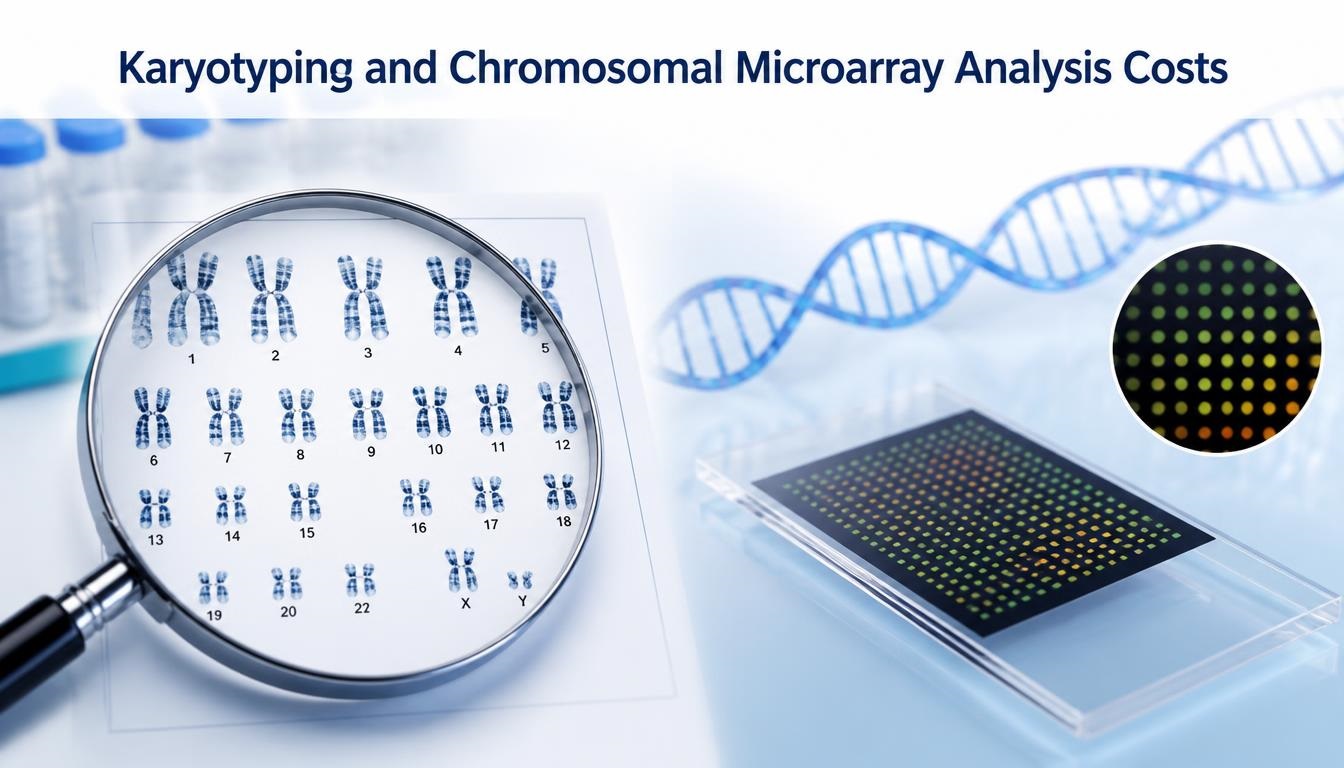
When a doctor recommends genetic testing—whether during a high-risk pregnancy, after experiencing recurrent pregnancy loss, or following a diagnosis of developmental delay in a child—the emotional weight is immediate. Almost instantly, that emotional burden is compounded by a second, equally daunting pressure: financial anxiety.
In South Africa’s private healthcare ecosystem, genetic pathology is one of the most complex, opaque, and wildly variable cost categories. Patients are frequently handed requisition forms listing terms like “Conventional Karyotype” or “Chromosomal Microarray Analysis (CMA)” without any clear indication of what the final invoice from PathCare, Ampath, or Lancet Laboratories will look like—or whether their medical scheme will cover a single cent.
As a South African healthcare pricing researcher who has spent years analyzing private pathology tariffs, Council for Medical Schemes (CMS) regulations, and out-of-pocket patient co-payments, I created this definitive guide to bring total transparency to cytogenetic testing costs in South Africa.
Below is an exhaustive breakdown of current 2026 pricing, medical aid pre-authorization rules, hidden laboratory surcharge fees, and actionable strategies to ensure you do not overpay.
1. What Are You Paying For? Karyotyping vs. Chromosomal Microarray (CMA)
To understand the price differential between these two tests, it helps to understand their technological scope. Think of human DNA as a massive multi-volume encyclopedia set:
-
Conventional Karyotyping is like holding the encyclopedia volumes up to a light to check if all 46 books (chromosomes) are present, if any are visibly torn in half, or if two volumes have swapped covers. It examines your chromosomes under a light microscope.
-
Chromosomal Microarray Analysis (CMA) is like using advanced optical scanning software to inspect every single page of every volume. It identifies microscopic copy number variations (CNVs)—tiny missing pieces (deletions) or extra pieces (duplications)—that are completely invisible under a traditional microscope.
Resolution Comparison:
Karyotyping Resolution: Detects changes larger than 5,000,000 to 10,000,000 base pairs (5–10 Mb).
CMA Resolution: Detects micro-changes down to 20,000 to 50,000 base pairs (20–50 kb).
Because CMA uses high-density DNA chips (often analyzing 750,000 to 2.6 million genomic markers simultaneously) and complex bioinformatic processing, its laboratory overhead, reagent costs, and specialized interpretation fees are substantially higher than those of traditional karyotyping.
2. Real Current Costs in South Africa (2026 Private & Public Estimates)
Private pathology fees in South Africa are governed by individual laboratory price structures following the deregulation of the Board of Healthcare Funders (BHF) National Health Reference Price List (NHRPL). While private labs share similar baseline tariffs, private out-of-pocket rates, international referral markups, and administrative handling fees vary.
Overview of Base Costs in South African Rand (ZAR)
| Diagnostic Test Type | Private Path Lab Cost (ZAR) | Public Sector / NHLS Rate (ZAR) | Standard Turnaround Time | Primary Clinical Indication |
| Blood Karyotyping (Peripheral Blood) | R2,200 – R3,800 | R850 – R1,400 | 14 to 21 Business Days | Recurrent miscarriages, infertility, balanced translocations. |
| Prenatal Karyotyping (Amniotic Fluid / CVS) | R3,500 – R5,500 | R1,200 – R2,100 | 14 to 28 Business Days (requires cell culture) | Confirmation of Down Syndrome (Trisomy 21), Trisomy 18/13. |
| Targeted Rapid QF-PCR / FISH (Aneuploidy) | R1,800 – R2,900 | R700 – R1,100 | 2 to 4 Business Days | Rapid rule-out of common trisomies (21, 18, 13, X, Y). |
| Chromosomal Microarray (CMA – Standard 750K) | R7,500 – R11,500 | R3,200 – R5,000 | 15 to 30 Business Days | Developmental delay, ASD, dysmorphic features, structural birth defects. |
| High-Density CMA (HD / SNP Array – 2.6M) | R11,000 – R16,500 | R5,500 – R8,000 | 20 to 35 Business Days | Complex genetic syndromes, consanguinity mapping, loss of heterozygosity. |
| Products of Conception (POC) Microarray | R8,500 – R13,000 | R4,000 – R6,000 | 21 to 35 Business Days | Unexplained pregnancy loss / severe tissue degradation where culture fails. |
Crucial Note on Cell Culture Failures: Traditional amniotic fluid or tissue karyotyping relies on living cells dividing in a culture medium. In roughly 2% to 5% of prenatal samples—and up to 20% of tissue from pregnancy loss (Products of Conception)—the cells fail to grow. If a cell culture fails, the laboratory may still charge a partial processing fee (typically R800–R1,500), and you will be forced to pivot to CMA, which extracts DNA directly without needing cell culture.
3. Hidden Out-of-Pocket Expenses Most Patients Forget
When budgeting for cytogenetic testing, the pathology bill for the test itself is rarely the only expense. To avoid unexpected invoices, factor in the following secondary charges:
1. Phlebotomy & Sample Collection Surcharges
Private pathology depots (PathCare, Lancet, Ampath) charge a standard consumable and venepuncture fee for drawing blood or processing specimen containers.
-
Standard Blood Draw Fee: R90 – R160 per patient.
-
Specialized Specimen Handling / Logistics Fee: R350 – R750 (especially applicable if samples are shipped between regional main hubs, e.g., from Cape Town to Johannesburg or sent internationally).
2. Clinical Specialist Procedure Fees
Amniotic fluid or Chorionic Villus Sampling (CVS) requires an invasive procedure performed by a Maternal-Fetal Medicine (MFM) specialist or obstetrician under ultrasound guidance.
-
Gynecologist/Obstetrician Procedure Fee: R3,500 – R7,500 (billed separately from pathology).
-
High-Resolution Ultrasound Guidance Fee: R1,200 – R2,500.
3. Pre- and Post-Test Genetic Counseling
In South Africa, reputable laboratories and medical schemes mandate genetic counseling before ordering a Chromosomal Microarray, or immediately following an abnormal result.
-
Private Genetic Counselor Consultation: R1,200 – R2,200 per hour (Tariff codes 0190 / 0192).
-
Clinical Geneticist Medical Specialist Consultation: R2,500 – R4,500.
4. How Medical Schemes in South Africa Cover Karyotyping and CMA
Navigating Discovery Health, Bonitas, Momentum, Medshield, or Medihelp for genetic testing coverage requires knowing the system’s exact terminology and rules.
Prescribed Minimum Benefits (PMBs) vs. Medical Savings Accounts
Under the Medical Schemes Act 131 of 1998, schemes are legally required to pay for the diagnosis and management of Prescribed Minimum Benefits (PMBs) in full, provided specific diagnostic algorithms and designated service providers (DSPs) are utilized.
-
Is Karyotyping a PMB?
Yes, under specific clinical conditions. For instance, if a newborn presents with clinical features of Down Syndrome, or an individual presents with ambiguous genitalia or severe congenital structural malformations, conventional karyotyping is routinely covered under PMB level-of-care guidelines.
-
Is Chromosomal Microarray Analysis (CMA) a PMB?
Rarely. Most medical scheme clinical committees view CMA as an “advanced molecular technique” or “investigational high-cost technology” rather than baseline standard-of-care, unless conventional testing is non-diagnostic and the clinical presentation meets strict motivation criteria.
Scheme-Specific Coverage Overview
Discovery Health Medical Scheme (DHMS)
-
Karyotyping: Covered from the Hospital Benefit or Major Medical Benefit if requested during an inpatient admission or as part of an approved PMB condition. Outpatient karyotyping is paid from the Medical Savings Account (MSA) unless a formal PMB motivation is approved.
-
Chromosomal Microarray: Billed under specialized molecular diagnostic codes. Discovery requires a pre-authorization process managed via their Next Generation Sequencing & Advanced Molecular Diagnostic Policy. Authorization almost always requires a formal motivation letter submitted by a registered Clinical Geneticist or Maternal-Fetal Specialist. If approved, it is funded from the Executive/Comprehensive Advanced Medicine Benefit or PMB allocations. If denied, it defaults to your Savings or threshold, or becomes an out-of-pocket expense.
Bonitas, Momentum, and Medihelp
-
Karyotyping: Generally approved for high-risk maternal age (>37 years), abnormal maternal serum screening (e.g., high-risk NIPT), or documented recurrent pregnancy loss (3 or more consecutive miscarriages).
-
CMA: Excluded on basic and mid-tier plans. On top-tier comprehensive plans, coverage is subject to pre-authorization approval with a strict co-payment (often 15% to 30% of the total claim) if non-DSP laboratories are used.
5. Comparative Breakdown: Which Test Do You Actually Need?
To avoid spending R10,000+ on a test that may not answer your specific clinical question, review this decision matrix before visiting the pathologist:
Diagnostic Scenario A: Recurrent Pregnancy Loss (2 or More Miscarriages)
-
First Line Test: Parental Blood Karyotyping for both partners.
-
Why: The goal is to detect whether one parent carries a Balanced Reciprocal or Robertsonian Translocation. The parent is completely healthy, but their gametes carry unbalanced genetic material.
-
Cost: Approx. R2,800 x 2 = R5,600 total.
-
Why NOT CMA first? CMA cannot detect balanced chromosomal translocations because the total amount of DNA material is normal—it has merely swapped places. CMA would return a “normal” result, missing a balanced translocation entirely.
Diagnostic Scenario B: Child with Unexplained Developmental Delay, Autism, or Structural Anomalies
-
First Line Test: Chromosomal Microarray Analysis (CMA).
-
Why: Global medical guidelines (including South African Society of Human Genetics guidelines) recommend CMA as the primary diagnostic tool for unexplained neurodevelopmental delays. The diagnostic yield of CMA in these cases is 15% to 20%, compared to just 3% to 5% for conventional karyotyping.
-
Cost: R7,500 – R11,500.
-
Value Assessment: Starting with a cheaper karyotype (R2,800) often wastes time and money because a normal karyotype will still require a follow-up CMA to rule out microdeletions like 22q11.2 (DiGeorge Syndrome) or 15q11.2 (Angelman/Prader-Willi).
Diagnostic Scenario C: High-Risk Screening on NIPT or Ultrasound
-
First Line Test: Rapid QF-PCR / FISH followed by Amniotic Karyotype or CMA depending on ultrasound findings.
-
Why: If the ultrasound shows an isolated soft marker (e.g., increased nuchal translucency) and NIPT indicates high risk for Down Syndrome, QF-PCR (R1,800–R2,500) gives a definitive answer in 48 hours. If the ultrasound shows multiple complex structural malformations, skipping karyotype and moving straight to CMA is clinically indicated.
6. Real Patient Case Studies from South African Clinics
Case Study 1: The “Unbalanced Translocation” Journey in Pretoria
-
Patient: Lerato & Johan (Ages 31 & 33)
-
History: Two consecutive first-trimester miscarriages.
-
Initial Path: Private Gynaecologist ordered parental blood karyotyping at Ampath.
-
Cost Breakdown:
-
Blood draws + Karyotyping for two: R5,900.
-
Medical Aid (Discovery Classic Comprehensive): Paid in full under PMB evaluation for recurrent pregnancy loss.
-
-
Outcome: Lerato was identified as a carrier of a balanced translocation between chromosomes 4 and 11. This provided a clear explanation for the miscarriages and allowed them to pursue targeted Pre-implantation Genetic Testing for Structural Rearrangements (PGT-SR) during IVF.
Case Study 2: Navigating Developmental Delay in Cape Town
-
Patient: Liam (Age 3)
-
History: Speech delay, mild dysmorphic facial features, and sensory processing differences.
-
Initial Path: Paediatrician ordered a standard blood karyotype. Result came back normal 3 weeks later. The paediatrician then referred Liam to a Medical Geneticist at Red Cross Children’s Hospital / Tygerberg, who immediately ordered a Chromosomal Microarray (CMA).
-
Cost Breakdown:
-
Initial redundant Karyotype: R2,900 (paid from Medical Savings Account).
-
Subsequent CMA: R9,200.
-
Out-of-pocket gap: The medical scheme initially refused CMA coverage. The Geneticist submitted a formal clinical motivation letter citing SASHG guidelines, securing 100% reimbursement from the scheme’s threshold benefit.
-
-
Outcome: CMA revealed a 1.2 Mb microdeletion on chromosome 16p11.2, confirming a known microdeletion syndrome. This unlocked access to early intervention speech and occupational therapy coverage through Liam’s medical aid.
7. Actionable Steps to Minimize Your Testing Costs
If you are facing an upcoming pathology request for cytogenetic testing, follow this checklist to avoid overpaying:
-
Obtain the Specific Tariff Codes First: Ask your healthcare provider for the exact ICD-10 diagnosis code and pathology tariff codes (e.g., 4551, 4552, or molecular codes) before getting your blood drawn.
-
Contact Your Medical Scheme’s Pre-Authorization Department: Call your scheme and quote these tariff codes. Ask specifically: “Is this test covered from my Major Medical / Risk Benefit or my Medical Savings Account? Is a motivation letter from a specialist required?”
-
Verify Laboratory Network Rates: Ensure your blood is processed by your scheme’s Network Pathology Provider. If your scheme uses Ampath as a DSP, sending your sample to PathCare or Lancet could incur a 20% to 40% out-of-pocket co-payment penalty.
-
Enlist the Help of a Genetic Counselor: Registered Genetic Counselors in South Africa excel at navigating pre-authorizations. They know precisely which medical literature to attach to your motivation letter to maximize your chance of full scheme approval on high-cost tests like CMA.
-
Explore Academic Hospital Private-Paying Options: If you are uninsured and paying strictly out-of-pocket, inquire whether your specialist can refer your sample to an academic university laboratory (such as the NHLS labs affiliated with Wits, UCT, Stellenbosch, or UFS). Public/academic cash-rates for CMA and karyotyping are often 40% to 60% lower than commercial private pathology rates.
8. Interactive Community Forum: Share Your Experience
Pathology pricing in South Africa relies heavily on transparency and shared patient experiences. By documenting real-world costs, medical scheme responses, and approval hurdles, we help other families make informed healthcare decisions.
Join the Discussion Below:
-
Which medical scheme and plan option are you currently on, and did they approve or decline your Karyotype or Chromosomal Microarray pre-authorization?
-
If you received a cash quote or invoice from PathCare, Ampath, Lancet, or Next Biosciences in 2025/2026, what was the exact amount billed, and were there any hidden surcharges (e.g., transport fees or culture failure fees)?
-
Did your doctor recommend starting with a traditional Karyotype, or did they send you straight for a Chromosomal Microarray (CMA)?
Drop your questions, cost quotes, or medical aid stories in the comments section below. Our medical pricing analysis team actively responds to help you interpret quotes, draft scheme motivations, and understand your pathology bills!
9. Frequently Asked Questions (FAQs)
What is the turnaround time for Karyotyping vs. CMA in South Africa?
Traditional karyotyping takes 14 to 21 business days because human cells (lymphocytes or amniocytes) must be grown in an incubator until they reach metaphase. CMA does not require cell culture; however, due to batching and complex bioinformatic analysis, turnaround times at private SA labs typically range between 15 and 30 business days.
Can Non-Invasive Prenatal Testing (NIPT) replace Karyotyping or CMA?
No. NIPT is a screening test, not a diagnostic test. NIPT analyzes cell-free fetal DNA circulating in maternal blood to calculate a statistical probability for conditions like Down Syndrome. If an NIPT returns a high-risk result, it must be confirmed via diagnostic invasive testing (Amniocentesis or CVS) using QF-PCR, Karyotyping, or Chromosomal Microarray Analysis.
Is Chromosomal Microarray the same as Whole Exome Sequencing (WES)?
No. CMA detects structural imbalances (large or small missing or extra chunks of DNA) across the entire genome. Whole Exome Sequencing (WES) reads the specific letter-by-letter DNA code within protein-coding genes to detect point mutations (spelling mistakes). WES is significantly more expensive in South Africa (R18,000 – R35,000+) and is typically ordered when both Karyotype and CMA yield normal results.
Why is prenatal karyotyping more expensive than blood karyotyping?
Prenatal samples (amniotic fluid or chorionic villi) require specialized sterile handling, complex tissue culturing media, continuous incubator monitoring, and skilled cytogenetic technicians to extract delicate fetal cells. Blood karyotyping uses abundant white blood cells that are much easier and faster to culture.

Joseph Mathebula is a consumer tech analyst and market researcher at Prices in South Africa. He specializes in tracking smartphone prices and consumer electronics, helping everyday shoppers navigate the market to secure the best value.
Post Disclaimer
Prices and availability are subject to change without notice and may vary by store or region. pricesinsouthafrica.co.za is an independent informational platform; we do not sell products directly, nor are we responsible for third-party pricing errors.