Commercial Vehicle Fleet Benchmark
Verified Salary Band: R368,995 – R460,995 (New Vehicle Acquisition Benchmark / Asset Investment Base)
Primary Entry Qualification/Requirement: Code 8 (Code B) or Code 10 (Code C1) South African Drivers License with PDP Endorsement
Top Hiring Industry/Sector in SA: Logistics, Construction, FMCG Distribution, Agricultural & Technical Fleet Operations
Final Career Advisory Recommendation: Prioritize models equipped with factory-fitted air conditioning to preserve driver focus and lower fatigue-related accidents during high-mileage urban delivery routes.
Commercial Fleet Acquisition & Operational Overview
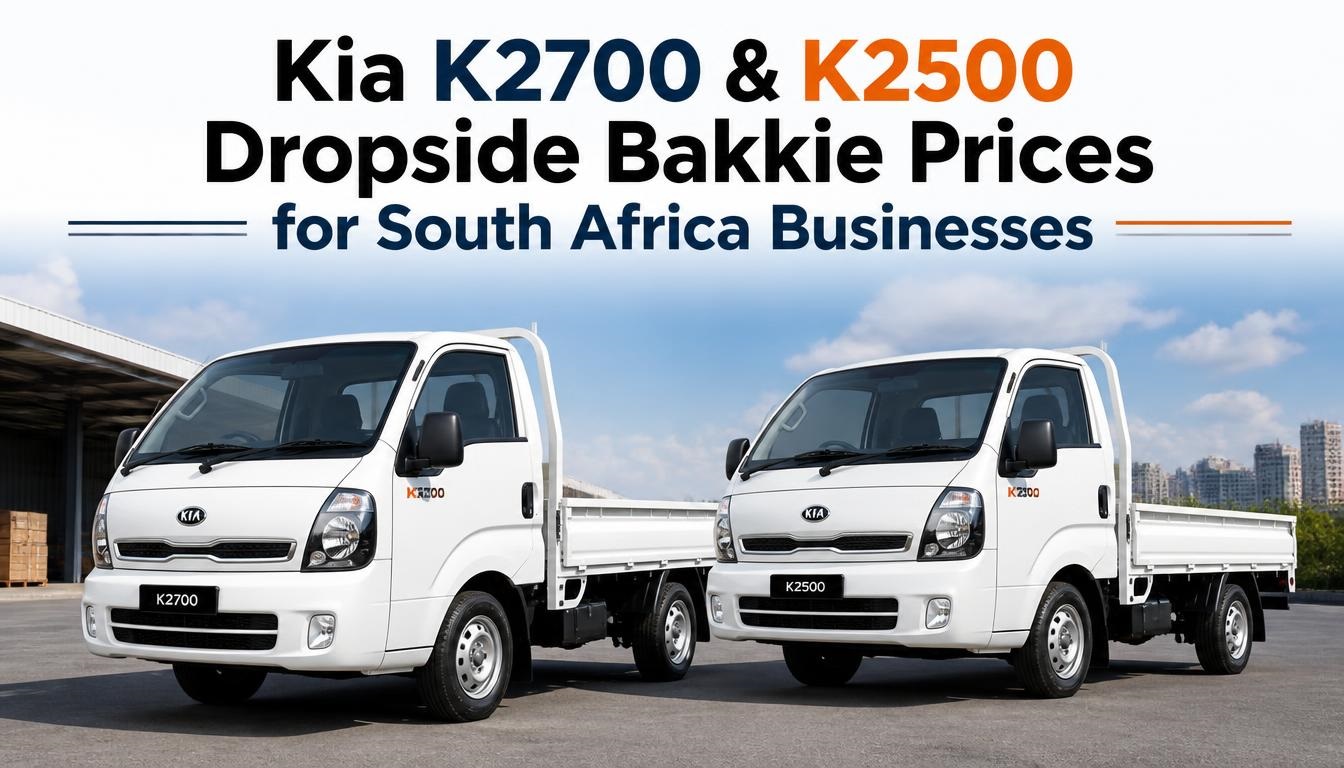
South Africa’s commercial transport sector relies heavily on light commercial vehicles (LCVs) capable of handling demanding payloads, poor road surfaces, and constant stop-start city driving. The Kia K2700 and Kia K2500 Workhorse dropside bakkies form the core of middle-tier transport logistics across Gauteng, KwaZulu-Natal, and the Western Cape. Designed specifically for high-frequency utility work, these vehicles feature three-way fold-down dropside load beds that allow side-loading via forklift or manual crew labor.
Understanding the purchase price, operating expenditure, and driver skillset required to manage these LCVs is critical for logistics operators, fleet managers, and procurement officers. Fleet managers look beyond the initial dealership sticker price to calculate total cost of ownership (TCO). Key considerations include driver payroll costs, maintenance intervals, diesel consumption rates, and licensing criteria. Drivers operating these Workhorse bakkies require specific driving license codes depending on gross vehicle mass (GVM), alongside a Public Driving Permit (PDP) if goods are transported for commercial gain under South African national road traffic legislation.
2026 Commercial Vehicle Pricing & Fleet Driver Compensation Index
Acquiring a commercial LCV requires a clear understanding of brand-new retail pricing alongside the driver pay scales needed to operate these fleet assets safely. The Kia K2700 utilizes a naturally aspirated 2.7-liter J2 diesel engine focused on low-end torque and mechanical simplicity, whereas the Kia K2500 houses a 2.5-liter intercooled turbodiesel engine paired with a 6-speed manual transmission for improved highway cruising capacity.
The table below outlines current South African retail asset pricing for the Kia K2-series alongside standard regional driver compensation scales across entry-level, mid-tier, and senior commercial transport positions.
| Commercial Asset / Driver Role | Model Variant / Experience Level | Retail Acquisition Price / Monthly Remuneration (ZAR) | Engine & Gearbox Spec / Key Allowance Structure |
| Kia K2700 2.7D Chassis Cab | Base Platform (New) | R351,995 | 2.7L Naturally Aspirated Diesel (56kW / 152Nm), 5-Speed Manual |
| Kia K2700 2.7D Workhorse Dropside | Mid-Range Workhorse (New) | R368,995 | 2.7L Naturally Aspirated Diesel, 1.3-Ton Payload Capacity |
| Kia K2700 2.7D Workhorse Dropside (Aircon) | Comfort Spec Workhorse (New) | R384,995 | 2.7L Naturally Aspirated Diesel, Factory AC |
| Kia K2700 2.7D Workhorse Tipper | Hydraulics Spec (New) | R404,995 | 2.7L Diesel, Electro-Hydraulic Rear Tipping Bed |
| Kia K2500 2.5TD Workhorse Dropside | Turbo Workhorse (New) | R424,995 | 2.5L Turbo Diesel (96kW / 255Nm), 6-Speed Manual |
| Kia K2500 2.5TD Workhorse Dropside (Aircon) | Turbo Comfort Spec (New) | R440,995 | 2.5L Turbo Diesel, Factory AC, 1.0-Ton Payload Capacity |
| Kia K2500 2.5TD Tipper | Hydraulic Turbo Spec (New) | R460,995 | 2.5L Turbo Diesel, Factory Tipping Bed |
| Code 8 / Code 10 Delivery Driver | Entry-Level (0–2 Years) | R7,500 – R9,800 per month | Basic Pay + Overtime + Basic Medical Aid Subsidy |
| Mid-Tier Commercial LCV Operator | Experienced (3–5 Years) | R10,500 – R14,200 per month | Basic Pay + Night Shift Allowance + Cellphone Allowance |
| Senior Fleet Driver / Operations Team Lead | Senior (6+ Years) | R15,000 – R19,500 per month | Basic Pay + Performance Bonus + UIF + Pension Fund |
Practical Workplace Observations & Field Insights
Recruiting qualified commercial drivers to manage LCV assets requires strict adherence to South African labor protocols and vetting standards. Fleet owners often make the mistake of hiring drivers based solely on an unverified Code 8 or Code 10 driving license. Professional recruitment processes require practical yard testing to evaluate clutch control under heavy loads, reverse maneuvers into narrow loading bays, and familiarity with load securing techniques.
2026 Fleet Operational Checklist:
-
Driver Vetting: Verify PDP validity, PrDP renewal status, and traffic violation records before assigning routes.
-
Payload Bounds: Enforce strict loading caps of 1,000 kg for the K2500 and 1,300 kg for the K2700 to protect suspension components.
-
Shift Limits: Enforce maximum regular working hours under the Basic Conditions of Employment Act (BCEA).
-
Telematics Tracking: Monitor sudden braking, excessive idling, and route deviations using onboard tracking devices.
From an operational standpoint, the standard naturally aspirated Kia K2700 delivers mechanical reliability because it lacks complex electronic turbochargers. This makes it ideal for rural distribution and construction sites where low-grade fuel or harsh conditions might compromise sensitive diesel injectors. Conversely, the Kia K2500 intercooled turbodiesel provides superior torque (255 Nm) for high-altitude environments such as the Highveld, where non-turbo engines lose roughly 15% to 18% of their power output due to thinner air.
Standard Fleet Onboarding & Deployment Process:
-
Vehicle Acquisition: Purchase platform variant (R351,995 – R460,995) matching terrain and payload requirements.
-
Driver Vetting: Conduct background check, PDP verification, and practical yard maneuver testing.
-
Telematics Setup: Install tracking units to monitor vehicle location, speed limits, and idling times.
-
Route Optimization: Assign daily delivery schedules and enforce strict payload boundaries.
Under the Basic Conditions of Employment Act (BCEA) and Bargaining Council for the Road Freight and Logistics Industry (NBCRFLI) guidelines, drivers operating commercial vehicles must adhere to regulated driving hour limits. Fleet managers must account for shift allowances, Sunday pay premiums, and overtime calculations when forecasting monthly driver expenses.
Major SA Employers & Hiring Sectors for LCV Drivers
Demand for skilled Code 8 and Code 10 drivers operating Kia Workhorse vehicles remains consistently high across key economic sectors in South Africa:
-
Fast-Moving Consumer Goods (FMCG) Distribution: Wholesalers, urban bakeries, and beverage distributors utilize dropside bakkies for last-mile deliveries to township spaza shops and suburban retail centers.
-
Building Supplies & Hardware Logistics: Construction materials vendors employ dropside LCVs due to their flat load decks, allowing quick loading of timber, cement bags, corrugated iron, and brick pallets using forklifts.
-
Courier & Express Freight Services: National parcel services utilize chassis cab conversions fitted with lockable cargo boxes for secure high-volume city deliveries.
-
Municipal Infrastructure & Utility Maintenance: Local municipalities and plumbing/electrical contractors rely on the Kia K2700 Tipper variant for quick dumping of soil, rubble, and maintenance debris.
Career Progression Strategies for Fleet Drivers
Drivers entering the commercial transport sector behind the wheel of a Kia K2500 or K2700 can advance into higher-paying logistics management roles by building specific qualifications:
-
Obtain Code EC (Code 14) Licensing: Transitioning from light commercial vehicles (Code 8/10) to heavy articulated combination vehicles (Code 14) increases potential earning capacity by 80% to 120%.
-
Complete Advanced Defensive Driving Certificates: Accredited certifications in rollover prevention, fuel-efficient driving techniques, and anti-hijacking protocols make drivers highly attractive to corporate logistics fleets.
-
Master Fleet Telematics Software: Drivers who demonstrate proficiency with onboard telematics systems (e.g., MiX Telematics, Cartrack, Ctrack) can transition into dispatch controllers, fleet administrators, or logistics supervisors.
-
Maintain a Clean PDP Record: Consistently renewing your Public Driving Permit without traffic fines or license endorsements ensures top-tier placement for corporate delivery roles.
Frequently Asked Questions
What driving license code is required to drive a Kia K2700 or K2500 in South Africa?
A standard Code 8 (Code B) driving license is legally sufficient to operate a Kia K2700 or K2500, as their Gross Vehicle Mass (GVM) is rated under 3,500 kg. However, if the vehicle is used to transport goods for commercial gain on public roads, the driver must hold a valid Public Driving Permit (PDP / PrDP).
What is the load payload capacity difference between the Kia K2700 and Kia K2500?
The naturally aspirated Kia K2700 Workhorse has a rated payload capacity of approximately 1,300 kg. The turbocharged Kia K2500 Workhorse has a slightly lower rated payload capacity of approximately 1,000 kg due to drivetrain weight differences, but offers higher engine torque.
Do Kia commercial bakkies come with a factory warranty and service plan?
Yes. New Kia K2700 and K2500 models sold in South Africa include a 5-Year / Unlimited Kilometre Manufacturer Warranty alongside a 3-Year / 60,000 km Service Plan, helping business owners maintain predictable servicing costs during the initial fleet deployment period.
How does fuel consumption compare between the K2700 and K2500 in daily business operations?
The Kia K2700 naturally aspirated diesel engine averages between 10.0L and 10.5L per 100 km depending on load weight and driving style. The Kia K2500 turbodiesel averages approximately 9.4L to 9.9L per 100 km, benefiting from its 6-speed manual gearbox on long-distance highway routes.
Are fleet drivers operating dropside bakkies entitled to sectoral minimum wages?
Yes. Drivers operating light commercial vehicles for registered logistics or transport businesses fall under the guidelines of the National Minimum Wage Act and relevant Bargaining Council agreements (such as the NBCRFLI), which mandate minimum hourly rates, overtime pay, and statutory allowances.
Disclaimer: Salary figures, job requirements, and hiring indicators listed in this guide reflect real-world market averages and verified employer data at the time of publication. Actual compensation may vary based on geographic location, candidate experience, company size, and individual contract negotiations. Always verify specific job terms directly with the recruiting employer or official posting.
Investing in a commercial LCV fleet requires a balance between initial capital outlay, fuel economy, and hiring trustworthy drivers. Whether you are expanding a small construction business or scaling an urban logistics fleet, matching the right vehicle specification—such as choosing between the high-torque K2500 or the robust naturally aspirated K2700—ensures long-term operational sustainability. Fleet managers and drivers are encouraged to share their real-world fuel mileage experiences, maintenance tips, and driver wage benchmarks in the comment section below to help strengthen our national carrier community.

Joseph Mathebula is a consumer analyst and market researcher at Prices in South Africa. He specializes in tracking local service costs, retail pricing, and travel budgets, helping everyday shoppers navigate the market to secure the best value.