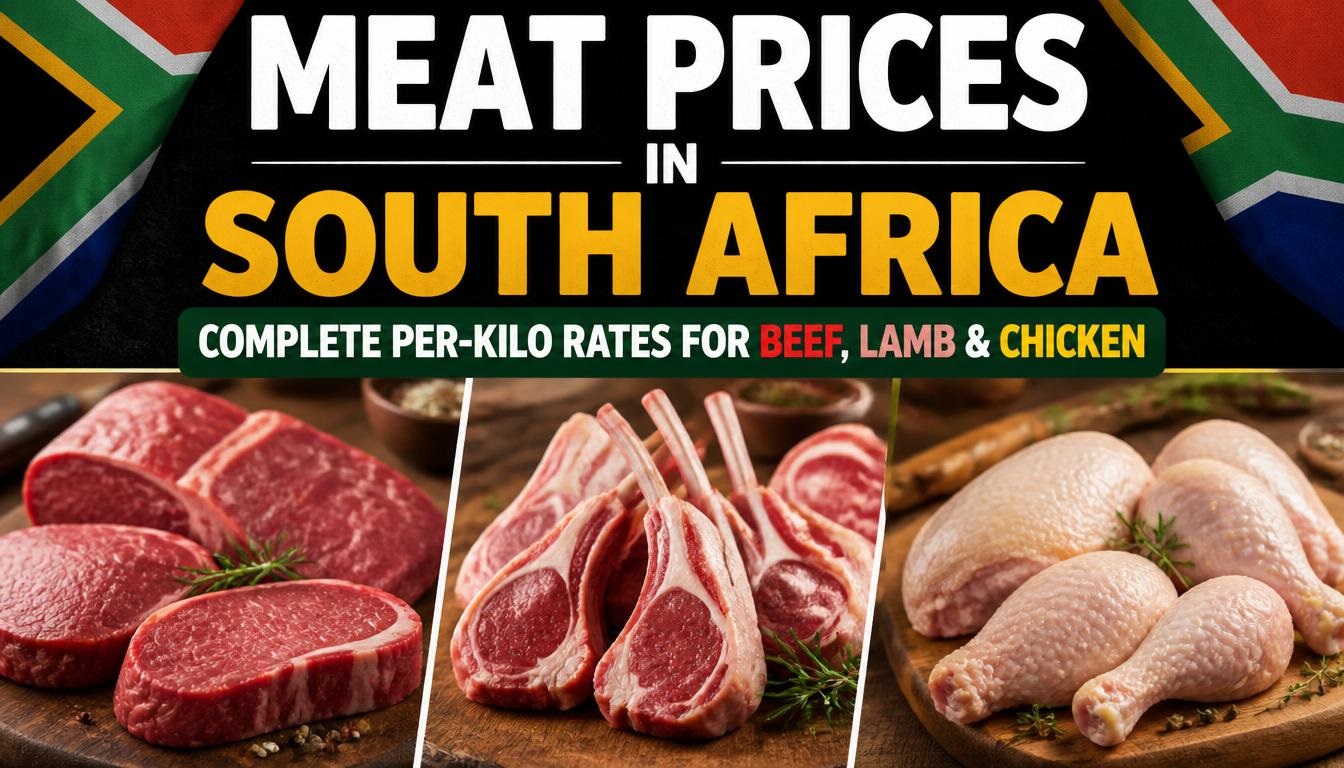
If you’ve stood in the cold meat aisle at your local Checkers, Food Lover’s Market, or neighborhood butcher recently, you’ve undoubtedly felt the pinch. Filling a trolley with protein for the family—or pulling together a proper weekend braai with your mates—feels noticeably heavier on the wallet than it did even a couple of years ago. Between diesel price fluctuations, the overhead costs of keeping butcher refrigerators running, rising feed costs, and broader food inflation, meat prices across Mzansi remain a major line item in every household budget.
But here is the honest truth: you do not have to stop braaiing, and you do not have to settle for sub-par meat. Understanding how meat is priced, graded, and distributed across South Africa is essential for getting the absolute best value for your hard-earned Rands. If you pay attention to specific cuts, understand grading, and know retailer margins, you can easily cut your monthly meat spend by a significant margin without sacrificing the quality of your Sunday roast or your favorite lamb chops.
As an expert navigating the South African food and retail landscape, I have put together this authentic, comprehensive breakdown of current meat prices per kilogram in South Africa. We will cover beef, lamb, and chicken in detail, along with insider tips on meat grading, supermarket comparisons, and realistic, budget-stretching tactics.
Decoding South African Meat Grading: Stop Overpaying for the Wrong Cut
Before we even look at the price tags, it is crucial to understand how the South African Meat Industry Company (SAMIC) grades red meat. Walking into a store without knowing your age letters and fat numbers often leads to overpaying for beef or lamb that simply isn’t suited for your intended recipe.
Supermarkets know that consumers gravitate towards the “A” grade, assuming it means “A-grade quality.” In reality, the letter only refers to the age of the animal, while the number refers to the fat cover.
Age Classification (The Letter)
-
Class A: Youngest animal with zero permanent incisor teeth. This meat is the most tender and is ideal for quick-cooking methods like steaks and fast braai cuts.
-
Class AB: Young animal with one to two permanent teeth. This offers a great balance of tenderness and slightly more developed, rich flavor.
-
Class B: Older animal with three to six teeth. The meat is less tender and generally requires medium-length cooking, braising, or marinating.
-
Class C: Mature animal with more than six teeth. This meat is tougher but boasts an incredibly deep, rich flavor. It is the absolute best choice for slow-cooked stews, bredies, and traditional potjiekos.
Fat Cover Classification (The Number)
-
Class 0: No fat cover at all.
-
Class 1: Very lean fat cover.
-
Class 2: Medium fat cover. For South Africans, this is the “sweet spot” for braai meat, providing enough fat to render down and flavor the meat without causing massive flare-ups on the coals.
-
Class 3: Generous fat cover.
-
Class 4 to 6: Ranging from excessive fat to super-fat.
Expert Buying Tip: Supermarkets charge a massive premium for Class A2 beef because consumers associate tenderness with premium quality. However, if you are making a slow-cooked beef stew, a winter soup, or a Sunday potjiekos, buying Class C2 or C3 beef will save you up to R40 per kilo. After two hours of slow cooking on the fire or the stove, Class C meat breaks down beautifully and delivers a far richer, beefier flavor than Class A. Save the expensive Class A specifically for your rump and sirloin steaks.
1. Beef Kilo Rates in South Africa
Beef prices vary significantly across the country depending on whether you purchase pre-packaged cuts, sub-primal bulk cuts, or whether the cattle were grass-fed versus grain-fed. Class A grain-fed beef dominates most supermarket shelves because it offers consistent tenderness and marbling, but it comes with higher feedlot costs that are passed directly to the consumer.
Current Beef Price Breakdown (ZAR per Kilogram)
| Cut / Product | Average Supermarket Price (per kg) | Wholesaler / Independent Butcher Price (per kg) | Best Cooking / Preparation Method |
| Beef Fillet | R240.00 – R320.00 | R210.00 – R260.00 | Pan-seared, oven roast, beef wellington, carpaccio |
| Rump Steak | R150.00 – R190.00 | R130.00 – R160.00 | High-heat braai, cast-iron pan-fry |
| Sirloin Steak | R145.00 – R185.00 | R125.00 – R155.00 | Braai, skillet cooking with butter and herb basting |
| T-Bone / Porterhouse | R135.00 – R170.00 | R115.00 – R145.00 | Open fire braai, reverse sear |
| Chuck / Short Rib | R105.00 – R135.00 | R90.00 – R115.00 | Slow braise, potjiekos, oven stew, slow smoking |
| Lean Beef Mince | R115.00 – R140.00 | R95.00 – R120.00 | Bolognese, homemade health patties, tacos |
| Regular Beef Mince | R90.00 – R110.00 | R80.00 – R95.00 | Traditional cottage pie, meatballs, traditional bobotie |
| Beef Shin / Stewing Beef | R85.00 – R115.00 | R75.00 – R95.00 | Long-simmered winter stews, hearty soups |
| Biltong Meat (Silverside/Topside) | R120.00 – R150.00 (wet) | R100.00 – R130.00 (wet) | Home curing, biltong making, drying |
Key Insights for Beef Shoppers
-
The “Whole Rump” Strategy: One of the easiest ways to save money is purchasing an entire rump vacuum-pack (usually weighing between 3.5kg and 5kg) from a wholesale butcher like Bluff Meat Supply, Roots, or the bulk section of Food Lover’s Market. This often drops the per-kilo price down closer to R120 or R130/kg. You can take it home, trim off the excess fat cap to render for tallow, slice your own 300g steaks exactly how you like them, and cube the trimmings for kebabs or stews.
-
The Mince Trap: Pre-packed “extra lean” mince often costs 20% to 30% more than regular mince, yet it strips away the very fat that provides flavor and moisture. If you are making burgers or koftas, opt for standard mince. The fat naturally renders out during the cooking process over the coals or in the pan anyway, leaving you with a juicier patty and more money in your pocket.
-
Wet Aging vs. Dry Aging: Most supermarket beef is wet-aged (vacuum sealed and aged in its own juices). This is standard and affordable. Dry-aged beef (hung in climate-controlled rooms) loses water weight, intensifying the flavor, but this weight loss and the required expertise mean you will pay a massive premium—often upwards of R350/kg at boutique butchers.
2. Lamb Kilo Rates in South Africa
Lamb remains South Africa’s premier red meat for Sunday lunches, festive celebrations, and high-end braais. Because sheep farming relies heavily on specific grazing terrain—most notably the Karoo, the Northern Cape, and the Eastern Cape—and faces ongoing challenges with logistics, drought, and livestock security, lamb commands the highest price per kilo among our standard local proteins.
True, certified Karoo Lamb carries an official origin mark. This is because the unique botanical grazing (consisting of specific fynbos and wild Karoo bushes) naturally infuses a distinct, herbaceous flavor directly into the animal’s fat. Because of this sought-after flavor profile, certified Karoo lamb often commands a 15% to 25% price premium over standard regional lamb.
Current Lamb Price Breakdown (ZAR per Kilogram)
| Cut / Product | Average Supermarket Price (per kg) | Wholesaler / Independent Butcher Price (per kg) | Best Cooking / Preparation Method |
| Lamb Loin Chops | R210.00 – R260.00 | R185.00 – R225.00 | Fast braai over hot coals to render the fat cap |
| Lamb Rib Chops | R195.00 – R245.00 | R175.00 – R210.00 | Crisp braai with a squeeze of lemon and dried oregano |
| Leg of Lamb (Bone-In) | R165.00 – R210.00 | R145.00 – R180.00 | Slow oven roast with garlic, rosemary, and olive oil |
| Lamb Shoulder | R150.00 – R185.00 | R135.00 – R160.00 | Slow roasting until falling off the bone, pulled lamb |
| Lamb Neck (Sliced) | R140.00 – R180.00 | R125.00 – R155.00 | Traditional tomato lamb bredie, hearty potjiekos |
| Lamb Shank | R175.00 – R220.00 | R150.00 – R185.00 | Slow red-wine and root vegetable braise |
| Whole / Half Lamb (Bulk) | Not typically available | R135.00 – R165.00 | Full freezer pack selection, customized cuts |
Key Insights for Lamb Shoppers
-
Buy Half or Whole: If you have the freezer capacity at home, buying a whole or half lamb directly from an accredited butcher is the ultimate money-saver. The butcher will cut and vacuum-seal the meat to your exact specifications, and it reduces the overall average price to around R140 to R155/kg across all the cuts. That means you are effectively getting expensive loin chops and shanks for the exact same average price per kilo as the cheaper stewing neck.
-
Understand Rib Fat: A Class A2 lamb provides a sweet, thin layer of white fat that crisps up beautifully and easily over the coals. Avoid buying Class A4 or A5 lamb cuts for the braai. You end up paying exorbitant per-kilo rates for thick, heavy fat caps that will simply melt into the coals, cause massive smoke flare-ups, and leave you with a very small yield of actual meat.
-
The Mutton Alternative: Do not shy away from mutton (older sheep). While it requires slower cooking methods to break down the connective tissue, mutton carries an incredibly robust flavor that many older South Africans actually prefer for curries and stews, and it routinely costs R30 to R50 less per kilo than lamb.
3. Chicken Kilo Rates in South Africa
Chicken is the undisputed king of the South African dinner table. It is the primary protein choice for the vast majority of households across the nation. From quick midweek family meals to massive township shisa nyamas, poultry delivers essential nutrition and culinary versatility at the most accessible price point.
However, navigating the chicken section requires a very close look at packaging details. The biggest mistake consumers make is not understanding the difference between Fresh and Frozen (IQF) chicken, and specifically, the impact of brine levels on what they are actually paying for.
Understanding South African Brine Injection Regulations
In South Africa, the Department of Agriculture strictly regulates how much brine (a salt water solution) can be injected into chicken. The limits are currently capped at:
-
15% maximum brine injection for Individual Quick Frozen (IQF) mixed chicken portions.
-
10% maximum brine injection for whole frozen chickens.
While producers argue that brine keeps frozen chicken juicy and prevents freezer burn during high-heat cooking, the economic reality for the consumer is stark. If you buy a 2kg bag of IQF portions with 15% brine, you are paying real money for 300 grams of frozen salt water. You must always factor this water weight into your cost-per-protein mathematics when comparing cheap frozen portions to seemingly more expensive fresh chicken.
Current Chicken Price Breakdown (ZAR per Kilogram)
| Cut / Product | Average Supermarket Price (per kg) | Wholesaler / Independent Butcher Price (per kg) | Best Cooking / Preparation Method |
| Whole Fresh Chicken | R58.00 – R78.00 | R50.00 – R65.00 | Spatchcock on the braai, traditional Sunday roast |
| Whole Frozen Chicken | R48.00 – R62.00 | R42.00 – R52.00 | Oven baking, boiling down for soup stocks |
| IQF Mixed Portions (2kg/5kg) | R44.00 – R58.00 | R38.00 – R48.00 | Air fryer, midweek casseroles, rich chicken curries |
| Fresh Skinless Breasts | R85.00 – R120.00 | R72.00 – R92.00 | Fitness meal prep, crumbed schnitzels, fast stir-fry |
| Fresh Thighs & Drumsticks | R65.00 – R88.00 | R55.00 – R72.00 | Flame braai with marinade, sticky oven tray bakes |
| Chicken Wings | R75.00 – R105.00 | R62.00 – R85.00 | Deep-fried, spicy peri-peri braai |
| Chicken Livers / Hearts | R32.00 – R45.00 | R25.00 – R35.00 | Peri-peri pan starters with fresh bread |
Key Insights for Chicken Shoppers
-
Debone It Yourself: Fresh, skinless, deboned chicken breasts sell for well over R100/kg in retail stores. However, a whole fresh chicken costs roughly R58 to R68/kg. Learning to break down a whole chicken yourself takes about five minutes with a sharp kitchen knife. From one bird, you yield two large breasts, two thighs, two drumsticks, two wings, and a carcass that is perfect for boiling down into a rich, nutritious chicken broth.
-
The Bulk IQF Advantage: Keep an eagle eye out for 4kg or 5kg bulk IQF sacks on promotion at large wholesalers or hypermarkets, particularly over month-end weekends. During heavy sales, the per-kilo costs can drop down to under R40/kg, offering an incredibly economical way to handle large families’ weekday protein needs.
Supermarket and Retailer Comparison: Where Should You Buy?
Not all meat counters are run the same way, and brand positioning plays a massive role in what you pay at the till. In South Africa, pricing strategies vary widely between the major retail giants and local independent outlets. Here is a candid look at the retail ecosystem.
-
Woolworths Food: Woolworths caters to the premium market. Their distinct focus is on free-range, pasture-raised, and grass-fed meats with incredibly strict animal welfare and supply chain tracing standards. The reality check? You pay a clear premium for the immaculate packaging, convenience, and ethical sourcing. Prices here are generally 20% to 40% higher than the national average. It is perfect for specialty cuts or convenience-driven meals, but less suited for high-volume family bulk buying.
-
Checkers & Checkers Hyper: Over the last decade, Checkers has aggressively upgraded its meat departments. They offer a very strong balance between high quality and competitive pricing. Their Steakhouse Classics range features wet-aged steaks that easily compete with high-end restaurants. Checkers is ideal for the mid-to-high market, offering excellent bulk deals on Wednesdays and weekends.
-
Pick n Pay & Shoprite: These retailers focus heavily on value packs, daily household staples, and accessible pricing for budget-conscious families. You will often find exceptional prices on bulk mince, pork chops, and frozen chicken packs.
-
Independent, Halal Butchers & Wholesalers: Outlets like Roots Butchery, Bluff Meat Supply, Cambridge Food, and your local neighborhood Halal butchers operate on a high-volume, bulk-cut model with minimal overhead spent on fancy packaging or lighting. Because these independent butchers often buy whole carcasses directly from the abattoirs, they cut out the middleman retail distributor markups. Shopping here is where you secure the absolute lowest prices, routinely saving 15% to 30% on your total meat basket. Plus, a traditional butcher will gladly slice your steaks to your preferred thickness or mince a specific cut of beef for you at no extra charge.
5 Practical Strategies to Radically Reduce Your Meat Expenses
If you want to stretch your Rand further without resorting to eating cabbage every night, you need to shop and prep like a pro.
1. Master “Sub-Primal” Slicing at Home
Instead of buying four pre-cut, pre-packaged sirloin steaks tray-wrapped in plastic and polystyrene, ask your butcher for a vacuum-sealed 2kg sub-primal sirloin block. Slicing it yourself at home saves you between R20 and R40 per kilo instantly. It also allows you to control the portion size and cut incredibly thick steaks for a traditional braai, which prevents the meat from drying out over the coals.
2. Embrace Alternative, Lesser-Known Cuts
High consumer demand automatically drives up prices for fillet, rump, and loin chops. Try switching to lesser-known cuts that deliver incredible flavor when prepared correctly:
-
Swap expensive Beef Fillet for Flat Iron Steak, Chuck Eye, or Picanha (Rump Cap).
-
Swap Lamb Loin Chops for Lamb Shoulder Chops or Slow-Cooked Neck Slices.
-
Swap dry Chicken Breasts for Chicken Thighs, which actually retain moisture much better over a fire and cost significantly less per kilo.
3. Stretch Your Mince Meals
You can easily extend ground beef dishes by incorporating cooked brown lentils, grated zucchini, finely chopped mushrooms, or textured vegetable protein (soya) into your mince mix at a 70:30 ratio. This cuts the dish’s overall cost dramatically, lowers the saturated fat content, and adds valuable dietary fiber—all without compromising on the deep, savory taste or texture of a cottage pie or spaghetti bolognese.
4. Split Bulk Orders with Family
Pair up with a friend, neighbor, or family member to purchase a massive bulk meat pack or a quarter hindquarter directly from a wholesale meat supplier or a commercial farm. Dividing up 20kg to 40kg of vacuum-sealed cuts lets you secure true wholesale pricing without overloading a standard household fridge-freezer.
5. Watch out for “Braai Pack” Markups
Pre-packaged “Braai Packs” containing a mix of chops, boerewors, and chicken pieces sitting in the supermarket fridge often seem incredibly convenient. However, they frequently bundle lower-grade cuts and high-fat, commercial sausage at an inflated average per-kilo price. Always do the math and calculate the individual per-kilo rates first. Buying your boerewors, chops, and chicken portions separately almost always yields much better quality meat for less total money.
Braai Planning Mathematics: How Much Meat Do You Actually Need?
One of the biggest areas of meat wastage (and lost money) in South Africa is over-catering for a braai. If you are hosting friends and are worried about running short—but also terrified of spending too much—use these tested raw-weight guidelines per adult guest to perfectly balance your menu and your budget:
-
Bone-In Meat (Lamb Chops, T-Bone Steaks, Chicken Portions): Budget strictly for 400g to 500g per adult guest. You have to account for the heavy bone weight that will be discarded.
-
Boneless Meat (Rump Steak, Fillet, Chicken Breasts): Budget for 250g to 300g per adult guest.
-
Traditional Boerewors: Budget 150g to 200g per person. Boerewors is very rich and dense, making it an ideal, cost-effective secondary meat to bulk up the plate alongside a single chop or steak.
Join the South African Meat Conversation
The reality is that meat prices fluctuate constantly across different provinces, regions, and seasons in South Africa. A kilo of rump steak in a boutique Cape Town deli is going to look vastly different from a wholesale butcher in the heart of the Free State or a hypermarket in Gauteng.
We want to hear about the realities on the ground in your specific area. What are the meat prices looking like at your local supermarket or neighborhood butcher right now? Have you managed to find an incredible independent wholesale butcher, or have you come up with a clever, unique recipe to stretch your monthly family grocery budget even further?
Drop your current local prices, your favorite butcher recommendations, and your best money-saving shopping tips in the comments below!

Joseph Mathebula is a consumer analyst and market researcher at Prices in South Africa. He specializes in tracking local service costs, retail pricing, and travel budgets, helping everyday shoppers navigate the market to secure the best value.