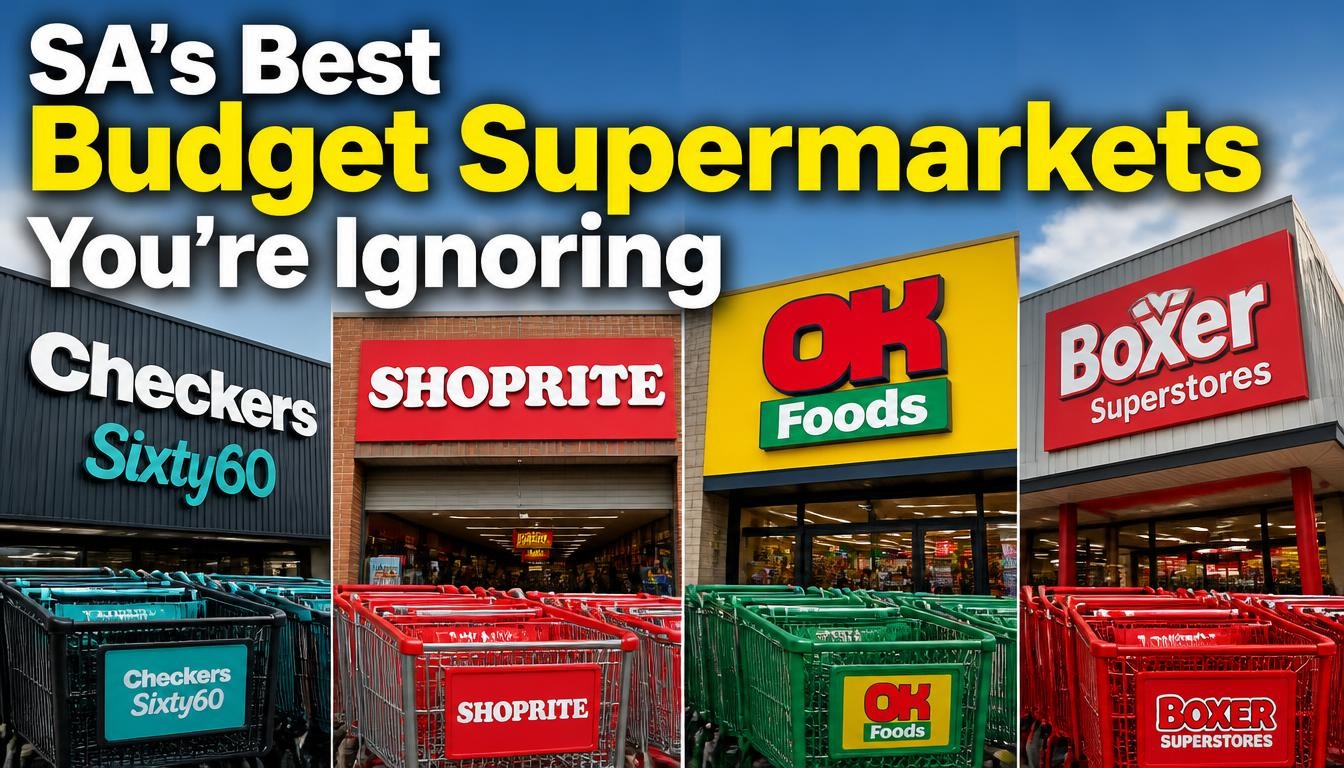
With food inflation chewing through household disposable income, sticking exclusively to mainstream suburban hypermarkets is financial suicide. If you want to uncover the best budget supermarket chains in South Africa, you have to look beyond flashy TV ads and examine where bulk buying, lean retail footprints, and aggressive discounting actually slash your monthly grocery bill by up to 35%.
Quick-Answer Market Summary
Why Mainstream Retailers Are Draining Your Bank Account
Walking into a standard suburban shopping mall feels convenient, but you are paying a massive premium for polished floor tiles, air conditioning, and extensive marketing campaigns. When you analyze the real economics of grocery retail in Mzansi, overhead costs dictate shelf pricing. Mainstream giants pass down the cost of prime retail real estate directly to the consumer.
Discounter chains operate on a completely different playbook. By cutting down store aesthetics, using bare-bones warehouse racking, minimizing SKU (Stock Keeping Unit) choices, and focusing on high-volume movement of essential goods, retailers like Boxer Superstores and Usave pass those operational savings straight to your trolley.
Furthermore, cash flow dynamics in South Africa rely heavily on stokvels, grant payout cycles, and bi-weekly budgeting. Ignoring independent wholesalers and regional discounters means you miss out on bulk-buying margins that can offset rising fuel and utility tariffs.
The Real ZAR Grocery Basket Face-Off
To see how these underrated chains stack up, we benchmarked a standard 10-item essential household basket (Mealie meal 10kg, sunflower oil 2L, white sugar 2.5kg, brown bread, long-life milk 6-pack, spekko rice 2kg, peanut butter 400g, baked beans 410g x2, and frozen mixed vegetables 1kg) across major budget contenders.
| Supermarket Chain | Est. Basket Total (ZAR) | VAT Inclusion | Private Label Quality | Key Advantage |
| Boxer Superstores | R420 – R460 | 15% Inclusive | High (HomePrivilege/Red Square) | Massive national footprint, strong meat counters |
| Usave (Shoprite Group) | R395 – R430 | 15% Inclusive | High (Usave House Brand) | Lowest overheads, hyper-localized inventory |
| Jumbo Cash & Carry | R385 – R415 | 15% Inclusive | Moderate | Exceptional bulk case-lot pricing |
| Food Lover’s Market (Value Marts) | R440 – R490 | 15% Inclusive | High | Unbeatable fresh produce and bulk meat deals |
| Saverite (SPAR Group) | R435 – R470 | 15% Inclusive | Moderate (Spinner/Spar House) | Independent owner flexibility, localized specials |
Note: Prices reflect average metropolitan and peri-urban shelf rates including 15% VAT. Actual costs vary based on regional logistics, transport surcharges, and promotional cycles.
Decoding the Power Players: Where to Shop and Why
Finding true value requires understanding the structural strengths of each underrated retail brand. Not all discount supermarkets are built the same, and knowing their operational focus helps you target specific items for maximum savings.
Boxer Superstores stands out as more than just a rural player; it has mastered high-density urban trading. By stocking exact pack sizes that match working-class household cash flows, Boxer undercuts traditional supermarkets on maize, sugar, and oil. Their butchery departments are legendary for fresh cuts at wholesale-adjacent pricing.
Usave, operating under the Shoprite Holdings umbrella, strips retail down to the absolute studs. You will not find deli counters or artisanal bakeries here. Instead, you get pallet-display merchandising that drastically reduces labor and merchandising costs. For bulk staples, Usave is frequently the cheapest floor in town.
Jumbo Cash & Carry bridges the gap between wholesale and retail. While traditionally targeted at spaza shop owners and catering businesses, everyday families with deep freezers can shop here without a trading license. Buying cooking oil in 5-liter containers or rice in 10kg bags drops your per-unit cost significantly.
Private Label Economics Versus Brand Name Markup
One of the biggest financial mistakes South African consumers make is paying a 20% to 40% brand-name tax on pantry basics. Budget chains have heavily invested in private-label manufacturing that rivals—and often beats—legacy brand equivalents.
When evaluating house brands at discounters, check the manufacturer code on the back of the packaging. Many budget private-label canned goods, maize meal, and dairy items are produced in the exact same factories as premium national brands.
The primary difference is the packaging and marketing budget. Transitioning your pantry staples from branded goods to retailer house brands at stores like Usave or Boxer can instantly trim R600 to R1,000 off a monthly grocery bill without sacrificing nutritional value or taste.
Supply Chain Realities, Load-Shedding, and Cold Chain Integrity
Shopping at budget-friendly or independent stores raises valid questions regarding product freshness and supply chain reliability, particularly given South Africa’s volatile power grid and perishable cold chain requirements.
Top-tier discounters have aggressively invested in backup diesel generators and inverter systems to protect cold-meat and dairy sections during power outages. However, smaller independent cash-and-carry outlets in outlying areas may occasionally struggle with refrigeration stability during extended grid failures.
Always inspect dairy, frozen goods, and fresh meat packaging for temperature anomalies or frost buildup. Buying perishables on high-turnover weekdays (like Thursday and Friday ahead of weekend rushes) guarantees you get stock that arrived fresh from regional distribution hubs.
Consumer Protection Act (CPA) Rights and Expiry Date Traps
Bargain hunting can sometimes expose shoppers to short-dated or near-expiry stock. Under the South African Consumer Protection Act (CPA), retailers are legally barred from selling expired food items that pose a health risk.
However, selling short-dated stock at a steep markdown is entirely legal and represents a massive money-saving opportunity—provided you consume or freeze the items immediately.
Check for damaged packaging (dented cans or torn flour bags), as discounted stores often buy salvage stock from major logistics hubs. Ensure your till slips are safely stored or digitally captured; the CPA guarantees your right to return sub-standard or spoiled goods within a reasonable timeframe for a full refund or exchange.
Frequently Asked Questions
Are budget supermarket chains safe for buying fresh meat and produce?
Yes, provided you shop at high-volume locations where stock turns over rapidly. Chains like Boxer and Food Lover’s Market manage massive daily meat volumes, ensuring high turnover and fresh stock replenishment. Always check the packaging date and visual color of the meat before dropping it into your trolley.
Do budget stores accept store cards or loyalty rewards?
Most major discount chains accept standard debit and credit cards, alongside specific group rewards programs (like Shoprite’s Xtra Savings applicable at Usave). However, independent wholesalers and cash-and-carry stores often incentivize cash or EFT transactions to avoid merchant bank swipe fees, sometimes passing those savings directly to you.
Why are prices at rural discount stores sometimes cheaper than urban branches?
Pricing variance is driven by centralized distribution networks, local rent structures, and targeted regional promotions. Retailers adjust margins based on local competitive landscapes and volume purchasing power within specific peri-urban and rural nodes.
How can stokvels leverage budget supermarket chains for maximum discounts?
Stokvel groups buying in bulk should approach regional cash-and-carry managers directly to negotiate pallet-level pricing or volume rebates. Coordinating group purchases bypasses standard retail basket markups entirely.
Community Discussion
What is your go-to budget supermarket in your province, and have you noticed any recent price shifts on essential grocery baskets? Drop your local insights, store feedback, or regional stock tips in the comments below.
Disclaimer: Prices fluctuate and reflect independent market research at the time of publication. We may earn a small affiliate commission through qualified links at no extra cost to you.

Joseph Mathebula is a consumer analyst and market researcher at Prices in South Africa. He specializes in tracking local service costs, retail pricing, and travel budgets, helping everyday shoppers navigate the market to secure the best value.