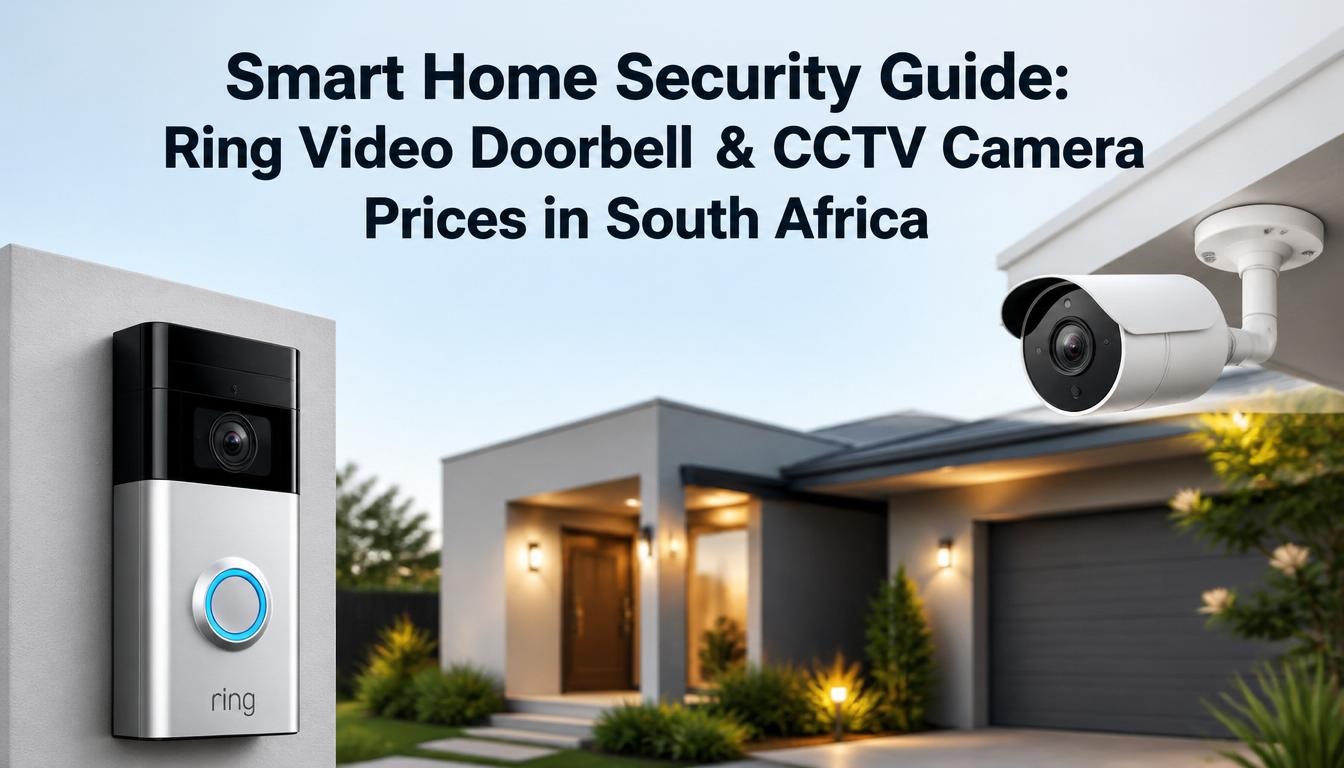
If you have ever stared at the ceiling at 2:00 AM listening to a suspicious click at your gate, or scrambled to find your phone while a delivery driver bangs on your front door in Johannesburg, you already know why smart home security has become non-negotiable in South Africa. As a local tech and smartphone specialist who has spent years testing connected hardware across load-shedding schedules, Wi-Fi drops, and erratic fiber lines, I have watched our approach to home defense shift dramatically. We no longer rely purely on high walls and spiked perimeter fencing; we want eyes, ears, and instant smartphone notifications right in our palms.
Evaluating smart home tech requires looking past glossy marketing sheets. Between choosing a battery-hungry Ring Video Doorbell or wiring a robust multi-channel CCTV setup, local factors like Stage 1 to Stage 6 power cuts, solar backup compatibility, and localized cloud subscription costs change everything. This comprehensive breakdown examines current South African pricing, real-world deployment challenges, and clear comparisons to help you build an impenetrable, smartphone-managed ecosystem.
The Evolution of South African Home Security: Why Smart Integration Matters
Years ago, home security meant an alarm blaring into an empty neighborhood while an armed response vehicle rushed through peak-hour traffic. While armed response remains crucial, modern security is proactive rather than reactive.
Smartphones act as the ultimate control hubs. Whether you are sitting at a desk in Sandton, braaiing in Durban, or traveling abroad, receiving a live high-definition feed the moment motion triggers at your boundary wall changes how you interact with your property. Doorbell cameras let you speak to visitors remotely—tricking potential intruders into thinking someone is home even when the house is dark.
However, deploying smart security in South Africa comes with unique hurdles. Constant power interruptions strain network routers, and standard IP cameras can quickly go offline unless tied to an Uninterruptible Power Supply (UPS) or an inverter system. Understanding how devices like Ring Doorbells and traditional CCTV systems handle power, storage, and app integration is the first step toward true peace of mind.
Ring Video Doorbell Prices and Models in South Africa
Ring has become a household name globally, and its footprint in South Africa continues to expand through major retailers like Makro, Takealot, and specialized security distributors. The appeal is straightforward: sleek design, straightforward smartphone integration, and sharp wide-angle lenses.
However, buying Ring in South Africa requires understanding import markups and subscription dependencies. While the app is free, unlocking full cloud video history requires a Ring Protect subscription billed in foreign currency or via local app stores.
Current Ring Doorbell Price Matrix in South Africa
| Model Variant | Connectivity | Power Source | Average Price Range (ZAR) | Best Suited For |
| Ring Video Doorbell (Wired) | 2.4GHz Wi-Fi | Hardwired (Existing doorbell wires) | R 1,100 – R 1,500 | Apartments or homes with existing low-voltage doorbell wiring. |
| Ring Video Doorbell V4 / V3 | 2.4GHz Wi-Fi | Quick-Release Rechargeable Battery | R 1,800 – R 2,500 | Standard freestanding homes where drilling or wiring is limited. |
| Ring Video Doorbell 3 / Plus | Dual-Band Wi-Fi | Battery / Hardwired Hybrid | R 1,999 – R 2,800 | Homes requiring better Wi-Fi stability through thick brick walls. |
| Ring Pro / Pro 2 | Dual-Band Wi-Fi | Hardwired (Heavy-duty transformer) | R 3,500 – R 5,500 | High-end properties needing advanced 3D motion detection and head-to-toe video. |
Comprehensive CCTV Camera System Prices in South Africa
While a video doorbell handles your front entry point, comprehensive property safety demands full CCTV coverage. South African homeowners generally choose between DIY wireless smart kits (like Hikvision, HiLook, Dahua, or Xiaomi) and professionally installed hardwired NVR/DVR systems.
Wired CCTV remains the gold standard for continuous recording because it does not miss frames due to intermittent Wi-Fi drops. Brands like Hikvision and Dahua dominate the local market, offering incredible resolution and smart analytics like human and vehicle filtering.
CCTV System and Equipment Cost Breakdown
| Category / Setup Type | Typical Equipment Cost | Estimated Professional Installation | Ideal Application |
| Entry-Level DIY Kit (2 to 4 Cameras + DVR) | R 2,000 – R 4,000 | R 1,500 – R 3,000 | Townhouses, small perimeter monitoring, budget-conscious setups. |
| Mid-Range Smart Kit (4 to 8 HD/ColorVu Cameras + NVR) | R 5,000 – R 9,500 | R 3,000 – R 5,000 | Standard 3-bedroom suburban homes needing crisp night vision. |
| High-End 4K / AcuSense Setup (8 to 16 Cameras + AI Analytics) | R 12,000 – R 26,000+ | R 5,000 – R 10,000+ | Large properties, small businesses, or multi-dwelling residential lots. |
| Standalone Smart Wi-Fi Cameras (Xiaomi / Hikvision PTZ) | R 650 – R 2,100 per unit | DIY / Plug-and-Play | Indoor monitoring, babies/pets, or targeted outdoor garage views. |
Ring Video Doorbell vs. Traditional CCTV: Which Is Right for Your Home?
Choosing between ecosystem-driven doorbells and traditional CCTV networks depends on your security goals and structural layout.
1. Installation and Setup Flexibility
-
Ring Doorbell: Unmatched ease of installation. Most models mount with a few screws and connect directly to your home Wi-Fi via the smartphone app within 10 minutes.
-
CCTV Systems: Require careful cable routing, drilling through exterior brick walls, and configuring a Network Video Recorder (NVR) with a dedicated surveillance hard drive. Professional installation is often recommended.
2. Power and Load-Shedding Resilience
-
Ring Doorbell: Runs on internal rechargeable batteries or continuous low-voltage wiring. During power outages, if your home Wi-Fi router lacks backup power, the doorbell loses cloud connectivity, though it may continue local motion alerts depending on the model.
-
CCTV Systems: Consists of cameras connected to a central recorder. If you plug your NVR and Wi-Fi router into a mini-DC UPS or inverter setup, your CCTV system will record continuously 24/7 without interruption.
3. Ongoing Costs
-
Ring Doorbell: Relies heavily on cloud storage. While you can view live feeds for free, storing video history requires a monthly or annual subscription fee.
-
CCTV Systems: Totally local storage. Footage saves directly to an internal hard drive inside your DVR or NVR box, meaning zero monthly subscription fees.
Expert Recommendations: Hardening Your Smart Security Setup for South African Realities
Protecting your smart security investment from local environmental and infrastructural challenges requires a few practical measures:
-
Secure Your Router Power: Smart cameras and doorbells are useless if your fiber or LTE router drops the moment Eskom load-shedding hits. Invest in a 12V mini-UPS to keep your internet router and base station powered for at least 4 hours.
-
Choose Color Night Vision: Traditional infrared cameras render grainy black-and-white images in pitch darkness. Technologies like Hikvision ColorVu or advanced smart floodlight cameras provide full-color recording at night, making it much easier to identify clothing, vehicle colors, and facial features.
-
Mind the Wi-Fi Dead Zones: South African houses built with thick double-brick walls severely degrade Wi-Fi signals. If your front gate is far from your indoor router, invest in a mesh Wi-Fi system or a dedicated outdoor access point before installing a wireless video doorbell.
Frequently Asked Questions
Do Ring Doorbells work well during load-shedding in South Africa?
Yes, the hardware functions fine on battery power, but they require an active internet connection to send push notifications and video feeds to your smartphone. If your Wi-Fi router goes down during a power cut, remote smartphone connectivity is lost unless your router is backed up by an uninterruptible power supply (UPS).
No. Unlike cloud-heavy ecosystems like Ring or Google Nest, traditional CCTV kits record directly onto a physical hard drive installed inside your NVR/DVR unit. You pay once for the hardware and installation, with zero recurring monthly fees.
Can I integrate a Ring Doorbell with a local CCTV monitoring app?
Ring operates within its own closed ecosystem (Ring App / Amazon Alexa). While it does not natively feed video streams directly into standard CCTV NVRs like Hikvision, you can manage both systems concurrently using separate applications on your smartphone.
Join the Conversation
Deploying smart home security in South Africa involves balancing budget, connectivity, and reliability against unique environmental factors. What has your experience been with smart security gear during power outages? Are you leaning toward the plug-and-play convenience of a wireless video doorbell, or do you prefer a hardwired multi-camera CCTV setup? Drop a comment below with your city or suburb setup tips, and let’s discuss what works best!

Joseph Mathebula is a consumer analyst and market researcher at Prices in South Africa. He specializes in tracking local service costs, retail pricing, and travel budgets, helping everyday shoppers navigate the market to secure the best value.