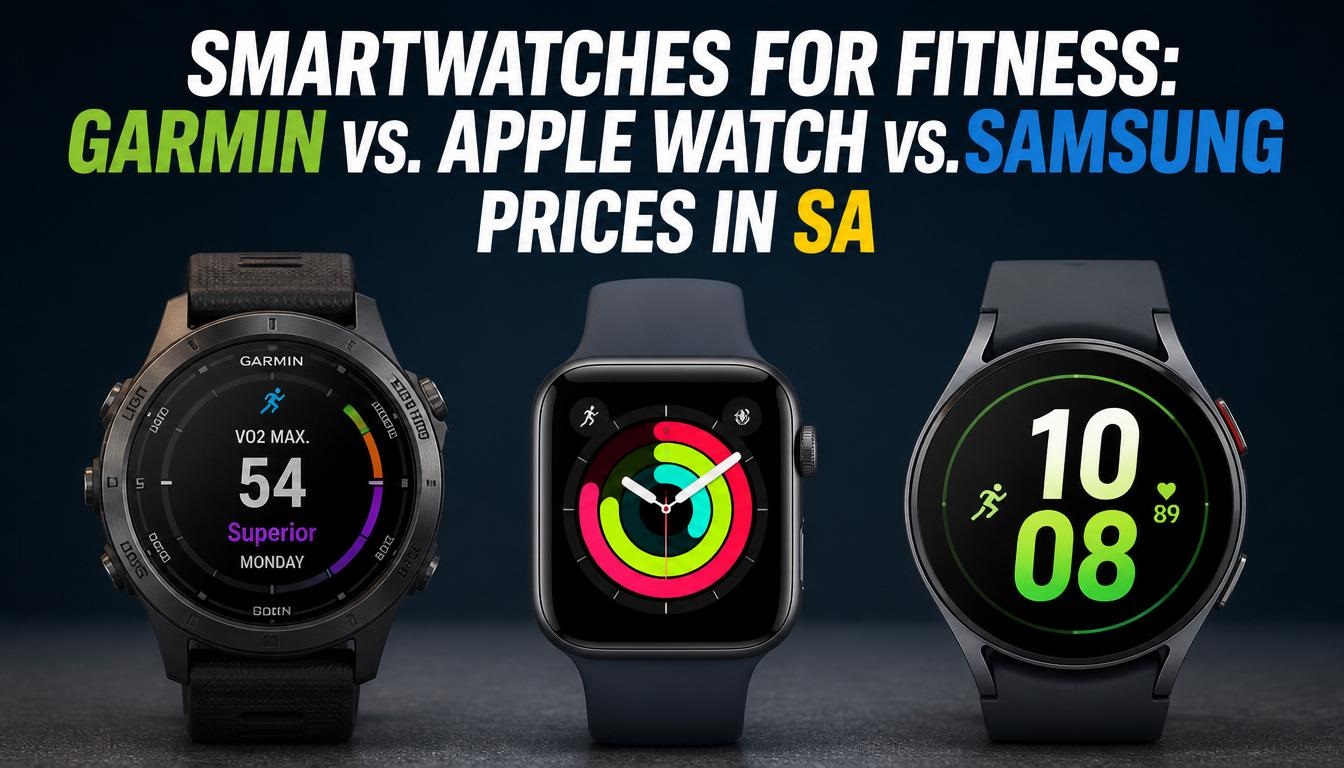
If you have ever tried pacing yourself up the steep climbs of Table Mountain, logging long weekend miles for the Comrades Marathon, or simply keeping your heart rate in check during a brutal Monday evening HIIT session at Virgin Active, you know that a reliable fitness smartwatch is no longer a luxury—it is an essential training partner.
Choosing the right smartwatch in South Africa comes with a unique set of demands. Beyond step tracking and pulse reading, South African athletes and fitness enthusiasts need devices with battery life that survives load shedding schedules, GPS routing that handles dense valley trails without losing track, and seamless integration with local reward programmes like Discovery Vitality and Momentum Multiply.
With prices ranging from under R3,000 to over R20,000, choosing between Garmin, Apple, and Samsung can feel overwhelming. Having logged thousands of kilometers testing these wearables across Western Cape trails, Highveld road runs, and indoor gym setups, this definitive guide cuts through the marketing fluff to compare real-world performance, ecosystem compatibility, and exact South African pricing.
Quick Comparison: Top Fitness Smartwatches at a Glance
Before diving into detailed reviews, here is how the primary contenders stack up across pricing in South African Rands (ZAR), battery endurance, and targeted user profiles.
| Brand & Model | Approx. Retail Price (ZAR) | Battery Life (Real World) | Standout Strength | Ideal South African User |
| Garmin Forerunner 165 | R4,200 – R5,500 | 11 Days (Smartwatch) / 19 hrs GPS | Dedicated running metrics & AMOLED display | Entry-to-intermediate runners wanting real data without heavy bulk |
| Garmin Forerunner 265 / 965 | R8,500 – R14,500 | 13–23 Days | Advanced training readiness, multi-band GPS, full offline maps | Serious maratherons, triathletes, and trail runners |
| Garmin Fenix 8 / Epix Pro | R18,000 – R26,000 | 16–30+ Days (Solar options) | Rugged build, built-in LED torch, extreme battery | Ultra-endurance athletes, hikers, and trail lovers |
| Apple Watch SE (2nd Gen) | R4,500 – R5,800 | 18 Hours | Seamless iOS integration at an accessible price | Casual gym-goers and everyday iPhone users on a budget |
| Apple Watch Series 9 / 10 | R8,900 – R12,500 | 18–36 Hours (Low Power) | Health sensor suite, bright display, cellular options | Active iPhone users who want deep health insights alongside daily utility |
| Apple Watch Ultra 2 | R18,500 – R21,500 | 36–72 Hours | Dual-frequency GPS, 3000-nit screen, titanium durability | iPhone users needing outdoor ruggedness, diving support, and multi-day battery |
| Samsung Galaxy Watch 6 / 7 | R4,800 – R7,500 | 30–40 Hours | BioActive sensor, body composition analytics, Wear OS features | Android/Samsung phone owners wanting comprehensive health and lifestyle tracking |
| Samsung Galaxy Watch Ultra | R10,500 – R13,500 | 48–100 Hours | Aerospace titanium casing, emergency siren, dual GPS | Android users wanting an ultra-rugged endurance watch with high smart capability |
Brand Breakdown 1: Garmin — The Undisputed King of Pure Fitness & Battery
Garmin remains the default benchmark for South African endurance runners, cyclists, and outdoor adventurers. Unlike smartwatch-first brands that added fitness features over time, Garmin built its foundation on satellite navigation and athletic tracking, adding smartwatch features incrementally.
1. Garmin Forerunner Series (165, 265, 965)
The Forerunner line has evolved from utilitarian plastic timepieces into sleek, bright AMOLED-screened powerhouses.
-
Garmin Forerunner 165 (R4,200 – R5,500): The entry point into Garmin’s modern AMOLED generation. It offers vibrant visuals, wrist-based running power, workout suggestions, and heart rate variability (HRV) status. It lacks full mapping, but for everyday 5k to half-marathon runners, it hits a sweet spot.
-
Garmin Forerunner 265 (R8,500 – R9,800): Adds dual-band GPS (essential for pin-point accuracy around city skyscrapers or deep mountain kloofs), training readiness scores, and multi-sport/triathlon tracking.
-
Garmin Forerunner 965 (R13,000 – R14,500): Titanium bezel, full-color offline topo maps, and up to 23 days of battery life in smartwatch mode. If you are training for Two Oceans or Comrades, this is arguably the single best running watch on the market.
2. Garmin Fenix & Epix Series (Fenix 8 / Epix Pro)
-
Pricing Range: R18,000 to R26,000 depending on size, sapphire crystal glass, and solar options.
-
Key Features: Built-in LED flashlight (a lifesaver during early morning load shedding runs), 100-meter water resistance, dive capability, and indestructible construction.
-
Real-World Experience: The battery life on the Fenix range changes how you interact with technology. Charging your watch once every two to three weeks means you never worry about finding a charger during power outages or multi-day hiking trips in the Drakensberg.
Garmin Pros:
-
Unmatched battery longevity (measured in weeks, not hours).
-
Class-leading athletic metrics: HRV Status, Training Load Ratio, Recovery Advisor, and Body Battery.
-
Full standalone capability—does not rely on a phone connection for deep post-run analytics.
-
Works identically across both iPhone and Android platforms.
Garmin Cons:
-
Smart features are basic: text replies are limited (Android only), notification interactions are standard, and voice assistant support is minimal except on top-tier models.
-
Higher entry cost for full topographic mapping features.
Brand Breakdown 2: Apple Watch — The Best Smartwatch with Serious Fitness Chops
If your phone of choice is an iPhone, the Apple Watch provides an ecosystem experience that no other brand can replicate. However, its identity as a mini-computer on the wrist means battery management requires daily discipline.
1. Apple Watch SE & Series 9 / 10
-
Apple Watch SE 2nd Gen (R4,500 – R5,800): Offers basic workout tracking, high/low heart rate notifications, fall detection, and seamless Apple Pay integration. Great for general gym work and daily movement goals.
-
Apple Watch Series 9 & Series 10 (R8,900 – R12,500): Introduces advanced sensors including ECG, blood oxygen estimation, skin temperature tracking for cycle insights, and the double-tap gesture. The display is bright enough to read easily in harsh South African midday sunlight.
2. Apple Watch Ultra 2
-
Pricing Range: R18,500 to R21,500 (Available at iStore, Takealot, and major cellular network providers).
-
Key Features: Flat sapphire crystal face, Grade 5 titanium enclosure, customizable physical Action Button, dual-frequency GPS, and depth gauge for scuba diving (EN13319 certified down to 40m).
-
Real-World Experience: The Ultra 2 bridges the gap between everyday smartwatch convenience and serious outdoor gear. Its dual-frequency GPS matches Garmin’s top-tier sensors through dense urban areas like Sandton or heavily forested trail runs. While 36 to 72 hours of battery life is a massive step up for Apple, it still requires strategic charging during long weekends away.
Apple Watch Pros:
-
Flawless smart functionality: crisp calls, seamless app ecosystem, Siri integration, and instant Apple Pay.
-
Highly accurate heart rate sensor during rapid cadence changes (e.g., HIIT, cross-training).
-
Excellent safety suite: Crash Detection, Fall Detection, and Emergency SOS.
Apple Watch Cons:
-
Zero compatibility with Android smartphones—iPhone mandatory.
-
Daily charging required for SE and Series 9/10 models.
-
Native Workout app, while significantly improved in watchOS 10/11 with custom intervals and heart rate zones, lacks integrated long-term recovery metrics like Garmin’s Training Readiness unless supplemented by third-party subscription apps like Athlytic or Bevel.
Brand Breakdown 3: Samsung Galaxy Watch — Android’s Smart Companion & Value Champion
Samsung has solidified its position as the ultimate wearable companion for Android users, running Google’s Wear OS customized with Samsung’s One UI Watch interface.
1. Samsung Galaxy Watch 6 & Watch 7
-
Samsung Galaxy Watch 6 (R4,800 – R6,800): Featuring thin bezels and brilliant Super AMOLED displays, this watch remains a fantastic value option on discount in SA.
-
Samsung Galaxy Watch 7 (R5,900 – R7,500): Upgrades to a 3nm processor for significantly faster app launching and smoother UI navigation, alongside an enhanced BioActive sensor array that delivers improved heart rate accuracy during intense exertion.
2. Samsung Galaxy Watch Ultra
-
Pricing Range: R10,500 to R13,500 (frequently bundled with trade-in deals via Samsung Experience Stores and Vodacom/MTN contracts).
-
Key Features: Titanium cushion-frame case, 3,000-nit peak brightness, 100m water resistance, emergency siren (86dB), and multi-sport workout tiles.
-
Real-World Experience: The Watch Ultra is Samsung’s direct response to outdoor fitness demands. The dual-frequency GPS keeps pace through tough outdoor routes, and the physical Quick Button allows instant lap triggering or sport transitions during triathlons. Battery life stretches comfortably to 2–3 days of moderate use.
Samsung Pros:
-
Deepest feature integration for Samsung Galaxy phone users (EKG, Blood Pressure monitoring, BIA Body Composition analysis).
-
Exceptional display clarity and touchscreen responsiveness.
-
High value-to-price ratio compared to entry-level outdoor competitors.
Samsung Cons:
-
Full health feature access (ECG and Blood Pressure calibration) requires a Samsung Galaxy phone with the Samsung Health Monitor app.
-
Battery life on base models (Watch 6/7) requires charging every 24–30 hours.
-
Strap mount system on the Watch Ultra uses a proprietary dynamic lug mechanism, limiting third-party band choices.
South African Medical Scheme Integration: Discovery Vitality & Momentum Multiply
For many South African consumers, a key consideration when buying a smartwatch is how effectively it tracks active rewards to lower monthly gym fees or earn cash back.
Key Rule for Vitality & Multiply Points: points are awarded based on heart rate intensity over time or raw step count—not the brand logo on your watch face.
-
Discovery Vitality: Fully compatible with Garmin, Apple Watch, and Samsung Galaxy devices. You can earn up to 300 points per day for reaching 10,000 steps, or up to 300 points for maintaining 60%+ of your age-adjusted maximum heart rate for 30+ minutes. Apple Watch users can also leverage the Vitality Apple Watch benefit to fund their device through active workout streak goals.
-
Momentum Multiply: Syncs seamlessly across all three platforms via the Momentum app, tracking Active Day points through heart rate burn or step thresholds (typically 10,000 steps or 30 minutes of elevated heart rate exercise).
Compatibility Overview Matrix
| Medical Scheme / Reward Program | Garmin | Apple Watch | Samsung Galaxy Watch | Best Syncing Method |
| Discovery Vitality | Native Direct Sync | Native Direct Sync | Direct Sync via Samsung Health | Discovery SA App / Apple Health |
| Momentum Multiply | Native Direct Sync | Direct Sync via Apple Health | Direct Sync via Health Connect | Momentum Multiply App |
| Santam / Woolworths / Virgin Active | Direct Sync | Direct Sync | Direct Sync | Strava / Google Health Connect |
Head-to-Head Technical Comparison: GPS, Battery, and Fitness Performance
To help you decide which watch best aligns with your daily training regime, let’s look at how their underlying technologies perform head-to-head under demanding real-world conditions.
-
Tier 1 (Multi-Band / Dual-Frequency L1+L5): Garmin Forerunner 265/965, Garmin Fenix 8, Apple Watch Ultra 2, Samsung Galaxy Watch Ultra, Samsung Watch 7.
-
Real-World Impact: If you run among high-rise buildings in Cape Town CBD or through steep valley trails in the Drakensberg, dual-frequency signals eliminate ghost drift and ensure your pace readings do not jump erratically.
-
-
Tier 2 (Standard Single-Frequency GPS): Garmin Forerunner 165, Apple Watch SE, Apple Watch Series 9/10, Samsung Galaxy Watch 6.
-
Real-World Impact: Completely accurate for open-road running, suburban cycling, and neighborhood walks, but may show slight route smoothing on tight trail switchbacks.
-
2. Sensor Performance: Heart Rate & Health
-
Apple Watch: Industry-leading optical sensor stability. It exhibits minimal lag during rapid heart-rate spikes in functional fitness workouts (Kettlebell swings, sprint intervals).
-
Garmin: Outstanding continuous 24/7 monitoring. Garmin’s Elevate V4 and V5 sensors excel at baseline metrics like HRV, resting heart rate, and sleep staging, providing deeper holistic recovery context.
-
Samsung: The BioActive sensor offers the broadest health telemetry—including Bioelectrical Impedance Analysis (BIA) to estimate body fat percentage and skeletal muscle mass directly from your wrist.
How to Choose the Right Smartwatch for Your Specific Profile
Scenario A: The Pure Endurance Runner / Trail Adventurer
-
Primary Need: Maximum battery life, detailed mapping, pacing strategies (PacePro), and crash-proof durability.
-
Top Recommendation: Garmin Forerunner 965 or Garmin Fenix 8.
-
Why: You can leave the charger at home during a 5-day trail festival, navigate turn-by-turn without mobile reception, and get precise training readiness data every morning.
Scenario B: The Connected iPhone Power User
-
Primary Need: Smooth daily communications, app store access, Apple Pay, slick UI, and comprehensive gym workout tracking.
-
Top Recommendation: Apple Watch Series 10 (everyday fitness) or Apple Watch Ultra 2 (rugged outdoors).
-
Why: The watch acts as a direct extension of your iPhone while providing elite-grade heart-rate telemetry and safety features.
Scenario C: The Android / Samsung Fitness Enthusiast
-
Primary Need: Seamless Android integration, lifestyle features, daily body composition monitoring, and reasonable fitness tracking.
-
Top Recommendation: Samsung Galaxy Watch 7 (best daily value) or Samsung Galaxy Watch Ultra (endurance features).
-
Why: Delivers fluid Wear OS capabilities, vibrant AMOLED screens, and quick body health snapshots at competitive retail pricing in South Africa.
Scenario D: The Value-Conscious Fitness Beginner
-
Primary Need: Accurate step, distance, and heart-rate tracking to hit Vitality points under a tight budget.
-
Top Recommendation: Garmin Forerunner 165 or Apple Watch SE (2nd Gen) / Samsung Galaxy Watch 6.
-
Why: Keeps cost below R5,500 while providing full access to core health metrics and reward scheme integrations without unnecessary fluff.
Frequently Asked Questions (FAQs)
1. Which smartwatch brand has the best resale value in South Africa?
Apple Watches generally hold the highest relative resale value on platforms like Gumtree, Facebook Marketplace, and trade-in programs like iStore Pre-Owned. However, mid-to-high-tier Garmin watches (Forerunner 900-series and Fenix lines) hold exceptional value among local running and cycling clubs due to high demand for rugged second-hand training gear.
2. Can I use an Apple Watch with a Samsung phone or vice-versa?
An Apple Watch cannot be paired or set up with an Android device; it requires an iPhone for initial activation and daily operation. Conversely, Samsung Galaxy Watches running Wear OS (Watch 4 series and newer) do not support iOS, meaning they will not work with an iPhone. Garmin is platform-agnostic and works seamlessly across both iOS and Android.
3. Do I need cellular connectivity (LTE) on my smartwatch in South Africa?
Cellular capabilities allow you to receive phone calls, stream music, and send emergency texts without carrying your smartphone during runs. In South Africa, eSIM support for smartwatches is available through major networks like Vodacom, MTN, and Telkom. If you prefer running completely phone-free while maintaining an emergency lifeline, LTE is worth the additional monthly e-SIM subscription fee (typically R25–R50/month).
4. How do smartwatch batteries perform during load shedding?
Long battery life devices like Garmin (7 to 20+ days) are virtually immune to daily power outage schedules. Smartwatches with 18 to 36-hour battery windows (Apple Watch, Samsung Galaxy Watch) require strategic top-ups—charging during work hours or using power banks—to avoid dying overnight and missing sleep tracking metrics.
Final Verdict & Interactive Reader Community
There is no single “best” smartwatch for everyone in South Africa—only the best watch for your phone ecosystem, battery preferences, and specific fitness discipline.
-
Choose Garmin if your primary focus is performance tracking, long battery life, and structured marathon or trail training.
-
Choose Apple if you are fully embedded in the iOS ecosystem and want an unrivaled blend of daily smart convenience with top-tier heart monitoring.
-
Choose Samsung if you want a featured-packed, sleek Wear OS smartwatch tailored specifically to your Android smartphone at a competitive price.
Join the Discussion!
Now over to you: Which smartwatch are you currently wearing on your runs or gym sessions in SA, and how has its battery life handled your weekly training routine?
If you are thinking of upgrading from an older device or switching between Garmin, Apple, and Samsung, drop your questions or experiences in the comments below—let’s help each other pick the ultimate wrist partner!

Joseph Mathebula is a consumer analyst and market researcher at Prices in South Africa. He specializes in tracking local service costs, retail pricing, and travel budgets, helping everyday shoppers navigate the market to secure the best value.